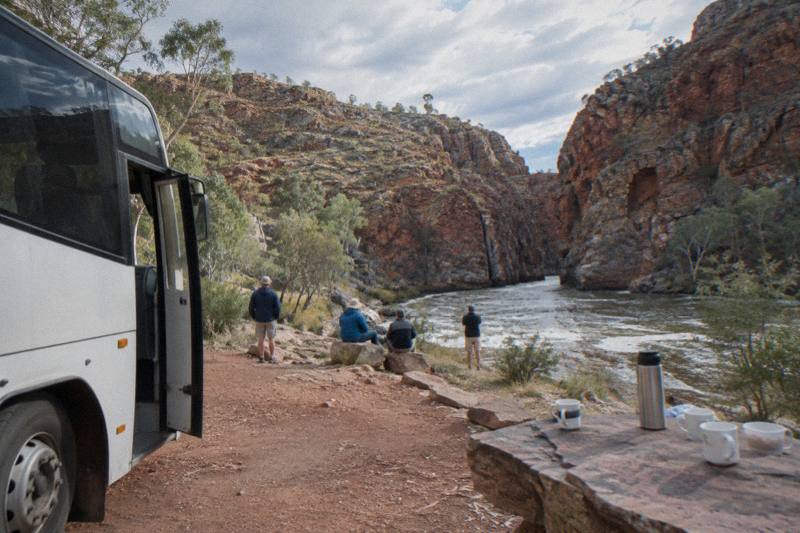
Are There Crocodiles In The Ormiston Gorge Waterhole?
No official guidance lists crocodiles among the swimming warnings at Ormiston Gorge. The real documented risks are cold water, depth and hypothermia. Here is what the park actually says.
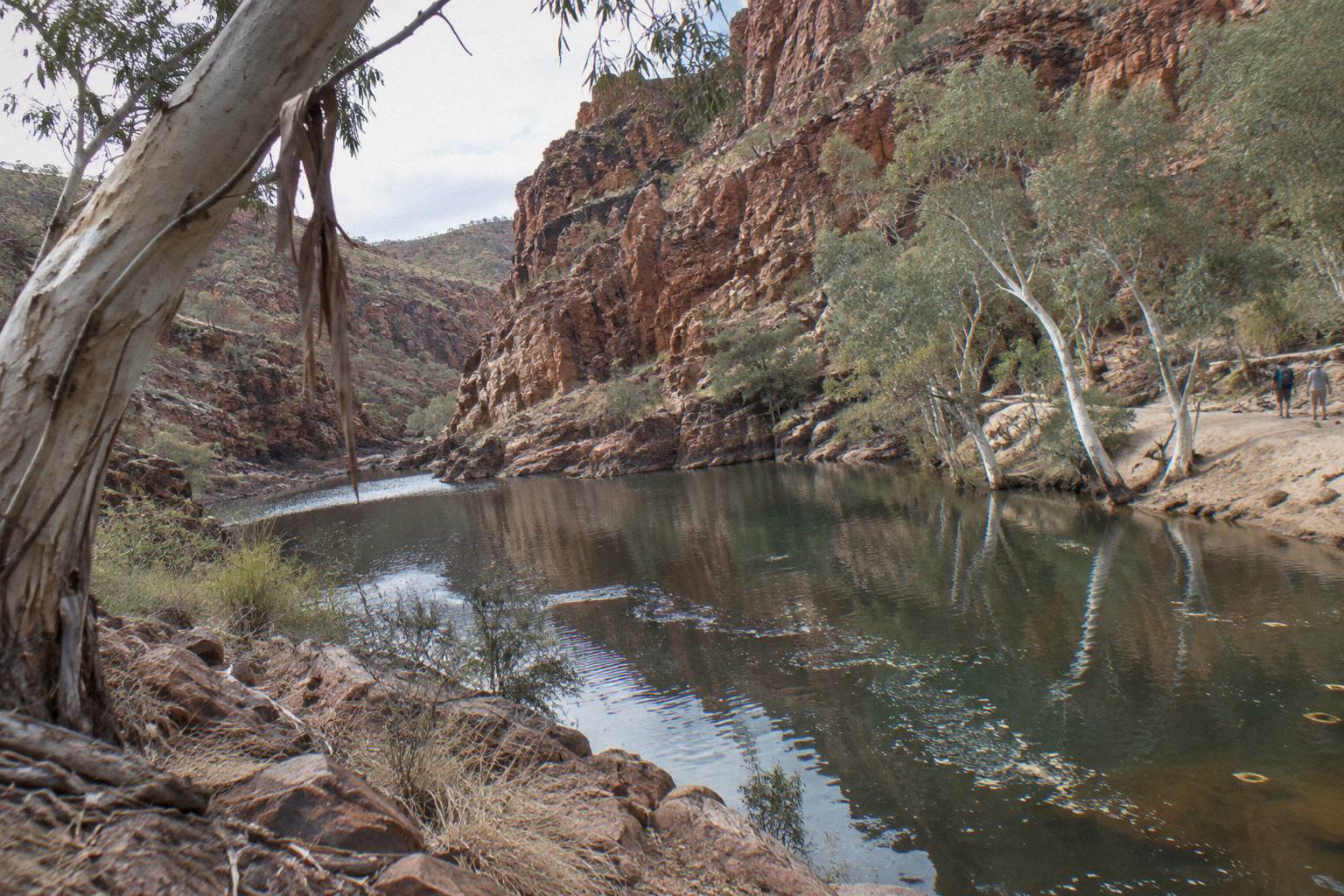
No verified official fact about crocodiles at Ormiston Gorge exists in the park guidance for this waterhole, so this article will not assert their presence or their absence. What the official guidance does say is specific and repeated: the waterhole is extremely cold, reaches up to 14 m deep at its southern end, carries a hypothermia risk even in summer, and jumping or diving is banned.
That is a deliberately narrow answer, and it deserves a short explanation before anything else. The Northern Territory government page for Ormiston Gorge lists swimming conditions, walk closures, campground details and a ranger station phone number, and its warnings for the waterhole concern temperature and depth. Crocodiles do not appear in that official guidance. This site reports verified facts only, and a claim about crocodiles, either way, is not among them, so the scope gap is stated once here and the rest of this article works from what is actually documented.
Why does this matter for a booking decision? Because travellers conflate the Top End's crocodile country with the arid Centre, and the two are different worlds separated by well over a thousand kilometres of outback. Ormiston Gorge sits 135 km west of Alice Springs by sealed road inside Tjoritja / West MacDonnell National Park, a 252,800 hectare reserve gazetted in October 2014 on the homelands of Central Arrernte, Western Aranda and Luritja people, jointly managed to this day. The swim decision there is a cold-water decision, and the park treats it that way.
If you are weighing a swim-stop tour, the practical reading is this: plan for cold water, for depth, and for a walk-in entry, exactly as the official warnings describe, and take your crocodile question up with the rangers directly if you want a live local answer. Ormiston Gorge has a ranger station, reachable on 08 8951 8250, and asking them is the only source that can speak to conditions on the day.
What The Official Swimming Guidance For Ormiston Gorge Actually Says
The park's swimming guidance for Ormiston Gorge names three hazards: the water is extremely cold, the permanent waterhole reaches up to 14 m deep at the southern end, and there is a hypothermia risk even in summer. Jumping and diving are prohibited. The same official source warns that flash floods and storms affect waterholes across the park, and that swimming is only permitted where it is explicitly allowed.
That guidance comes from the Northern Territory government's park pages, which are the primary source for everything in this article. The waterhole sits 500 m from the visitor centre, which is why it works so well as a tour stop: a short walk on a formed path, then a permanent pool ringed by red rock. Permanent is the operative word. Unlike the temporary waterholes that dot the ranges after rain, this one holds water year round, and its depth is the reason the southern end is treated with respect.
The wider swimming rules for Tjoritja / West MacDonnell National Park are worth reading before any swim stop, not just this one. The park's swimming page states plainly that most waterholes in the park are extremely cold, that swimming is allowed only in designated spots, and that flash floods and storms are a real hazard in gorge country. Rain falling far upstream can send water down a dry creek bed with little warning, which is a structural feature of the Centre's geography, not a rare event.
| Official guidance point | What it means for a swim stop |
|---|---|
| Extremely cold water | Enter gradually; expect gasp and rapid breathing on entry |
| Up to 14 m deep at the southern end | Stay within your depth; the floor drops away |
| Hypothermia risk even in summer | Short swims, warm layers ready, watch for shivering |
| No jumping or diving | Enter feet first from the edge, never from rocks |
| Swim only where allowed | Ormiston's waterhole is the designated swim spot |
| Flash floods and storms | Check conditions on the day; leave if water rises |
One more detail from the same official source: the kiosk at Ormiston Gorge has been closed for the season, so bring everything you need for the day, including water. The park safety guidance is blunt about that too. Carry and drink plenty of water, wear a hat, avoid strenuous activity in the heat of the day, and note where the emergency call devices are located. Temperatures in this region can exceed 40 °C between October and April, which is a far more statistically present danger than anything in the water.
Why Cold Water, Not Wildlife, Is The Documented Risk At This Waterhole
Every verified warning for Ormiston Gorge's waterhole points at temperature and depth. A pool that can hold hypothermia risk in summer is a pool where cold-water shock, not wildlife, is the hazard the rangers write rules about. The bans on jumping and diving exist because of what lies under the surface and how the body reacts to sudden immersion, and the 14 m southern end is the number that anchors those rules.
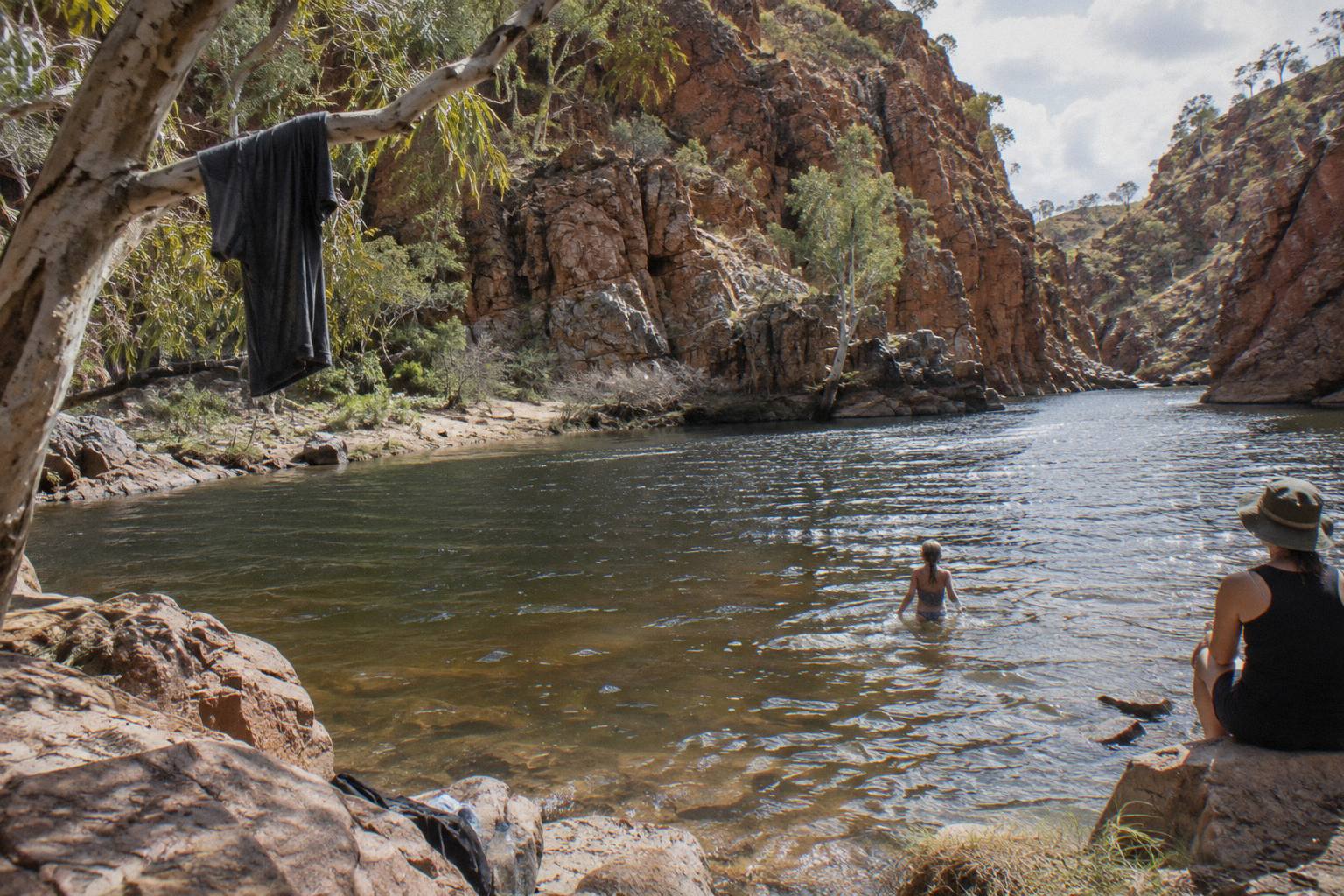
Cold water works on the body faster than most visitors expect. Sudden immersion triggers an involuntary gasp and rapid breathing, and even strong swimmers can inhale water in the first seconds. A pool with hypothermia risk in the middle of an Australian summer is cold enough for that reflex, and the official guidance for Ormiston Gorge carries that warning deliberately. Depth compounds it: a swimmer who enters the deep southern end, misjudges the drop and panics has combined two hazards at once.
The no jumping and diving rule fits the same picture. The park guidance does not frame it as a wildlife rule; it frames it as a water-entry rule, consistent with cold shock and with submerged rock ledges that a permanent gorge pool collects over centuries. Follow the letter of it and you remove the two most common ways swimmers come to grief in deep, cold waterholes: head-first entry and exhaustion from fighting the cold.
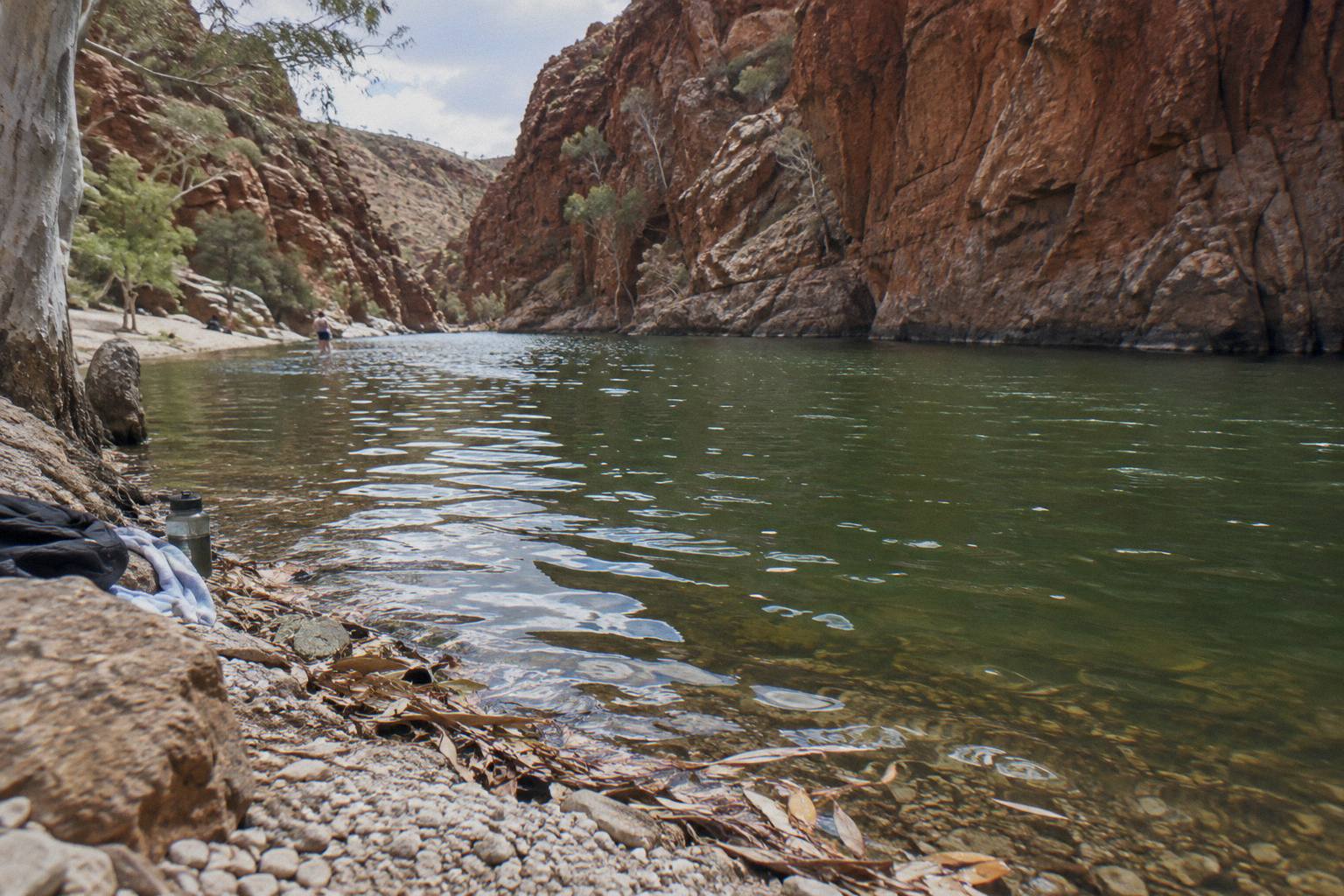
Hypothermia in summer sounds like a paradox until you stand at the edge of the water. The Centre's air temperature and its permanent water temperature are different stories, because gorge pools are shaded for much of the day and fed by groundwater. The park says extremely cold and means it. Swim in short bursts, keep a towel and dry layer within reach, and treat shivering, slurred speech or clumsy fingers as your cue to be out of the water and warming up, not pushing on.
None of this is a statement about crocodiles, and it is not meant to be read as one. It is the documented risk profile of the waterhole as the park publishes it, and it is the risk profile a responsible tour operator plans around when they schedule a swim stop. For the wider picture on swimming across the ranges, see which outback waterholes you can swim in on a tour, which covers the designated swim spots park by park.
Which Walks At Ormiston Gorge Involve Swimming, And Which Do Not
Two named walks at Ormiston Gorge involve water: the Pound Walk loop requires a short swim through deep cold water, and the Ghost Gum Loop requires swimming or wading with a return via the lookout. The Waterhole Walk and the Ghost Gum Lookout track stay dry. This distinction is published on the official park page and it changes which walk belongs on your day.
The Pound Walk is the headline circuit at Ormiston, and the swim inside it is not optional: the route threads the gorge and crosses a deep cold section that cannot be waded. If the idea of swimming through a shaded gorge pool appeals, that is the walk that delivers it, and the cold-water rules from the waterhole apply doubly in a narrower channel. If it does not appeal, the lookout walks deliver the views without the wet crossing.
The Ghost Gum Loop also requires swimming or wading, per the official page, with the return leg travelling via the lookout. The Ghost Gum Lookout itself and the short Waterhole Walk are the dry options, and the waterhole walk is the one most tour itineraries use, since it finishes at the permanent pool 500 m from the visitor centre. A visit that skips every wet crossing still gets cliffs, ghost gums and the waterhole itself.
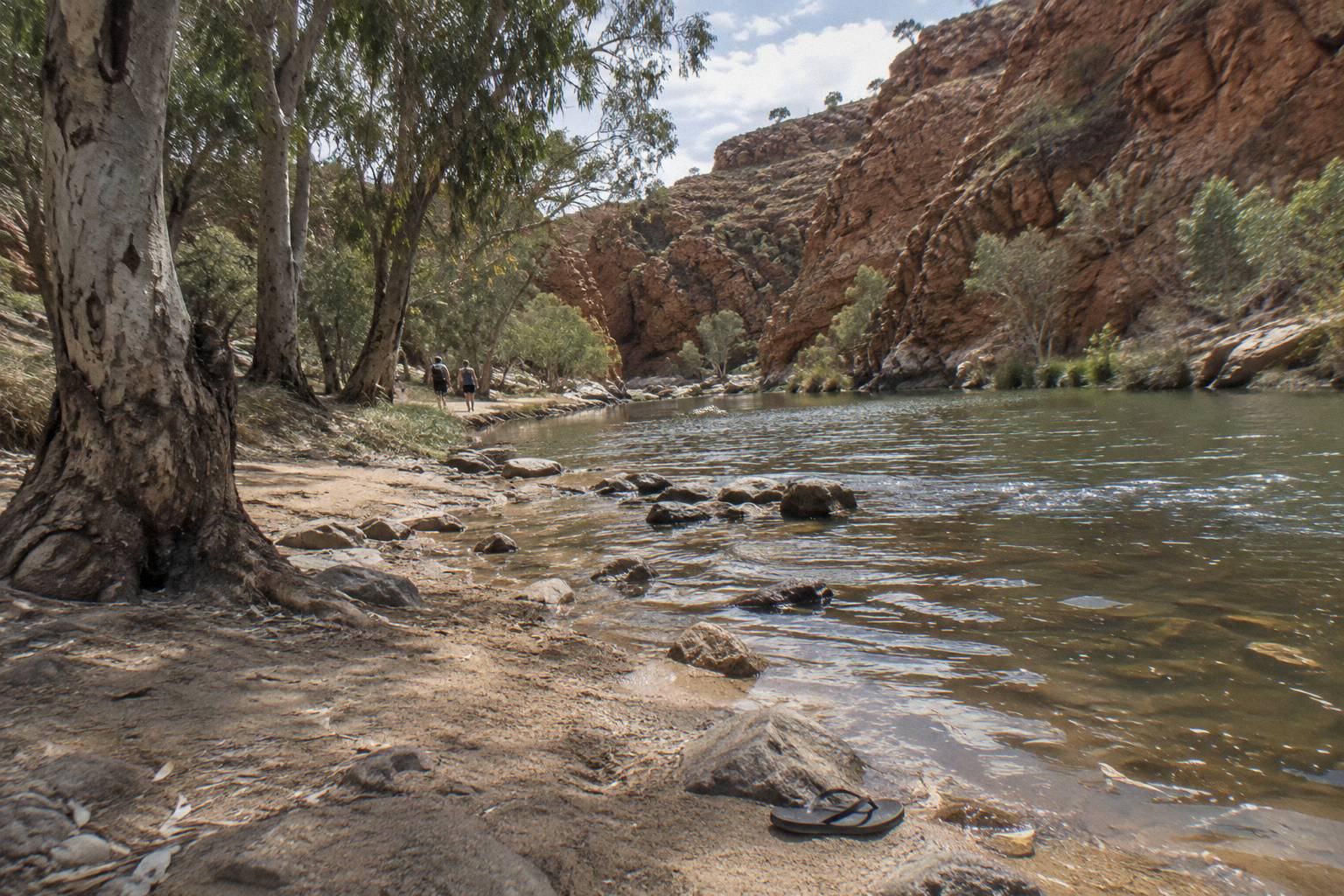
One closure note from the park's own pages: at the most recent check of the Simpsons Gap page, that park's Ghost Gum Walk was closed due to storm damage. Walk closures in the ranges move around with weather, so the current status of every track on your itinerary is a question for the ranger station, 08 8951 8250, or the operator on the morning. Alice Holiday Tours states in its own terms that if attractions are closed for circumstances beyond its control, a suitable alternative is provided, which is the standard protection to look for on any booked day trip.
The Larapinta Trail connection is worth knowing even if you never walk it: sections 9 and 10 of the trail pass through Ormiston Gorge, and section 10 finishes at the Finke River. Through-walkers use Ormiston as a resupply and rest point, which is why the campground here has gas barbecues, toilets and showers. The campground is a category B site, bookable online, and open to all vehicle types including caravans.
How Tour Operators Handle The Swim Stop At Ormiston Gorge
Guided tours build the Ormiston swim stop around the official conditions, not around wildlife assumptions. Operators publish their inclusions precisely, and the practical differences that matter at the waterhole are the group size, the parks pass treatment and the food. Every Alice Springs tour on this site's roster includes hotel pick-up and offers free cancellation up to 24 hours before, which makes the swim-stop decision a low-commitment one.
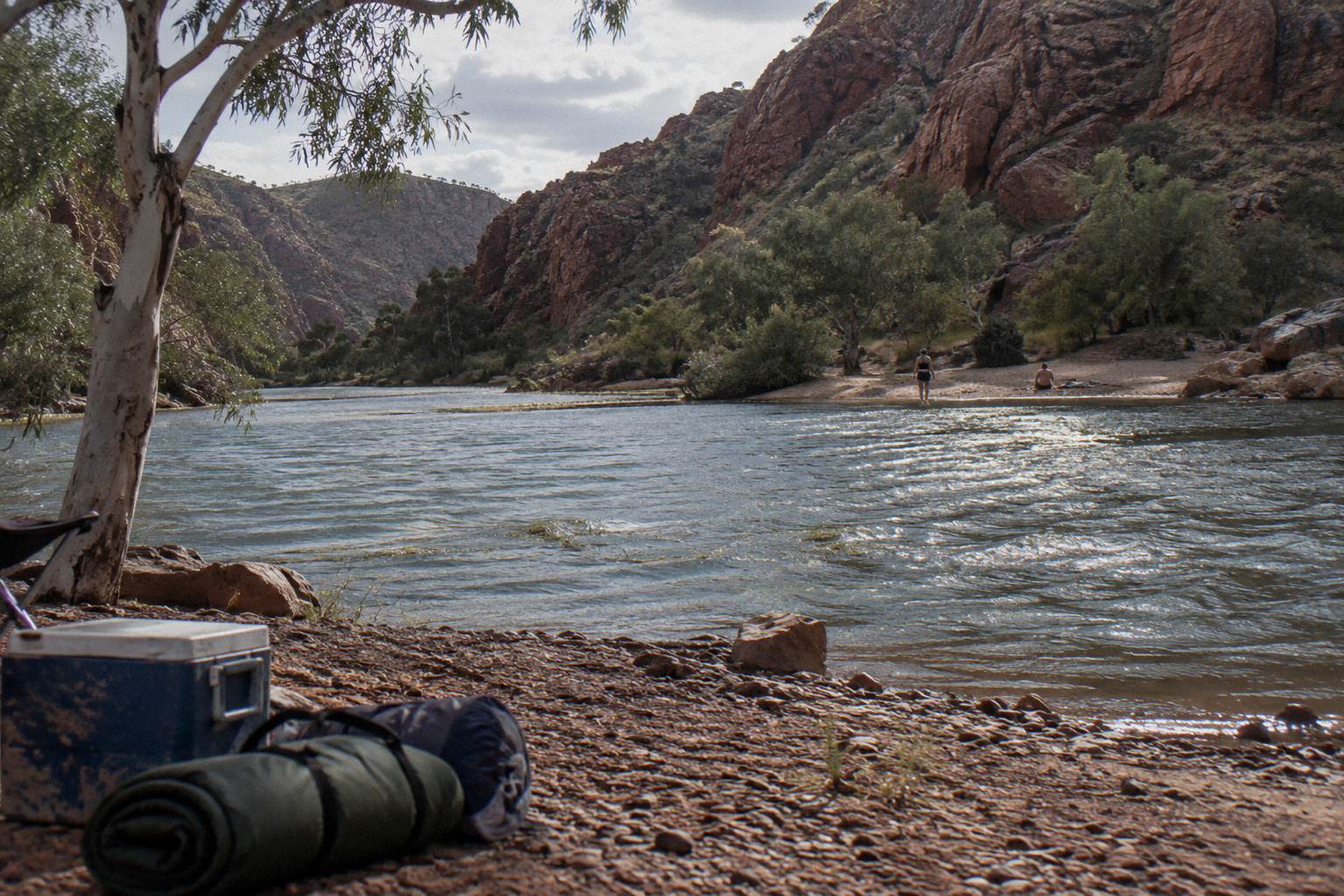
The featured option on West MacDonnell Ranges Tours is the "From Alice Springs: West MacDonnell Ranges Day Trip", a 9-hour coach day trip from Alice Springs run by Emu Run Experience from AU$249 per person, rated 4.7 from 336 reviews. Standley Chasm entry is included in its price, along with hotel pick-up and drop-off, transport by air-conditioned vehicle, a guide, morning tea and a bushman's lunch. The NT Parks pass is an exclusion, bought separately online before you go, a detail that trips up a lot of first-time visitors. Children aged 2 and over are welcome.
Two other full-day formats suit different travellers, and both belong in a fair comparison. The "West MacDonnell Ranges Full Day - Small Group Tour" from Alice Holiday Tours runs 10 hours from AU$279 per person, rated 4.6 from 16 reviews, with the NT Parks Visitor Pass, Standley Chasm entry, morning tea, snacks, water and a picnic lunch all included, and pick-up within 10 km of the Alice Springs town centre. The "Alice Springs: West MacDonnell Ranges & Standley Chasm Tour" from Autopia Tours runs 10.5 hours from AU$220 per person, rated 4.7 from 70 reviews, in a small-group vehicle with lunch, snacks, Standley Chasm entry and onboard Wi-Fi included, while the parks pass remains an extra bought online.
A note on the pass, because it changes the real price of a swim day. The NT Parks Visitor Pass is required for visitors to the NT, NT residents are exempt, and it is sold online only, through a logged-in parks booking account, before you arrive. An adult pass costs AU$10 for one day, AU$20 for three days or AU$30 for two weeks, with child, concession and family rates below that, and camping and walking fees are extra on top. A tour whose headline price excludes the pass is quoting you a number you cannot actually pay at the gate without one more transaction. The full pass picture, including family pricing, is laid out in the guide to NT Parks passes and fees for West Macs tours.
Autopia's Standley Chasm combination tour shows how the pass question plays out in practice:
| Tour (short name) | Operator | Length | From | Pass treatment | Standley Chasm entry |
|---|---|---|---|---|---|
| 9-Hour Coach Day Trip | Emu Run Experience | 9 hours | AU$249 | Extra, bought online | Included |
| Full Day, Small Group Only | Alice Holiday Tours | 10 hours | AU$279 | Included | Included |
| Day Trip Plus Standley Chasm | Autopia Tours | 10.5 hours | AU$220 | Extra, bought online | Included |
| Day Tour, Lunch Included | Wildlife Tours Australia | 10.5 hours | AU$163 | Extra, bought online | Included |
The Wildlife Tours Australia day tour with lunch is the price contrast in that table, from AU$163 per person, with lunch, snacks, Standley Chasm entry and guided bush walks of 3-4 km subject to fitness, in a shared air-conditioned mini-coach. It carries no published rating, so this site prints none. Children under 6 are not carried, and those aged 6 to 17 must travel with an adult or legal guardian.
Planning A Safe Swim Day At Ormiston Gorge
A safe swim day at Ormiston is built from four official habits: carry and drink plenty of water, wear a hat, avoid strenuous activity in the heat of the day, and know where the emergency call devices are. Add the waterhole rules, enter feet first, stay in your depth, keep swims short, and you have the complete documented playbook. None of it requires a wildlife assumption.
Timing matters more than gear. The hottest months, October through April, can exceed 40 °C in this region, and the park's heat guidance is to walk only in the cooler parts of the day in hot weather and to check heatwave warnings before setting out. A tour actually helps here, because the itinerary puts the gorge walks in the comfortable hours and the coach handles the 135 km of sealed road between Alice Springs and the waterhole, out along Larapinta and Namatjira Drive through the middle of the ranges.
What to pack is straightforward and the park says most of it. Water, more than feels reasonable. A hat. Sun protection. A towel and dry layers for after the swim, because the hypothermia warning is real even on a day when the air tops 40 °C. Shoes you can walk 3 to 4 km in on uneven ground, since that is the walking volume the tour itineraries describe. And a plan for the phone situation: the Larapinta Trail guidance for remote walkers, satellite phone or personal locator beacon rather than mobile coverage, applies to independent travel west of town, though a guided day trip keeps you within reach of the coach and the driver-guide.
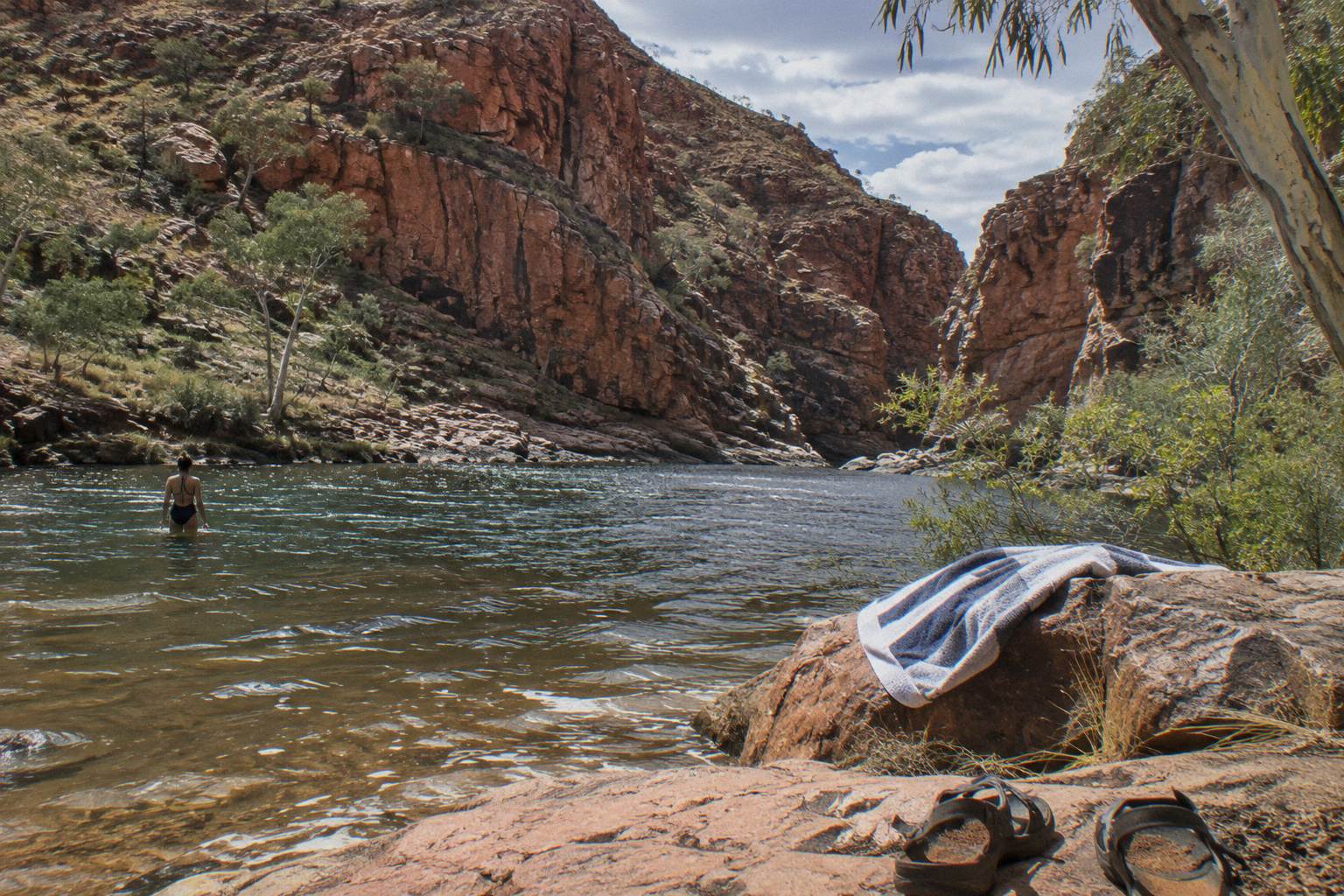
For visitors connecting through the region, the swim stop also pairs with the park's other designated waterholes. Ellery Creek Big Hole, west of town with the last 2 km unsealed, has a permanent waterhole a 5 minute walk from the car park that the park describes as ideal for swimming, extremely cold, with no jumping, diving or swinging. Glen Helen Gorge, 132 km out, invites a cool dip with a restaurant and campsites alongside. Each of these carries the same cold-water framing as Ormiston, which tells you how the park itself ranks the risks across the whole range system.
If you want the full walk-by-walk picture before committing a day, the Ormiston Gorge tour guide breaks down every stop, and the Ormiston Pound walk guide covers the loop that includes the cold swim crossing in detail.
The Cultural Setting Around The Waterhole
Ormiston Gorge sits inside Tjoritja / West MacDonnell National Park, on the homelands of the Central Arrernte, Western Aranda and Luritja people, a jointly managed park whose landscape, in Arrernte understanding, was shaped by ancestral beings in the mythological time. That creation story is the foundation of spiritual belief and identity here, and the park's dual name, gazetted in 2014, reflects it.
Tjoritja is the Western and Central Aranda name for the MacDonnell Ranges, and the park carries it alongside the colonial one as a matter of record, not marketing. For a visitor standing at the waterhole, this context changes what the place is: not a scenic pool that happens to have a First Nations history, but a living cultural landscape whose features carry meaning that predates and outlasts the walking tracks. Several dreaming trails and stories cross at Simpsons Gap, the closest major stop to town, and the official wording for the whole park describes ancestral creation as the foundation of spiritual beliefs and identity.
Standley Chasm, which most full-day itineraries pair with the western gorges, is privately operated and sacred to the Arrernte people, per the operator's own directions page, with a separate entry fee that tours either include or leave to you, as the table earlier in this article shows. The Ochre Pits, 110 km west of Alice Springs, are part of the same cultural landscape, and the park maintains strict rules against removing ochre from them. Treat every stop in the ranges as a place with rules that predate the visitor centre, and the signage starts to make a different kind of sense.
None of this bears directly on crocodiles, but it bears on how to behave at the waterhole. Swim where swimming is allowed, walk where walking is allowed, and take the restrictions as the current expression of a much older relationship between people and this country. That is the honest framing, and it is the one the park itself uses.
Common Questions About Ormiston Gorge Waterhole
Are There Crocodiles At Ormiston Gorge?
No verified official fact about crocodiles at Ormiston Gorge exists in the park guidance for this waterhole, so no presence or absence claim can be made here. The documented warnings are extremely cold water, depth up to 14 m at the southern end, hypothermia risk even in summer, and a ban on jumping or diving. For a live local answer, contact the Ormiston Gorge ranger station on 08 8951 8250.
Are There Crocodiles In The Ormiston Gorge Waterhole?
The official park guidance names cold, depth and hypothermia as the waterhole's hazards, and does not list crocodiles among its swimming warnings. This site reports verified facts only and does not assert either presence or absence. The practical takeaway: plan for cold water and depth, swim only where allowed, and ask the rangers about conditions on the day.
Can You Swim At Ormiston Gorge?
Yes, swimming is permitted at the permanent waterhole, which sits 500 m from the visitor centre. The park describes the water as extremely cold, up to 14 m deep at the southern end, with a hypothermia risk even in summer. Jumping and diving are prohibited, and swimming is allowed only in designated spots.
How Cold Is The Ormiston Gorge Waterhole?
The official guidance describes it as extremely cold, with a hypothermia risk even in summer. No temperature figure is published for the pool, so none is printed here. Treat it as a cold-water swim: enter gradually, keep swims short and have warm layers ready.
Do I Need An NT Parks Pass To Visit Ormiston Gorge?
Yes, visitors to the NT need an NT Parks Visitor Pass, sold online only before you go. An adult pass costs AU$10 for one day, AU$20 for three days or AU$30 for two weeks, with child, concession and family rates available. Some tours include the pass in their price and some list it as an exclusion bought separately, so check the inclusions before booking.
Which Tours Include The Ormiston Swim Stop?
Full-day West MacDonnell itineraries from Alice Springs call at Ormiston Gorge. The 9-Hour Coach Day Trip from Emu Run Experience runs from AU$249 per person, and the Full Day Small Group Tour from Alice Holiday Tours runs from AU$279 per person with the parks pass and Standley Chasm entry included. All rostered day tours include hotel pick-up and free cancellation up to 24 hours before.