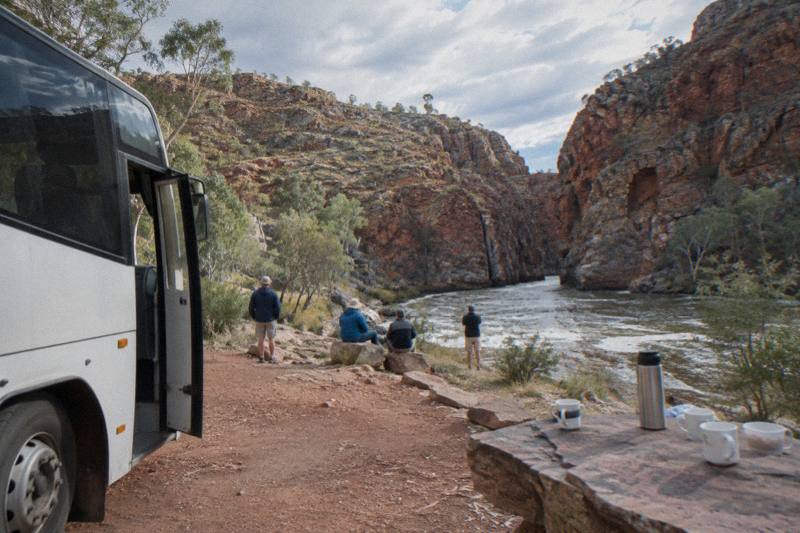
Swimming At Ormiston Gorge: Water Temperature And Safety
Ormiston Gorge has one of the best-known swimming holes in the West MacDonnell Ranges, and the water is cold enough to be a genuine safety consideration rather than a refreshment.
Short answer
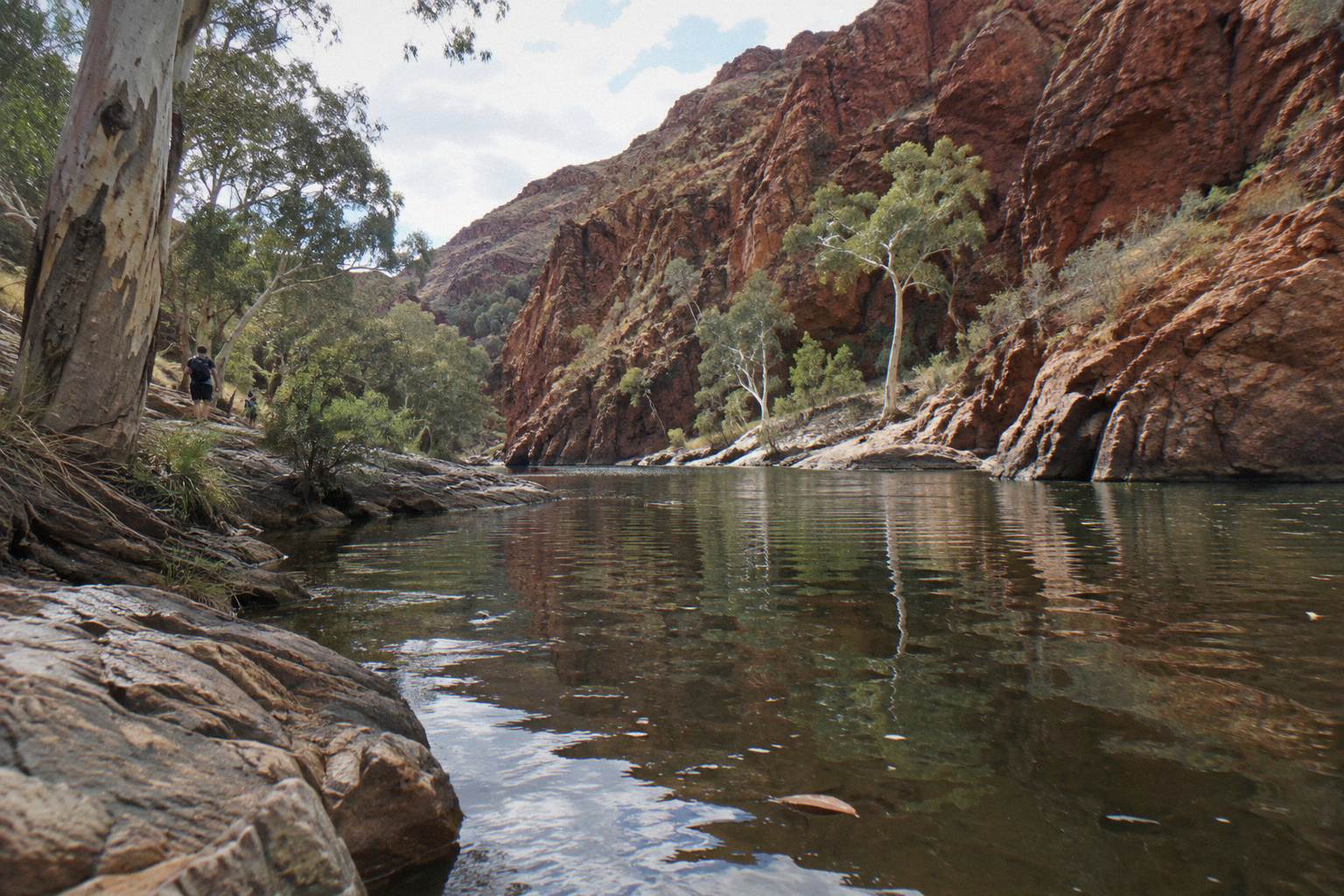
Yes, swimming is permitted at the Ormiston Gorge waterhole, a permanent pool 500 m from the visitor centre that reaches up to 14 m deep at its southern end. The water is extremely cold, jumping and diving are banned, and the official guidance warns of hypothermia risk even in summer. A NT Parks pass is required, from AU$10 per adult for one day.
Swimming is the reason many travellers put Ormiston Gorge on a Red Centre itinerary, and it is also the part of the visit that carries the most safety fine print. The gorge sits 135 km west of Alice Springs on a sealed road inside Tjoritja / West MacDonnell National Park, a 252,800 hectare park gazetted in October 2014 on the homelands of Central Arrernte, Western Aranda and Luritja people. This guide sets out exactly what the official park guidance says about swimming there, how the waterhole compares with the other swim spots across the ranges, and what a guided day trip does and does not promise.
Can You Swim At Ormiston Gorge?
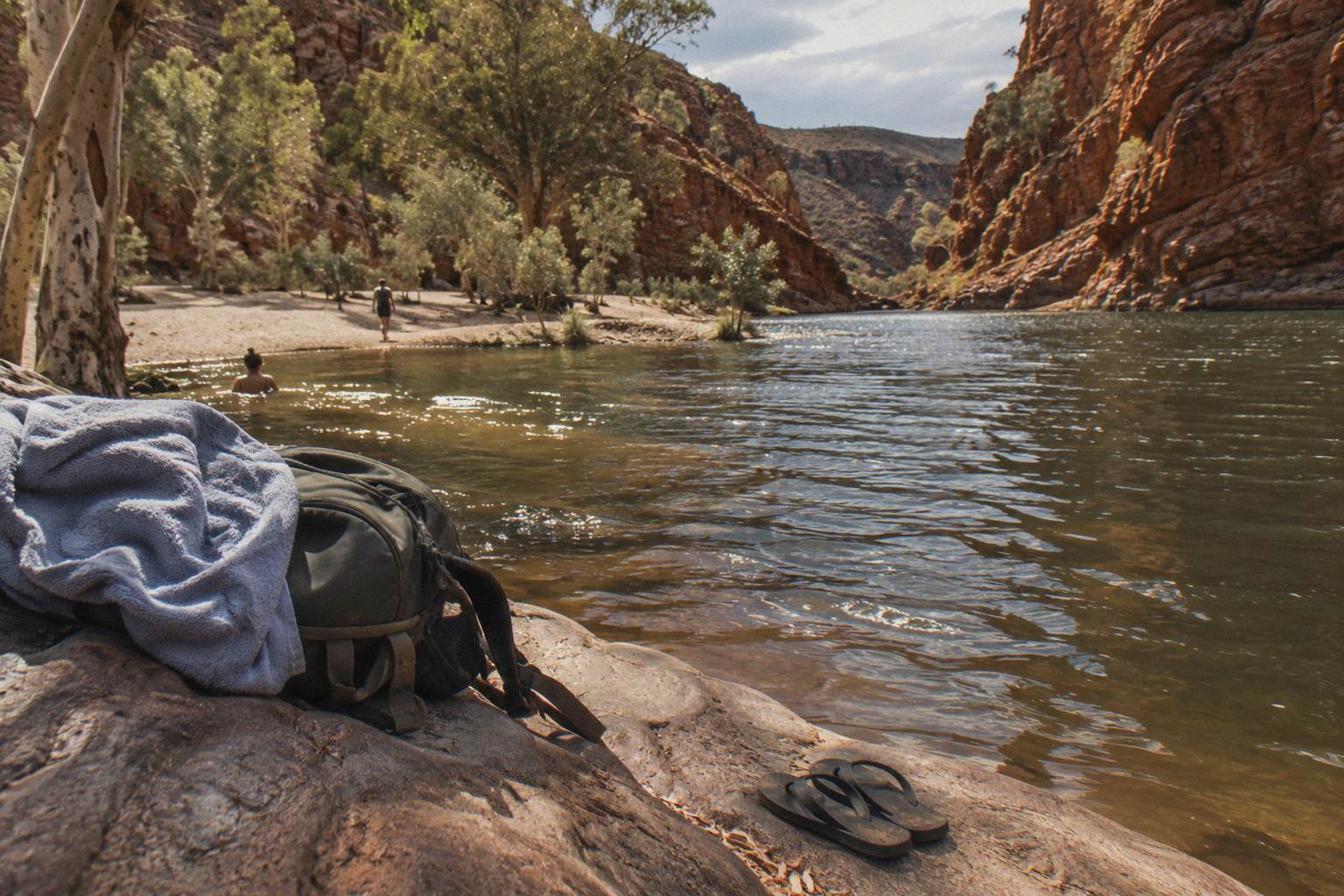
Yes. Swimming is permitted at the Ormiston Gorge waterhole, a permanent pool about 500 m walk from the visitor centre, and it is one of the few places in Tjoritja / West MacDonnell National Park where a swim is explicitly part of the visitor experience. The catch is the water itself: the pool is extremely cold, it reaches depths of up to 14 m, and the park guidance warns of hypothermia risk even in summer.
The waterhole sits close enough to the visitor infrastructure that most visitors can reach it in a short walk from the car park and ranger station. That accessibility is unusual in the ranges. Redbank Gorge, the other deep swimming hole further west, requires a 1 km walk from its carpark and a high-clearance 4WD just to get there, since its access road is unsealed and restricted. At Ormiston, the sealed road runs all the way from Alice Springs and the pool begins a few minutes from the main facilities, which is why the gorge features on so many day tour itineraries as the mid-afternoon stop.
Two of the gorge's named walks also treat the water as part of the route rather than an optional extra. The Ormiston Pound Walk is a loop that requires a short swim through deep, cold water at one point, and the Ghost Gum Loop Walk involves swimming or wading depending on conditions, with the return leg passing a lookout. Neither is a casual stroll with a picnic at the end; both assume you are prepared to get wet in water the park service itself describes as extremely cold, and both are graded accordingly. If your plan is a swim from the beach area near the waterhole's northern end, that is available without committing to a full loop walk.
What the official guidance does not do is promise comfort. The phrasing around Ormiston's waterhole is consistently about cold, depth and restraint: no jumping, no diving, swim within your ability. That tone exists because the pool looks inviting and behaves like a deep alpine lake. Treating it that way, rather than as a warm resort pool, is the single most useful mental shift a visitor can make before arriving.
How Cold Is The Water Really?
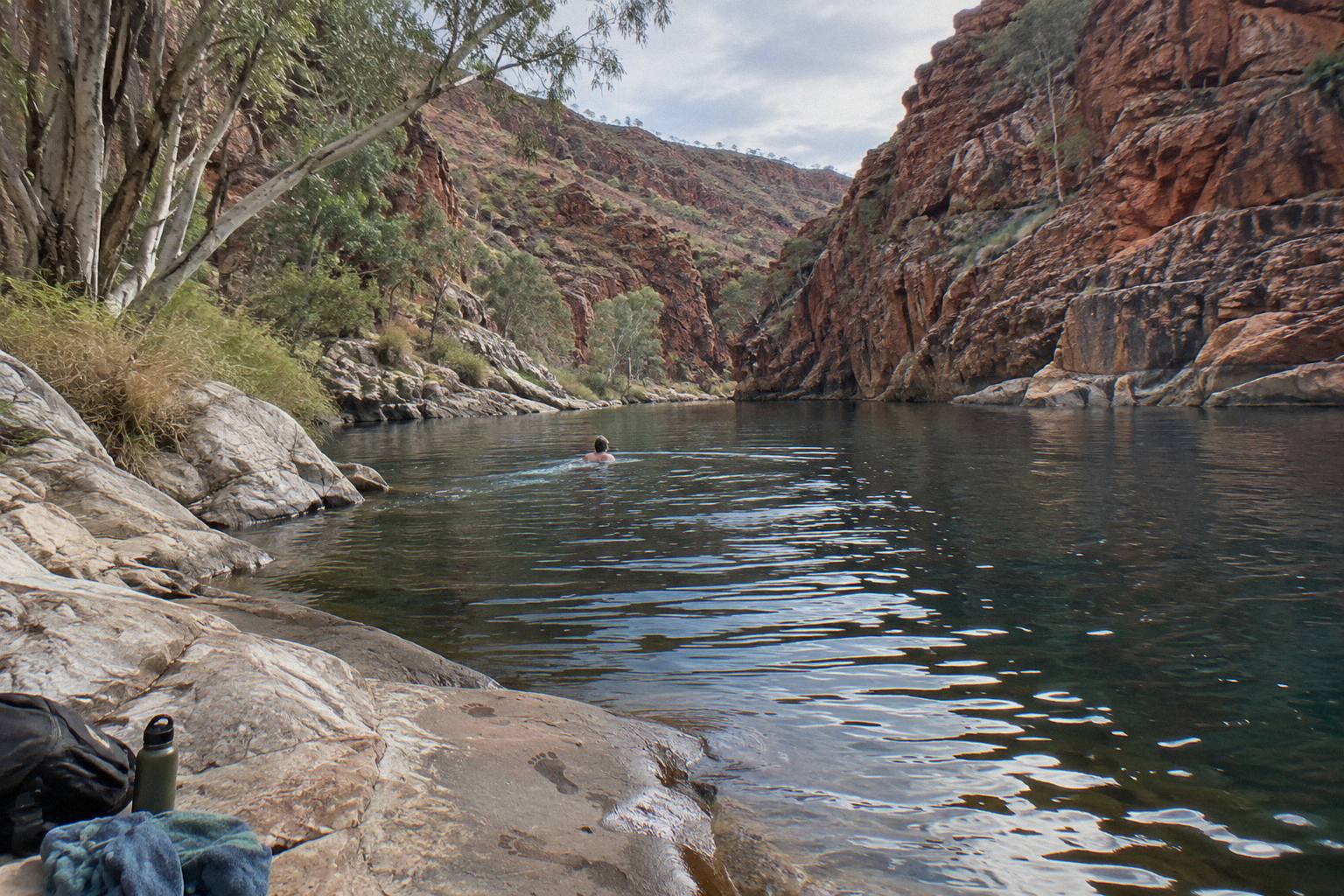
The official word is that the Ormiston waterhole is extremely cold, and the park guidance attaches a hypothermia warning to it that applies even in summer. No water temperature figure is published by the park service, and none is needed to make the point: the water stays cold year round because the pool is deep, permanent and shaded by high cliff walls for much of the day. Depth is the mechanism. A pool that holds water permanently in the desert does so because it is deep enough to resist evaporation, and deep water in a shaded gorge does not warm through. The southern end of the Ormiston waterhole reaches up to 14 m, which places most of its volume out of reach of the sun entirely. The surface layer may feel tolerable on a hot afternoon; a few metres of swimming toward the southern cliffs puts you in water that has not changed temperature since winter. This is why the hypothermia warning is not seasonal. A swimmer who stays in too long, swims far from the edge, or attempts the Pound Walk crossing without a plan can lose body heat faster than the desert air can replace it, even while the air temperature above the water is extreme.
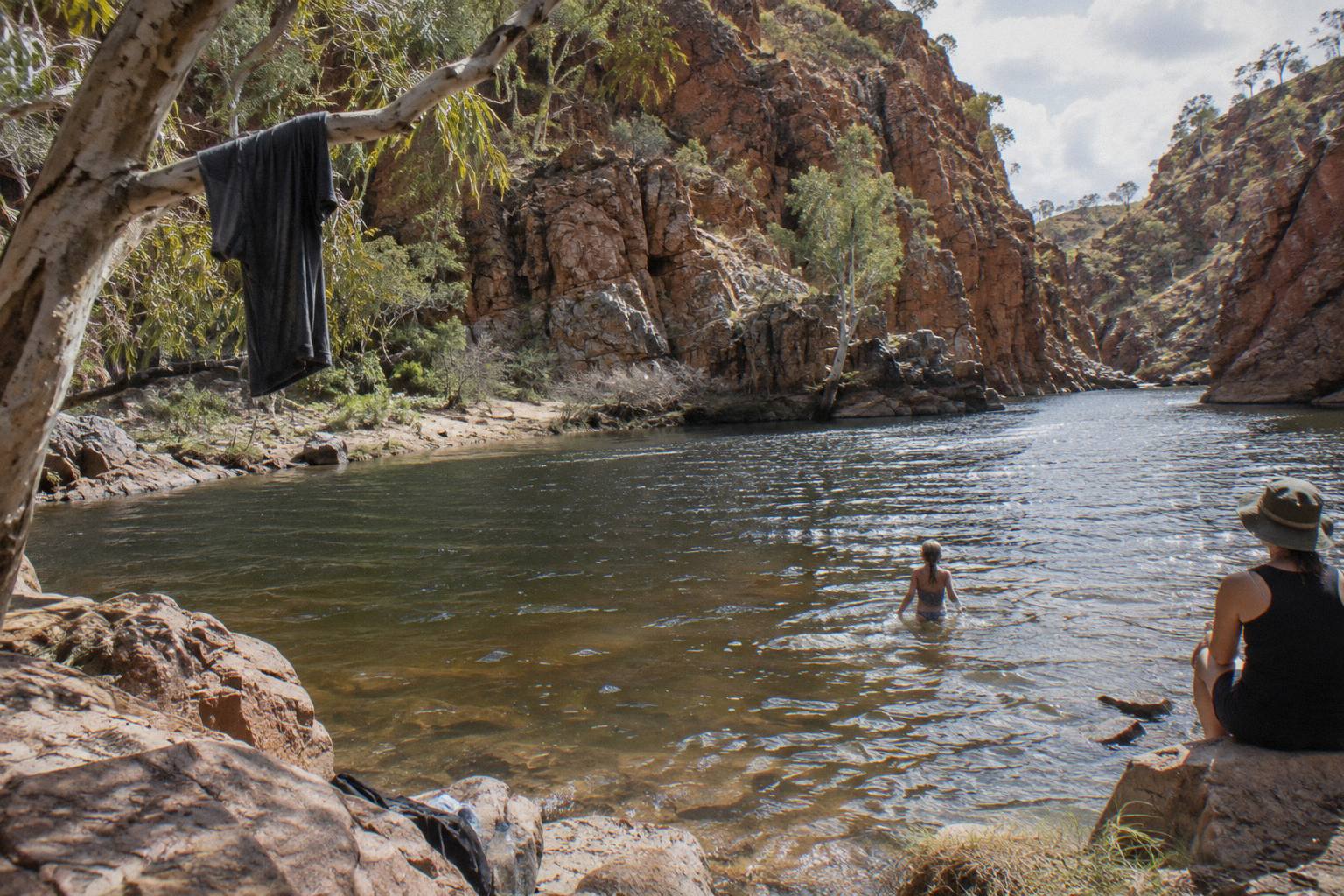
The practical advice that follows from this is simple. Keep swims short. Stay close enough to the bank or the beach area that you can exit the water quickly if you feel your coordination or breathing change. Children and weaker swimmers should stay in the shallower northern reaches where they can stand, and an adult should be watching rather than swimming out at the same time. If your hands go numb or your speech tightens, that is the cue to be out of the water, wrapped in something dry and moving around, not the cue to swim back the long way.
For readers weighing a swim against the season, the honest framing is that there is no month in which Ormiston behaves like a warm swimming hole. There are only months in which the air temperature afterward helps you recover faster. The cooler walking season from April to September makes the whole gorge more comfortable to visit, and a swim is a bracing bonus rather than the main event, which is roughly how the day tour itineraries treat it.
For more on where else a dip is possible across the ranges, see our broader guide to the swimming holes of the West MacDonnell Ranges.
Where Can You Swim In The West MacDonnell Ranges?
Swimming is allowed at Ormiston Gorge and at Ellery Creek Big Hole, possible at Redbank Gorge with real access caveats, and not permitted at all at Simpsons Gap, where the official page states plainly that swimming is not allowed. Each spot has its own depth, access and safety profile, so the choice of where to swim is really a choice about how much walking, driving and cold water you are signing up for.
The comparison below uses the official wording from the NT parks pages for each site. It is worth reading closely, because the differences between sites are larger than the distances between them suggest.
| Waterhole | Distance from Alice Springs | Swimming status | Key official notes |
|---|---|---|---|
| Ormiston Gorge | 135 km west, sealed | Permitted | Permanent waterhole, up to 14 m deep, extremely cold, hypothermia risk even in summer, no jumping or diving |
| Ellery Creek Big Hole | last 2 km unsealed | Permitted | 5 minute walk from car park, ideal for swimming, extremely cold, no jumping, diving or swinging |
| Redbank Gorge | last 5 km unsealed | Permitted with caution | High clearance 4WD only access, 1 km walk from carpark, cold water, flotation device recommended |
| Simpsons Gap | 18 km west, sealed | Not permitted | Official page states swimming not permitted; spiritual site where dreaming trails cross |
Simpsons Gap is the one that catches visitors out, because it looks like the ideal swimming hole and it is the closest gorge to Alice Springs, a 20 minute drive along Larapinta Drive. The prohibition is stated without qualification, and the site's standing as a place where several dreaming trails and stories cross is part of why the water there is treated differently. Visitors who want water at Simpsons Gap get the shade, the river red gums and the black-footed rock wallabies at dawn and dusk, not a swim.
Ellery Creek Big Hole is the practical middle option. The waterhole is a five minute walk from the car park, the park page calls it ideal for swimming, and the same extreme-cold warning and jumping and diving ban apply. Access is the trade-off: the final 2 km of road is unsealed, and the page warns it can be impassable for a short time after heavy rain. Redbank Gorge goes further again, with high-clearance 4WD the stated requirement for its final 5 km, a 1 km walk to the water and an explicit recommendation to bring a flotation device for the cold water. That is a swimming hole you plan a day around, not one you drop into.
Ormiston sits in the sweet spot for most visitors: sealed road all the way, short walk, deep permanent water and full visitor facilities including a campground with showers. That combination, more than any claim about the water itself, is why it anchors the itineraries of guided day trips.
How Deep Is The Waterhole And Why Is Jumping Banned?
The southern end of the Ormiston waterhole reaches depths of up to 14 m, and jumping and diving are banned at the pool regardless of depth. The ban exists because a deep, cold pool combines badly with impact entry: cold shock constricts breathing and blood flow on contact, and rocks and submerged ledges are invisible in the dark water close to the cliffs.
Fourteen metres is not a statistic to skim past. It is roughly the height of a four storey building turned on its end, and it means large parts of the pool have no bottom within reach of a tired swimmer. Depth of that order is also why the water stays so cold: volume below the sunlit surface never warms, and a swimmer who drops below the surface layer, deliberately or after a jump, meets water cold enough to trigger an involuntary gasp. That gasp reflex is the mechanism behind most cold-water drownings, and it does not care how strong a swimmer you are.
The entry rules are therefore absolute in the official wording. No jumping, no diving, and the same ban appears verbatim at Ellery Creek Big Hole extended to swinging. Enter the water gradually, from the bank or the beach area, and let your body adjust before you commit to swimming out. The temptation at Ormiston is specific and predictable: the cliffs look like a diving platform and the water looks warm and shallow near the northern end. Both impressions are wrong, and the signage at the site says so.
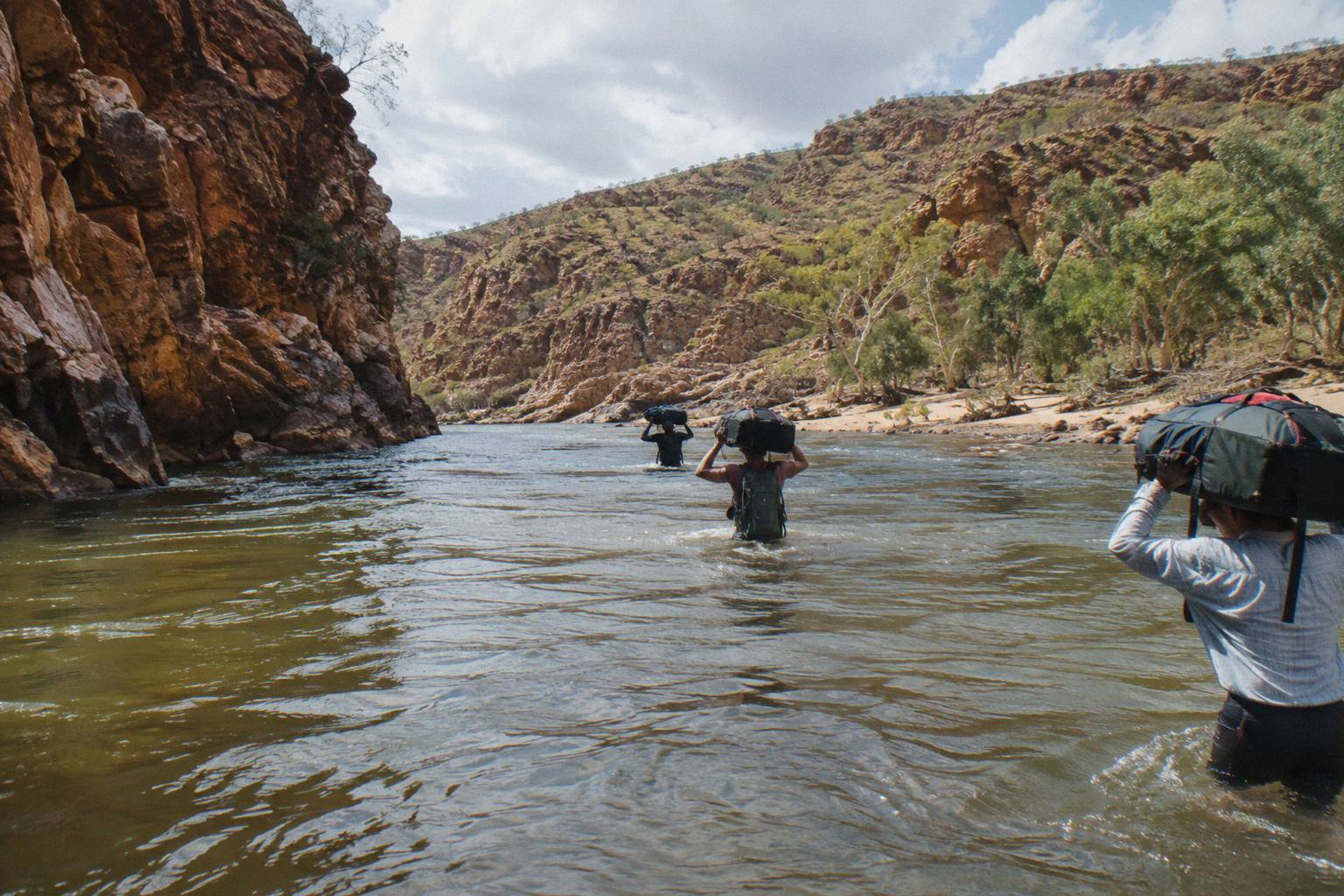
Two of the gorge's loop walks complicate this picture and are worth separating out. The Pound Walk's crossing involves a short swim through deep, cold water as part of the route, and the Ghost Gum Loop involves swimming or wading. These are undertaken walking, with packs if you are carrying them, entering the water deliberately and close to the exit point. That is a different risk profile from a leap off a rock, and the park treats it as such, while still expecting walkers to respect the cold.
| Ormiston walk | Water involvement | Notes from the official page |
|---|---|---|
| Waterhole Walk | None required, swim optional at the pool | 500 m from visitor centre, permanent waterhole, no jumping or diving |
| Ghost Gum Lookout | None | Lookout walk, no crossing required |
| Ghost Gum Loop Walk | Swimming or wading | Return via the lookout; water crossing depends on conditions |
| Ormiston Pound Walk | Short swim through deep cold water | Full loop, graded walk, crossing is part of the route |
Planning to walk rather than just swim changes what you carry. A dry bag for electronics, a towel you can reach quickly, and layers for the far side of the crossing matter more than they would on an ordinary gorge walk. Our longer Ormiston Pound Walk route guide covers the full loop in detail.
What About Flash Floods And Storms?
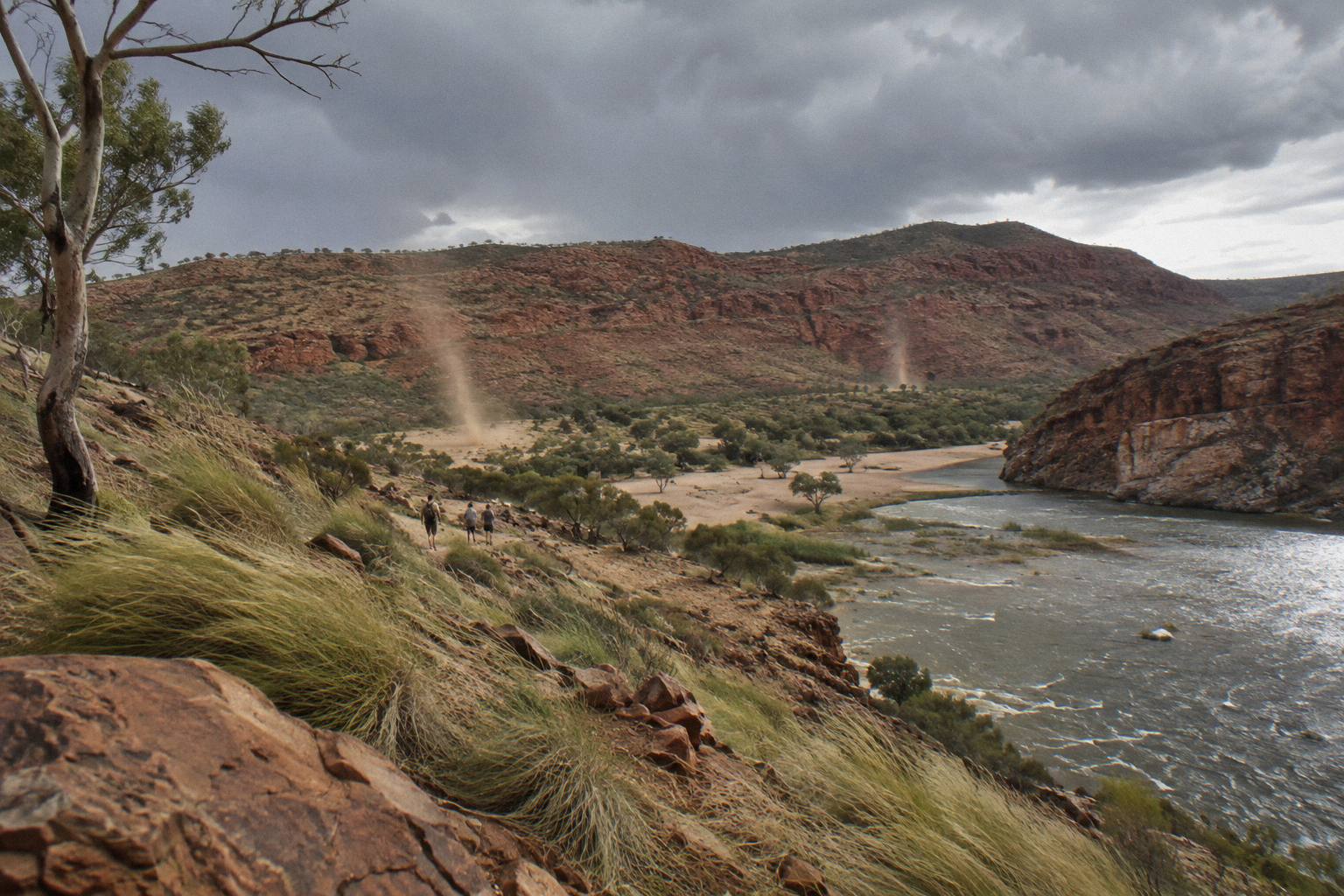
Flash floods and storms are the standing hazard across every waterhole in Tjoritja / West MacDonnell National Park, and the official swimming guidance names them directly. Gorge floors are drainage channels: rain falling many kilometres away can arrive as a wall of water in a slot canyon under a clear local sky, which is why the advice is to check conditions before you go and never to enter a gorge when storms are forecast.
The geography makes the risk concrete. Ormiston's cliffs catch and funnel an entire catchment into the gorge system, and the permanent waterhole exists precisely because water concentrates there. The same concentrating action that keeps the pool full can raise its level and its current rapidly during rain events. The Ellery Creek page adds a road-side dimension to the same weather: unsealed access roads there can be impassable for a short period after heavy rain, and Ormiston's sealed road is the exception rather than the rule in the western ranges. Rain closes access before it arrives as a flood at many sites.
The practical protocol is unglamorous. Check the Bureau of Meteorology warnings before setting out, since the park's own heat and weather guidance points to BoM heatwave warnings as the reference. If storms are forecast for the area, pick a different day for gorge walking and swimming, or choose a stop outside a gorge system. If you are already in a gorge and hear water, see debris moving or notice the level rising, move to higher ground immediately rather than pausing to collect gear. Slot sections and the waterhole's southern cliffs are the places you least want to be when that happens.
Tour groups have a built-in advantage here, and it is one of the quiet arguments for guided travel in the ranges. Driver-guides operate these roads daily, monitor conditions, and hold contingency plans; the booking terms for several operators on the roster state that route and timing changes may occur for weather, road conditions or closures, with a suitable alternative provided. An independent swimmer makes the same go or no-go call alone, with a phone map and a forecast app. Both can get it right, but the guided version carries a second set of eyes.
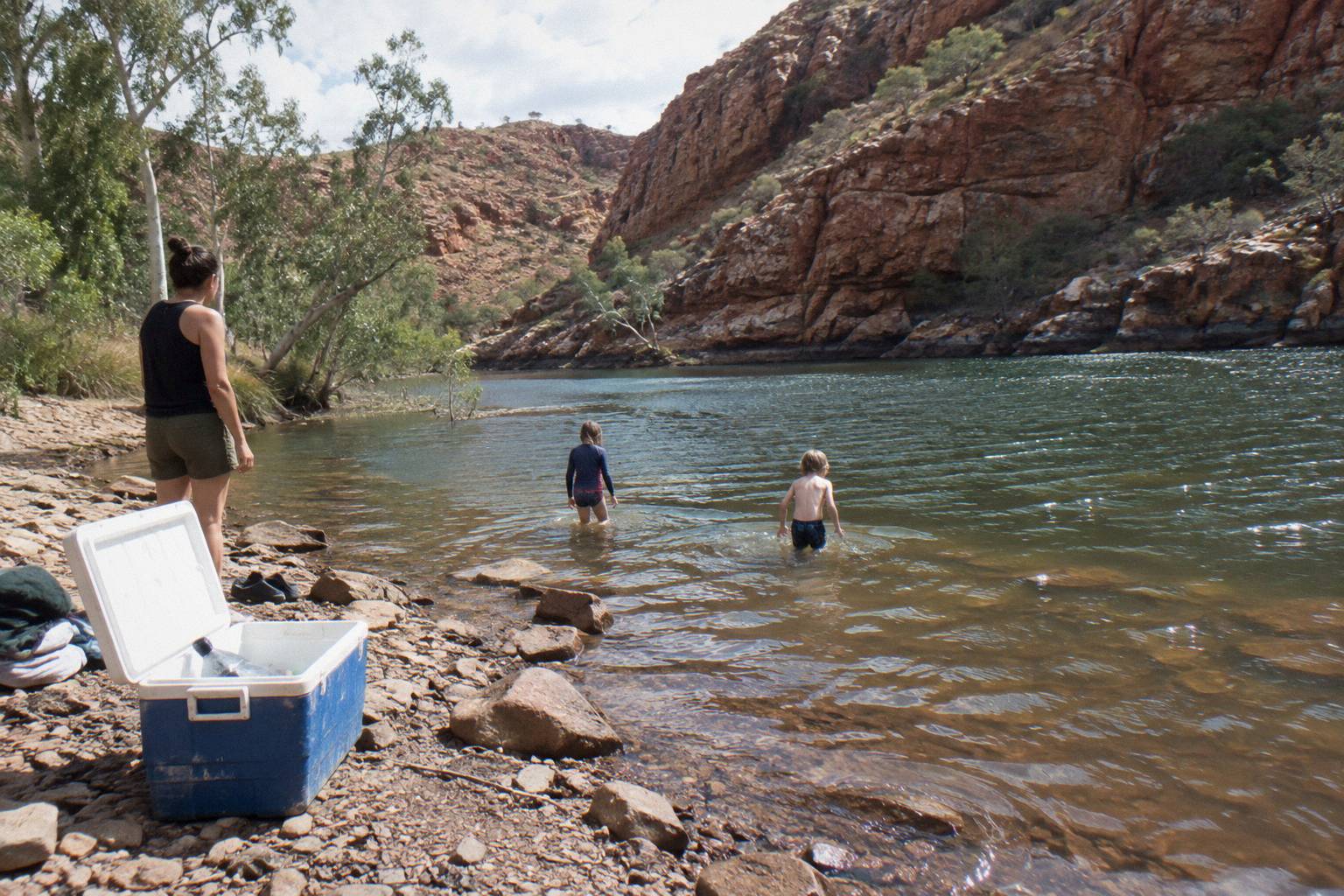
The heat side of the same coin deserves its own line. Temperatures in the park can exceed 40 °C between October and April, and the standing advice is to avoid strenuous activity in the heat of the day and to carry and drink plenty of water. The perverse result is that the months when a swim looks most appealing are the months when the middle of the day belongs in the shade, and the cold that makes the waterhole safe from evaporation makes it risky for a long swim.
Do You Need A Parks Pass To Swim At Ormiston?
Yes. A NT Parks Visitor Pass is required for Ormiston Gorge, as for the rest of Tjoritja / West MacDonnell National Park, and it must be bought online in advance through the parks booking system; there is no pass purchase at the gorge itself. An adult day pass costs AU$10, with concession, child and family rates below that, and longer passes work out cheaper for multi-stop trips.
The pass schedule rewards a little arithmetic. A two-week pass at AU$30 per adult beats four separate day passes the moment your trip includes a second park day, and for most Red Centre itineraries it will. Camping and walking fees are additional to the pass, booked separately online. NT residents are exempt and may be asked for proof. The one fee the pass does not cover anywhere is Standley Chasm, which is privately operated and charges separately.
| Pass type | Adult | Child 5-17 | Family | Concession |
|---|---|---|---|---|
| 1 day | AU$10 | AU$5 | AU$25 | AU$8 |
| 3 day | AU$20 | AU$10 | AU$50 | AU$16 |
| 2 week | AU$30 | AU$15 | AU$75 | AU$24 |
| 1 month | AU$45 | AU$22 | AU$110 | AU$36 |
| Annual | AU$60 | AU$30 | AU$150 | AU$48 |
Full pass details, including which tours bundle the pass into the fare, are in our guide to the NT Parks pass and fees for West Macs tours, and the official pass page is at nt.gov.au/parks/visitor-pass.
The pass question matters at tour-booking time more than most travellers realise, because the roster splits evenly on it. Some operators include the pass in the fare, others list it as an excluded item you buy yourself online the night before. Two tours of similar sticker price can differ by AU$10 per adult per day once the pass is counted, and a family of four on a two-week trip can be looking at AU$75 in passes that one operator has already folded in.
Which Day Tours Actually Reach Ormiston Gorge?
The full-day West Macs itineraries from Alice Springs are the ones that reach Ormiston Gorge, since a half-day trip physically cannot cover 135 km each way plus the gorge stops in between. Day tour fares run from AU$163 to AU$289 per person depending on operator, group size and inclusions, and every trip on the roster includes hotel pick-up in Alice Springs.
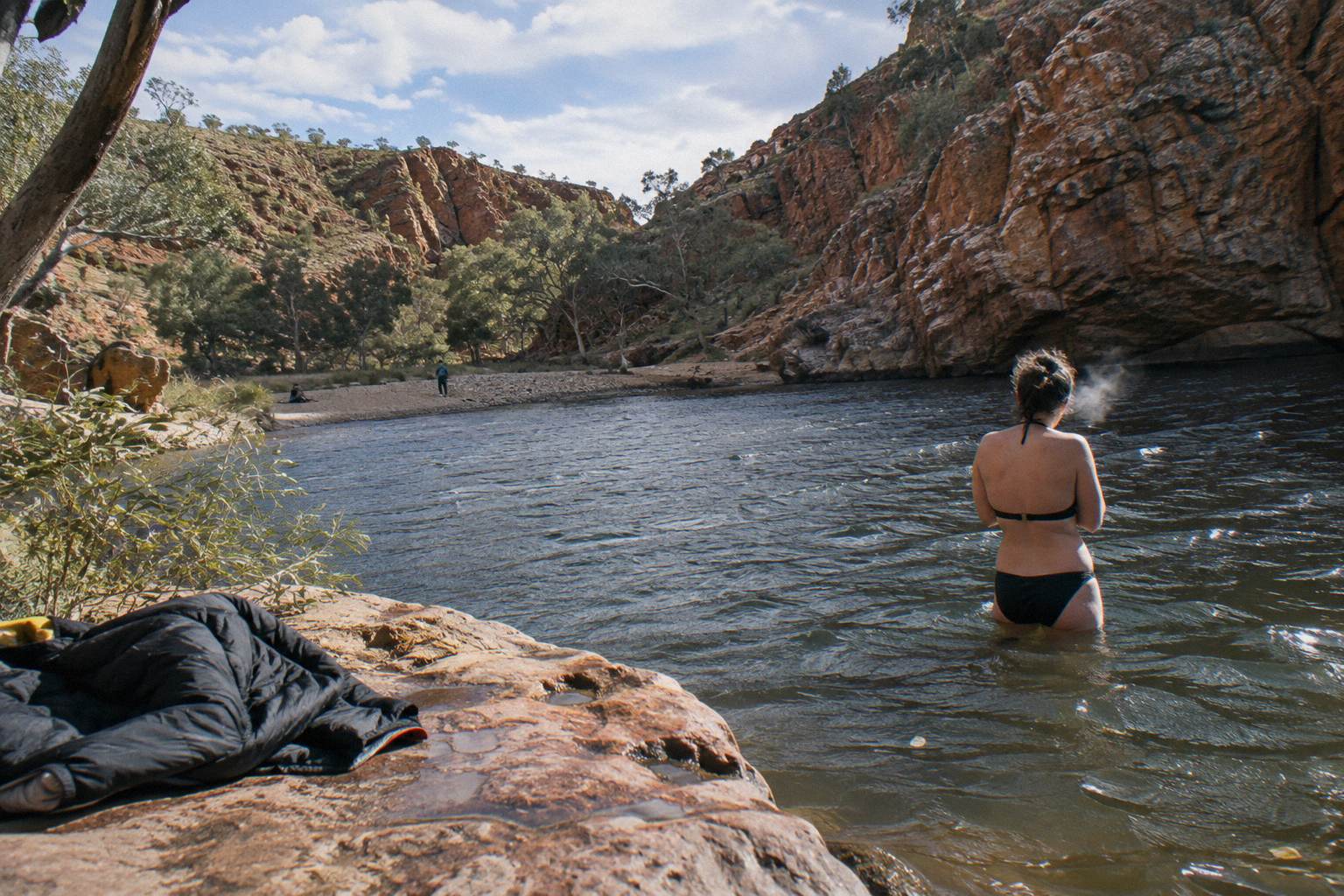
No operator promises a swim stop in writing, and this guide does not either. What the itineraries offer is time at the gorge, typically in the middle of the day or early afternoon, and what you do with that time depends on the schedule, the season and your own tolerance for cold water. On a hot afternoon the waterhole beach is the most crowded place in the park; on a winter morning most of the tour group stays dry and walks the lookout tracks instead.
| Tour | Duration | From (per person) | Rating | Parks pass |
|---|---|---|---|---|
| Day Tour, Lunch Included (Wildlife Tours Australia) | 10.5 hours | AU$163 | No rating yet | Extra, buy online |
| 9-Hour Coach Day Trip (Emu Run Experience) | 9 hours | AU$249 | 4.7 from 336 reviews | Extra, buy online |
| Full Day, Small Group Only (Alice Holiday Tours) | 10 hours | AU$279 | 4.6 from 16 reviews | Included |
| West And East Ranges Combo (Alice Holiday Tours) | 10.5 hours | AU$289 | No rating yet | Included |
The "Day Tour, Lunch Included" run by Wildlife Tours Australia is the value end of that table, at AU$163 from Alice Springs with lunch, snacks, Standley Chasm entry and guided bush walks of roughly 3 to 4 km on the itinerary, subject to fitness. As with any shared-coach format, the day runs to a schedule, so swim time at any stop is what the schedule allows rather than open-ended.
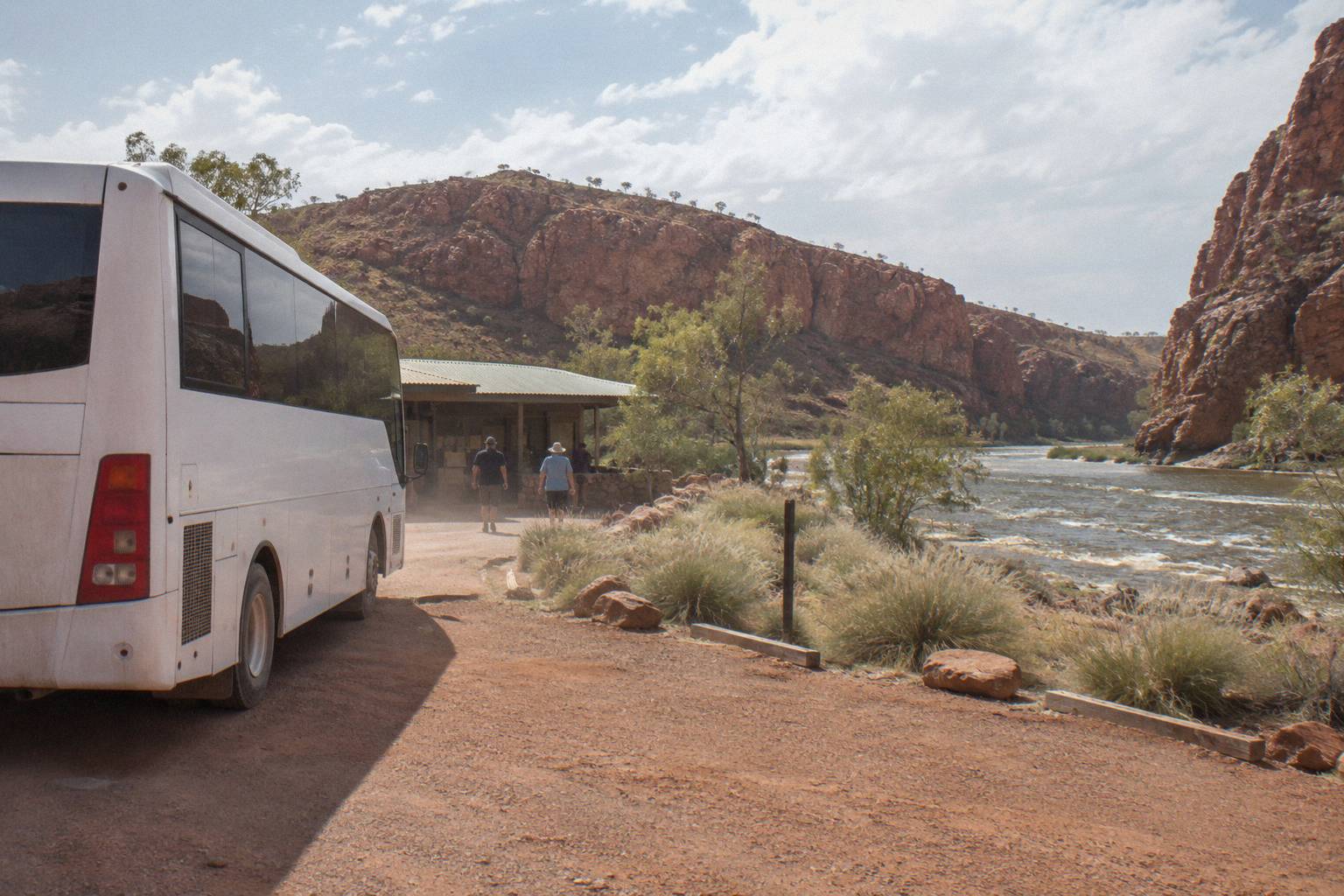
At the small-group end, the "Full Day, Small Group Only" trip from Alice Holiday Tours costs from AU$279 and includes both the NT Parks Visitor Pass and Standley Chasm entry in the fare, with picnic lunch and hotel pick-up within 10 km of the town centre. A smaller vehicle means fewer people queueing for the waterhole beach whenever the schedule allows a stop, and the pass inclusion removes the buy-it-the-night-before chore.
The "West And East Ranges Combo" pushes the same small-group format across both sides of Alice Springs in one 10.5 hour day, from AU$289 with the parks pass, Standley Chasm and several Alice Springs attractions included. It is the pick for travellers with only one tour day who want east and west ranges in a single itinerary, at the cost of a longer, fuller day than a west-only trip.
For travellers deciding between formats at all, our small group versus coach comparison for West Macs tours works through the trade-offs, and West MacDonnell Ranges Tours covers the full roster of day and multi-day options.
What Should You Bring For A Swim Stop?
Bring a towel, something dry to pull on immediately, reef shoes or sandals that grip wet rock, and a dry bag for anything electronic. Sun protection and a minimum of water per person belong in the bag regardless of season, because the official guidance for the park is to carry and drink plenty of water and avoid strenuous activity in the heat of the day.
The towel-and-layers advice is not padding; it follows directly from the cold-water picture above. The moment you leave a pool that carries a hypothermia warning, you want insulation between you and the desert air, even in the warmer months. A windproof layer beats a wet cotton t-shirt by a wide margin. Footwear matters on the walk in and out, since the track to the waterhole and the loop walks cross smooth rock that is slick when wet.
The dry bag earns its place on the loop walks specifically. The Pound Walk crossing puts packs and pockets in the water with you, and phones do not forgive. A swim in a permanent waterhole also means sunscreen needs reapplying afterward, so pack it where you can reach it rather than at the bottom of the day pack. Our fuller packing rundown is in what to bring on a West Macs day tour.
One timing note belongs here rather than anywhere else. The gorge's facilities include a campground with gas barbecues, toilets and showers, bookable online, and the ranger station is on site. If a swim and a proper recovery afterward are the priority, a night at the campground buys unlimited waterhole time in the early morning and evening light when the tour crowds are absent, and our Ormiston Gorge camping guide covers booking and site details.
Is Swimming At Ormiston Safe For Kids And Weak Swimmers?
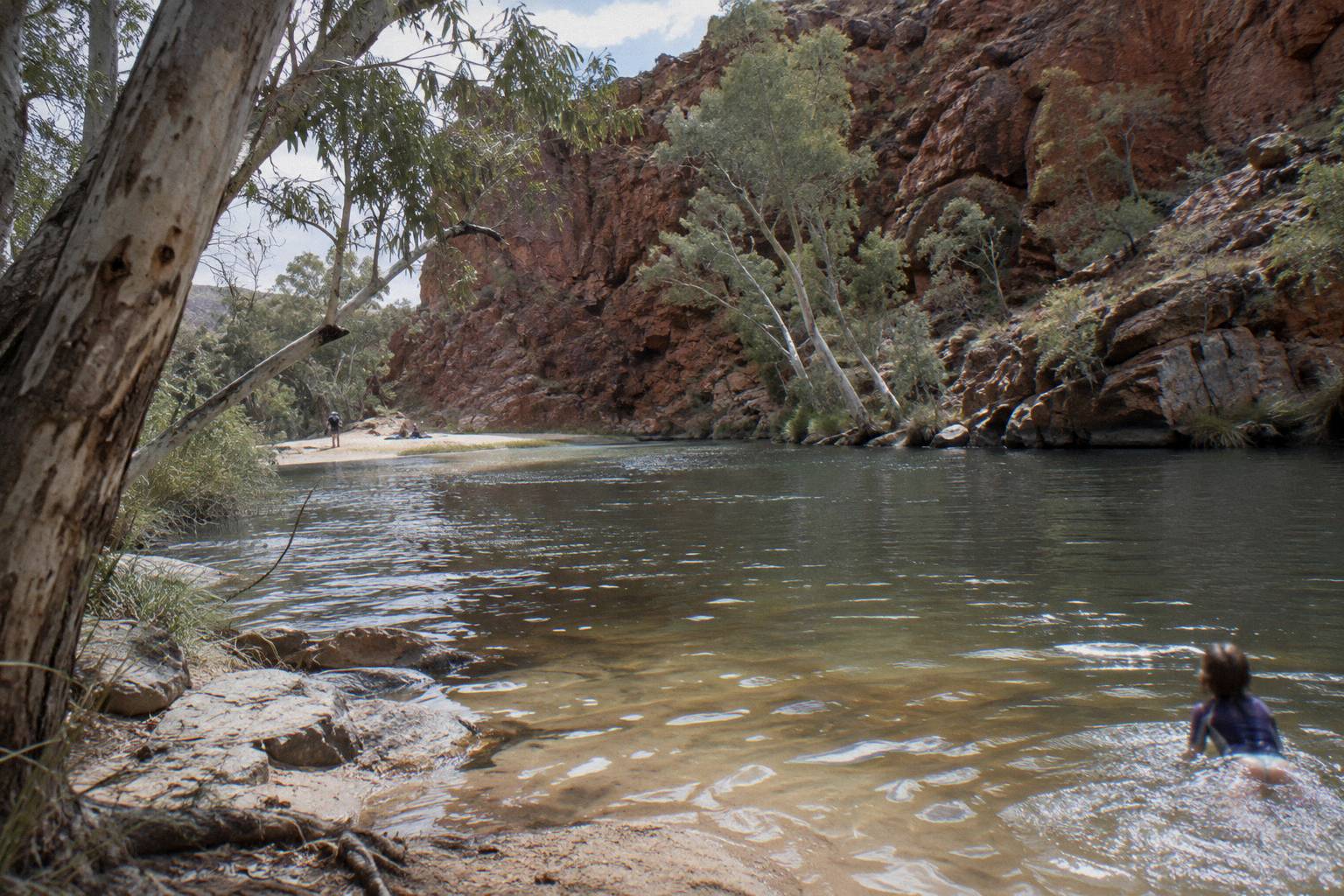
Managed carefully, yes: the waterhole's northern end has shallower water where children can stand, and the pool's permanence means no current in normal conditions. The caveats are the cold, which drains children's body heat faster than adults', and the depth toward the southern cliffs, which makes an adult watching from the bank, not swimming alongside, the right supervision pattern.
Cold water affects small bodies faster. A child who is shivering, going quiet or suddenly clumsy in the water is showing the early signs of heat loss, and the response is to be out of the water and warm, immediately. The shallow northern reaches near the entry point are the sensible zone for younger swimmers: waist-deep water, a standable bottom and a short trip back to the towel. The southern half of the pool, where depth builds toward 14 m, is strong-swimmer territory only, and the no-jumping rule matters most exactly where children are most tempted to try it.
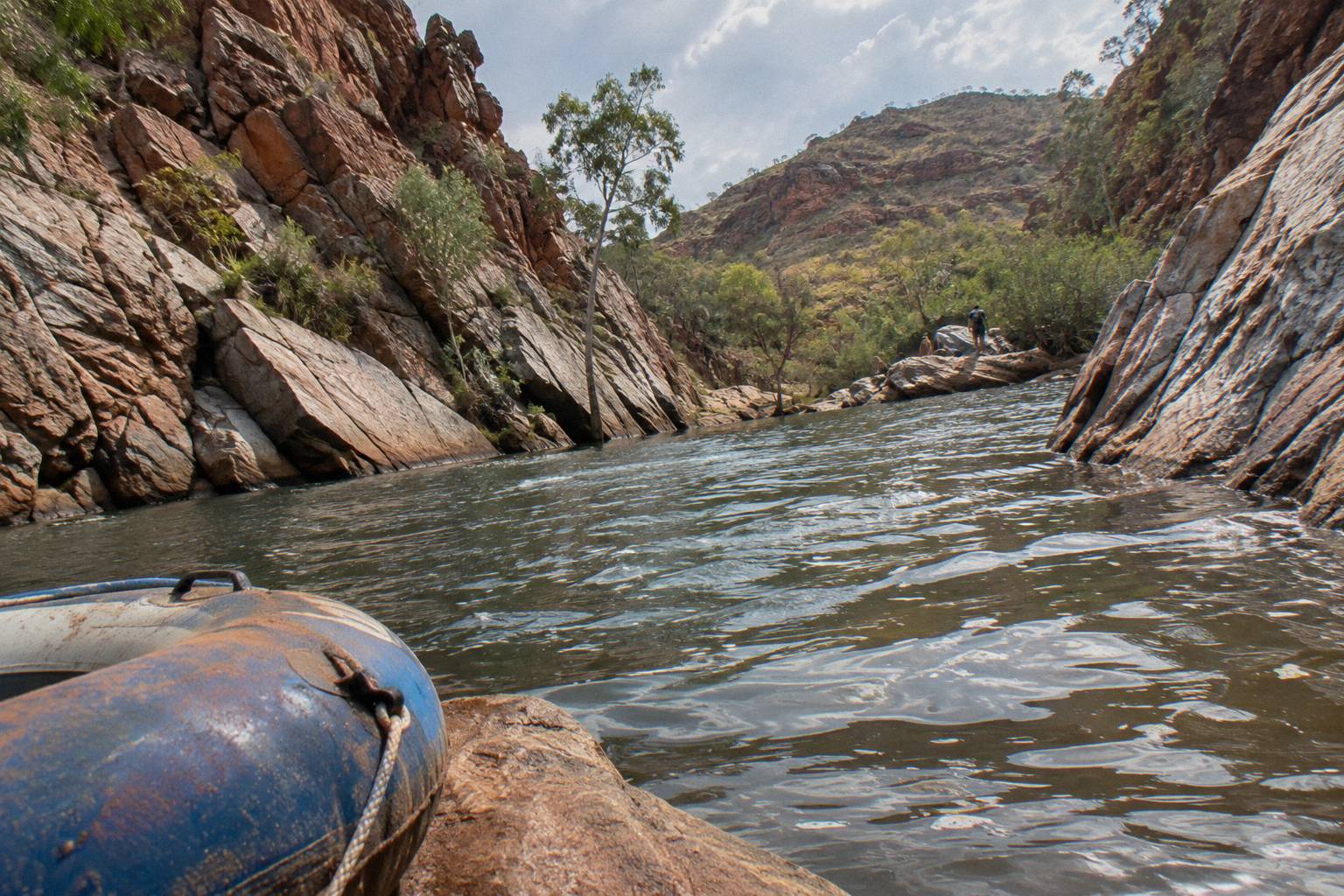
Flotation aids are a reasonable addition for kids and for any adult swimmer who wants a margin, and the Redbank Gorge guidance recommending a flotation device shows the park service's own comfort with that approach for cold, deep waterholes. At Ormiston nothing prohibits a pool noodle or a kickboard, and both travel flat in a tour day pack. What is prohibited, everywhere in the park, is treating the waterhole as anything other than a cold, deep, natural pool: no jumping, no diving, no swinging at the sites that ban it.
For families weighing whole itineraries rather than one swim, the ages listed on tour booking pages vary more than prices do. Several roster tours set a minimum child age of 6 or 7, the Emu Run day trips welcome children aged 2 and over, and the West And East Combo excludes under 5s. Checking the age line against your own crew before booking saves an awkward surprise at pick-up, and our page on West MacDonnell Ranges tours with kids works through the family options.
What Do Reviews And Closures Say About The Experience?
Visitors consistently describe the Ormiston waterhole as the swim highlight of the West Macs when conditions allow, and the site's few recurring gripes are seasonal: the kiosk closes outside peak season, some walks need swim crossings that cold weather makes unappealing, and the pool is at its coldest exactly when the walking is at its best.
The closure pattern is worth knowing before you build a day around a specific facility. The Ormiston kiosk operates seasonally and closes for the off-season, and individual walks can close for storm damage, as happened to the Ghost Gum Walk at Simpsons Gap. Alice Holiday Tours' own terms address the general case: if attractions close for circumstances beyond the operator's control, a suitable alternative is provided. That is the honest deal every West Macs tour makes, and it is the reason no itinerary, guided or independent, should promise a specific swim at a specific hour.
The seasonal tension is the deeper pattern. April to September is the recommended walking season and the season when most tours run comfortably, and it is also when the waterhole is at its coldest and a swim becomes a dare rather than a relief. October to April inverts the picture: the water still carries a hypothermia warning, the air temperature can exceed 40 °C, and the middle of the day belongs in the shade. There is no window where both the walk and the swim are ideal, only windows with different trade-offs, and visitors who understand that plan better days.
Against all that, the pool's permanence is its real recommendation. In a landscape where most waterholes come and go with the seasons, Ormiston holds water year round, deep and cold and reliable, half a kilometre from a sealed road and a campground with showers. That combination is rare enough anywhere in arid Australia, and it is why the gorge keeps its place on every serious West Macs itinerary, whatever the season.
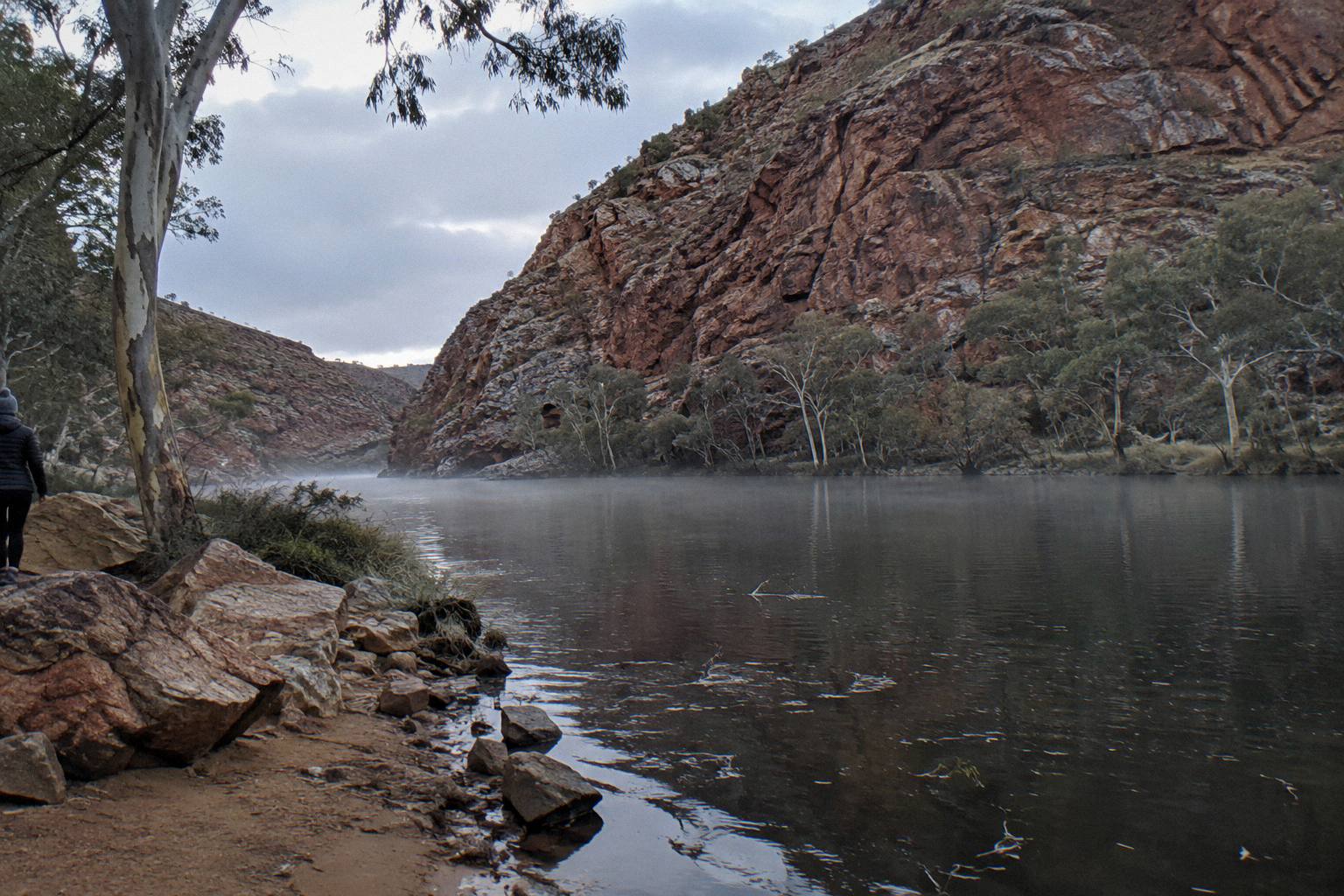
Whatever the season and whichever vehicle you choose, the decision framework is the same. Check the forecast, buy the pass online the night before, pack for cold water rather than warm, and treat a swim at Ormiston as the bonus it is on a day built around the walking, the geology and the scale of the ranges. The three day trips below all reach the gorge country from Alice Springs with hotel pick-up included.
Common Questions About Swimming At Ormiston Gorge
Can You Swim At Ormiston Gorge?
Yes, swimming is permitted at the permanent waterhole, 500 m from the visitor centre. The water is extremely cold, the southern end reaches up to 14 m deep, and jumping and diving are banned. The park guidance warns of hypothermia risk even in summer, so keep swims short and stay close to the edge.
How Deep Is The Ormiston Gorge Waterhole?
Up to 14 m deep at the southern end, per the official park page. The northern reaches are shallower, which is where families and weaker swimmers should stay. Depth is a major reason the water stays so cold year round.
Is The Water At Ormiston Gorge Cold?
Extremely cold, in the park service's own wording, with a hypothermia warning that applies even in summer. No water temperature figure is published. Enter gradually, swim within your ability, and get out and warm up if you start shivering or losing coordination.
Why Is Jumping And Diving Banned At Ormiston Gorge?
Cold water triggers an involuntary gasp reflex on impact, and submerged rocks and ledges near the cliffs are invisible in the dark water. The same ban appears at Ellery Creek Big Hole, extended to rope swinging. Enter the water from the bank or beach area instead.
Can You Swim At Simpsons Gap Instead?
No. The official Simpsons Gap page states swimming is not permitted. Simpsons Gap is 18 km from Alice Springs and is a significant spiritual site where several dreaming trails cross; visit for the gorge, the walks and the rock wallabies at dawn and dusk, not for a swim.
Do You Need A Parks Pass To Visit Ormiston Gorge?
Yes, a NT Parks Visitor Pass is required and must be bought online in advance through the parks booking system; it cannot be purchased at the gorge. An adult day pass is AU$10, or AU$30 for two weeks. NT residents are exempt and may be asked for proof.