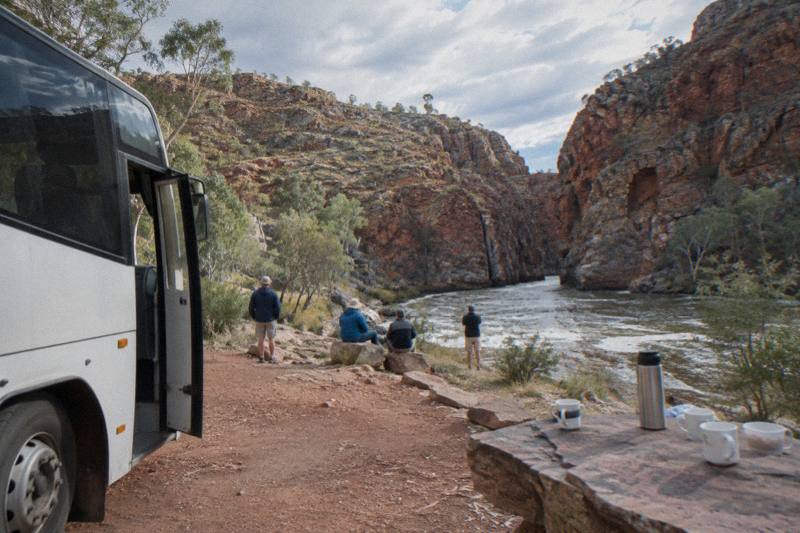
Best Time Of Year To Book A West MacDonnell Ranges Gorge Tour
Season decides almost everything about a gorge tour out of Alice Springs: how hot the walk is, whether the waterhole is a relief or a risk, and whether the coach can reach the far gorges at all.
Short answer
The best time to visit the West MacDonnell Ranges is April to September, when the official trail guidance marks the cooler months for walking and temperatures stay below the 40 °C peaks possible from October to April. May to August offers the most comfortable conditions for swimming, walking and full-day tours. Tours run year round, with free cancellation up to 24 hours before on most day trips.
Tjoritja / West MacDonnell National Park stretches about 161 km west of Alice Springs, and the same tour can feel like two different trips depending on the month you take it. In July the waterholes at Ormiston Gorge are bracing but safe, the walks are pleasant by mid-morning, and a 10-hour day passes comfortably. In January the same route can push past 40 °C, some walks become morning-only affairs, and the sealed drive to Ormiston is simple while the last unsealed kilometres further along can be closed by rain.
This guide lays out what each part of the year actually means for a gorge tour: what the official guidance says about heat and trail season, how the swimming stops change, why wet-season rain can briefly close access roads, and which of the tours on this site fit which season. The short version is that the cooler months win for almost everything, but there are good reasons to travel in the shoulder months too.
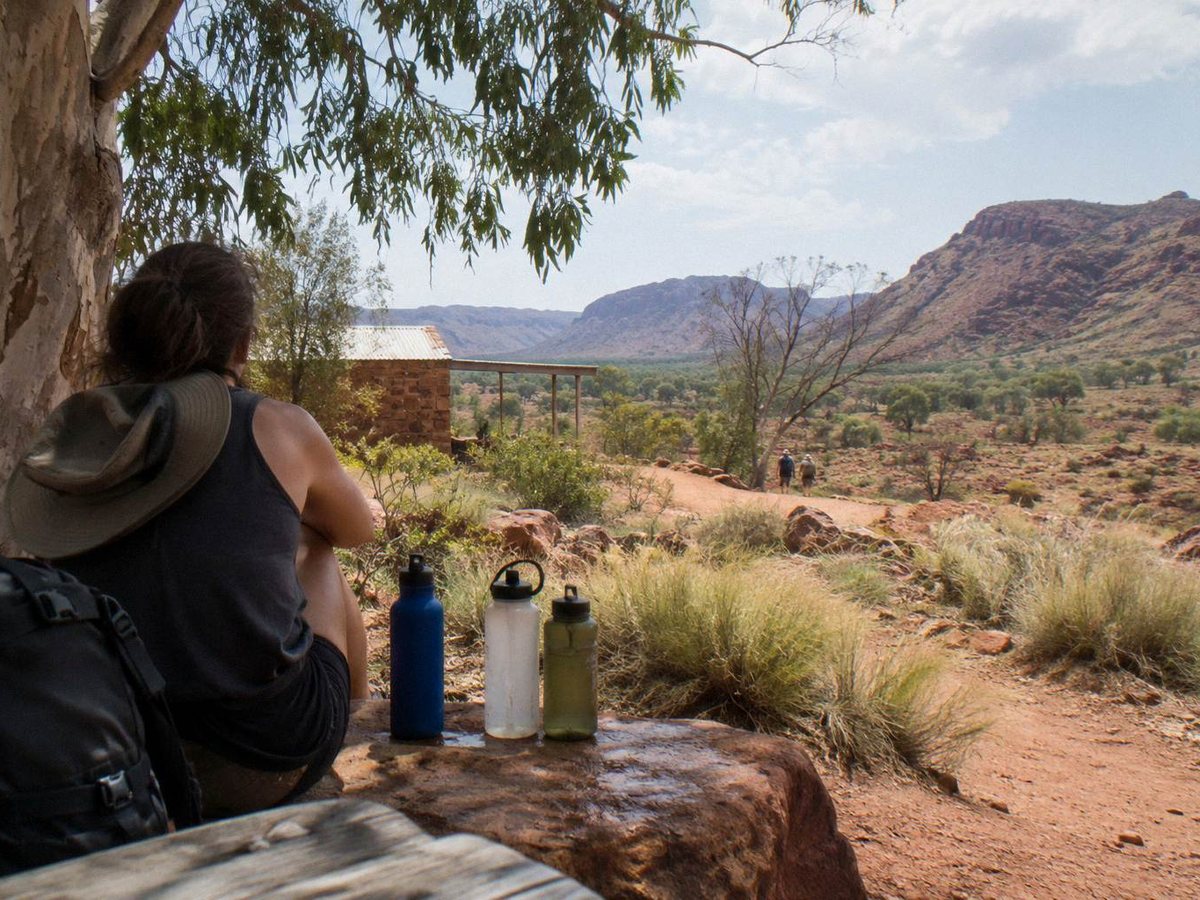
When Is The Best Time Of Year To Visit The West MacDonnell Ranges?
The best months are April through September. That is the window the official Larapinta Trail guidance names as the cooler months for walking, and it applies just as well to gorge day tours. Daytime conditions suit the 3-4 km guided bush walks most tours include, waterholes are cold but swimmable, and roads are generally dry. October to March brings heat that can exceed 40 °C and brief rain closures.
Outside that core window, nothing shuts down. Coach and small-group tours run year round from Alice Springs, and operators adjust timing and walks to the conditions. What changes is the character of the day. A summer tour leans on early starts, shorter walks and the cold relief of a waterhole, while a winter tour can stack Simpsons Gap, Standley Chasm and Ormiston Gorge into one comfortable loop with time at each.
The trade-off for the mild winter is popularity. If your dates fall in the June-July school-holiday peak, book well ahead, especially for the small-group options, which cap numbers by design. The shoulder months of April, May and September give you most of the comfort with noticeably more room on the walking tracks and at the gorge car parks.
One point that surprises first-time visitors: winter nights in Central Australia are genuinely cold. A day that finishes pleasantly at 20-odd degrees can drop close to freezing overnight, which matters if you are camping rather than day touring. For day trippers the practical version is simply layers: warm morning, warm evening, light clothing in between.
How The Alice Springs Climate Shapes A Gorge Tour
Alice Springs sits at the edge of the ranges, and its climate sets the rules for every tour that leaves town. Official wording warns that temperatures can exceed 40 °C between October and April, and the park service advises walking only in the morning and late afternoon in hot weather. Heat, not rain, is the main planning problem for most of the year.
The numbers behind that guidance come from long-run readings at Alice Springs Airport. Summer months push daytime highs well into the thirties as a normal, with the 40 °C mark in reach from October right through to April. Winter days sit far lower, mild by day and cold by night. Rain is the smaller input: the Centre gets modest totals on average, but when heavy rain does fall, it can close unsealed access roads for a short time and make some waterholes unsafe.
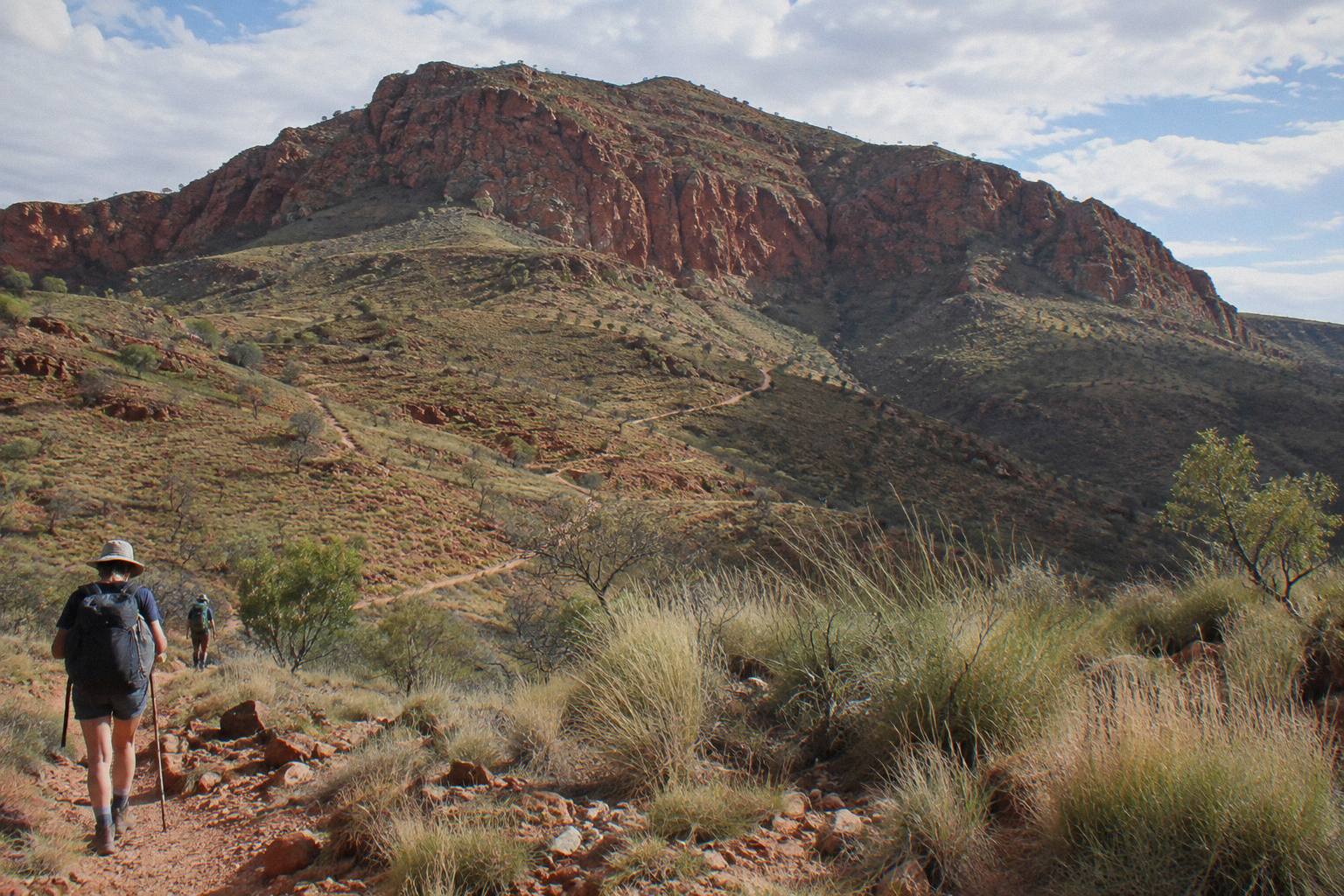
For a tour, that climate translates into three practical effects. Walk lengths matter more in summer: the "Day Tour, Lunch Included" itinerary lists guided bush walks of 3-4 km subject to fitness, and in the hottest months guides use that flexibility to shorten them. Timing matters too, with pickups often earlier in hot months so the walking happens before the peak of the day. And swimming stops change role entirely: in winter the waterholes are a scenic centrepiece, in summer they are the reason the day works at all.
The park's own safety advice is worth reading before any hot-month trip: carry and drink plenty of water, wear a hat, avoid strenuous activity in the heat of the day, and note where emergency call devices are located. The official swimming guidance adds that most waterholes are extremely cold and should only be used where swimming is allowed.
If you are still deciding between a long day and a shorter one, the season should weigh on that choice, which is covered in our full day versus half day West Macs comparison.
The official heat and rain markers, rather than printed temperature values, are what a planner actually needs, and they are set out below.
| Climate marker (official wording) | Applies to | What it means for planning |
|---|---|---|
| Temperatures can exceed 40 °C | October to April | Book morning-shaped tours, expect shortened walks |
| Walk only morning and late afternoon in hot weather | Hot conditions, all year walkers | Early pickups and post-lunch vehicle time in summer |
| Cooler months, best walked April to September | Larapinta Trail season | Core booking window for treks and long day tours |
| Roads can be impassable for a short period after heavy rain | Unsealed approach roads | Rain risk mainly to Ellery Creek and Redbank access |
| Sealed access via Larapinta Drive and Namatjira Drive | Main routes, year round | Coach itineraries keep running in almost all weather |
What Each Month Means For A Gorge Tour
Each month lands somewhere on a simple spectrum: heat risk, swimming appeal, walking comfort and road reliability. From October to April heat above 40 °C is possible and walks shift to the coolest hours. April to September is the official cool walking season, with June and July the safest bet for a first-time visitor who wants everything on the itinerary.
The table below reads the official guidance month by month. Rather than a dry numbers chart, it tells you what each month means for the decisions you actually make: how long a walk you will want, whether the waterhole is a swim or a view, and whether rain is a realistic risk to your access roads.
| Month | Heat and walking | Swimming | Notes for tour planning |
|---|---|---|---|
| January | Hot, morning walks only | Yes, a genuine relief | Heavy rain possible; unsealed sections can close briefly |
| February | Hot, morning walks only | Yes | Highest rain risk of the shoulder; check road status |
| March | Hot easing late in the month | Yes | Shoulder month, fewer crowds, heat still a factor |
| April | Official cool season begins | Yes | Larapinta walking season opens; strong all-round month |
| May | Comfortable walking all day | Yes, cold water | One of the best months for a full-day tour |
| June | Mild days, cold nights | Scenic more than a swim | Peak season, book small-group tours early |
| July | Mild days, coldest nights | Scenic | Peak season, school holidays in parts of Australia |
| August | Mild, warming late in the month | Yes | Still fully in the walking season |
| September | Warm, late-month heat building | Yes, at its most inviting | Shoulder sweet spot, smaller crowds |
| October | Heat above 40 °C becomes possible | Yes, essential | Tours run; expect shortened walks |
| November | Hot, early starts | Yes | Fewer crowds, real heat to plan around |
| December | Hot, morning walks only | Yes | Rain risk returns; quietest month at the gorges |
Two things follow from that pattern. First, the cheapest months to travel are rarely the most comfortable ones, so a bargain fare in January buys you a day built around avoiding heat rather than enjoying the walks. Second, the shoulder months of April, May and September deliver most of the comfort at lower demand, and if your tour includes an included NT Parks Visitor Pass, that fee is the same year round. The pass details are covered in our NT Parks pass and fees explained guide.
Can You Tour The West MacDonnell Ranges In Summer?
Yes, tours run all summer, but the day is shaped around heat. Official guidance warns temperatures can exceed 40 °C between October and April and advises walking only in the morning and late afternoon in hot conditions. Expect earlier pickups, shortened bush walks, longer stops at waterholes where swimming is allowed, and a guide watching the forecast closely.
Summer touring works best with the right tour shape. A half-day morning option is the natural fit: the "Half-Day Gorges, Emu Run" trip runs 5 hours from AU$135 per person and gets you back to town before the worst of the afternoon. Its longer sibling, the "9-Hour Coach Day Trip" from AU$249, covers far more ground, with a rating of 4.7 from 336 reviews, and its summer departures lean on the vehicle's air-conditioning between stops.
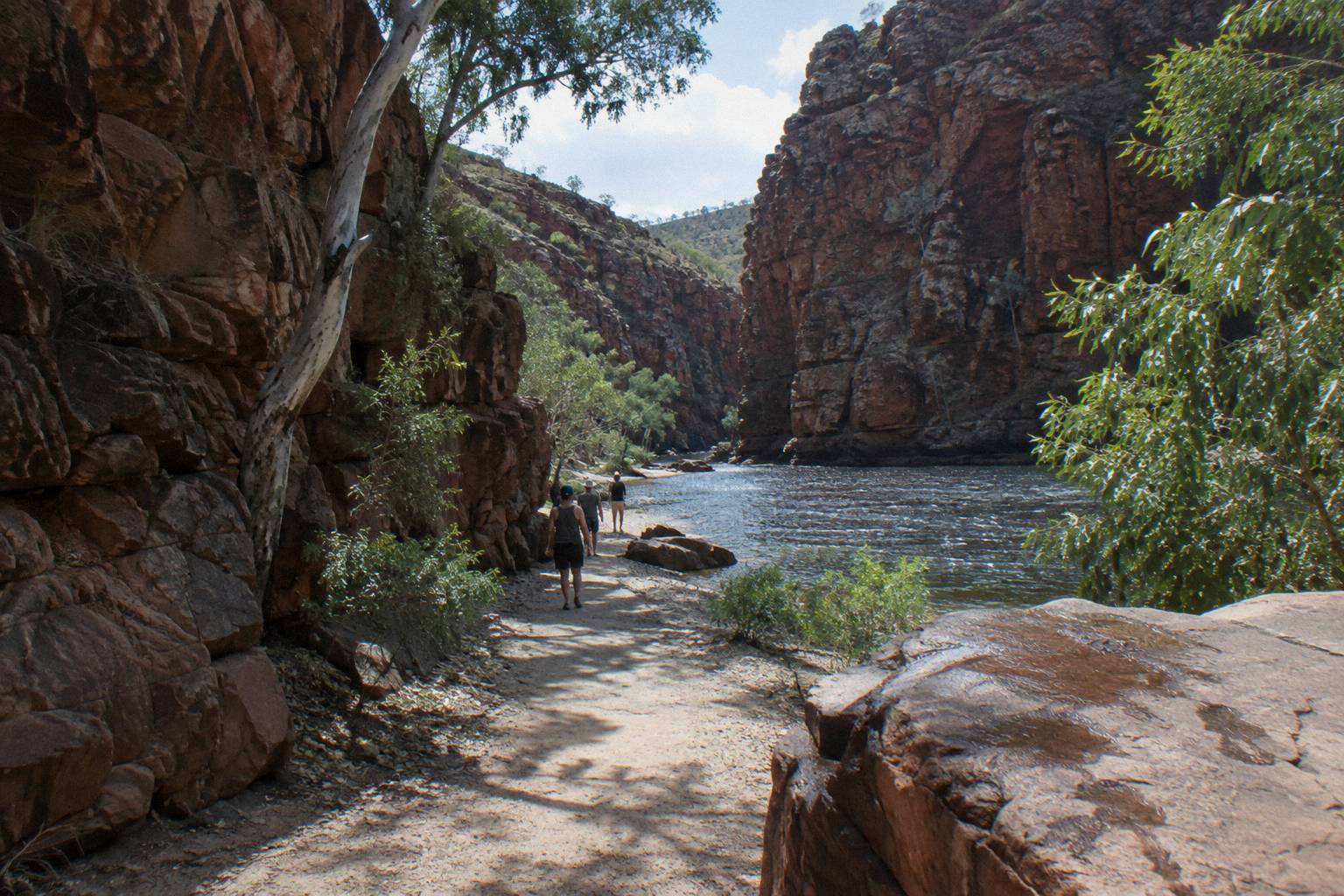
What you give up in summer is walking distance. The inclusions on several day tours describe guided bush walks of roughly 3-4 km subject to fitness level, and in the hot months that flexibility gets used. What you gain is the waterholes at their best: a swim at Ellery Creek Big Hole or Ormiston in November is the whole point of the day, and the water is cold even in the height of summer. The official guidance on swimming in the park notes most waterholes are extremely cold and that swimming is only permitted in some places, so follow your guide on where a dip is allowed.
Heatwave warnings are issued by the Bureau of Meteorology, and the park service points visitors to them before hot-weather trips. If a severe heatwave lands on your chosen date, the 24-hour free cancellation window on most day tours gives you an out: rebook a day or two later rather than walking a gorge in extreme conditions. Longer trips work differently, with the "4-Day Uluru Red Centre 4WD" requiring 14 days' notice and the "6-Day Astronomy Camping Trip" 7 days.
Swimming Season: When The Waterholes Are At Their Best
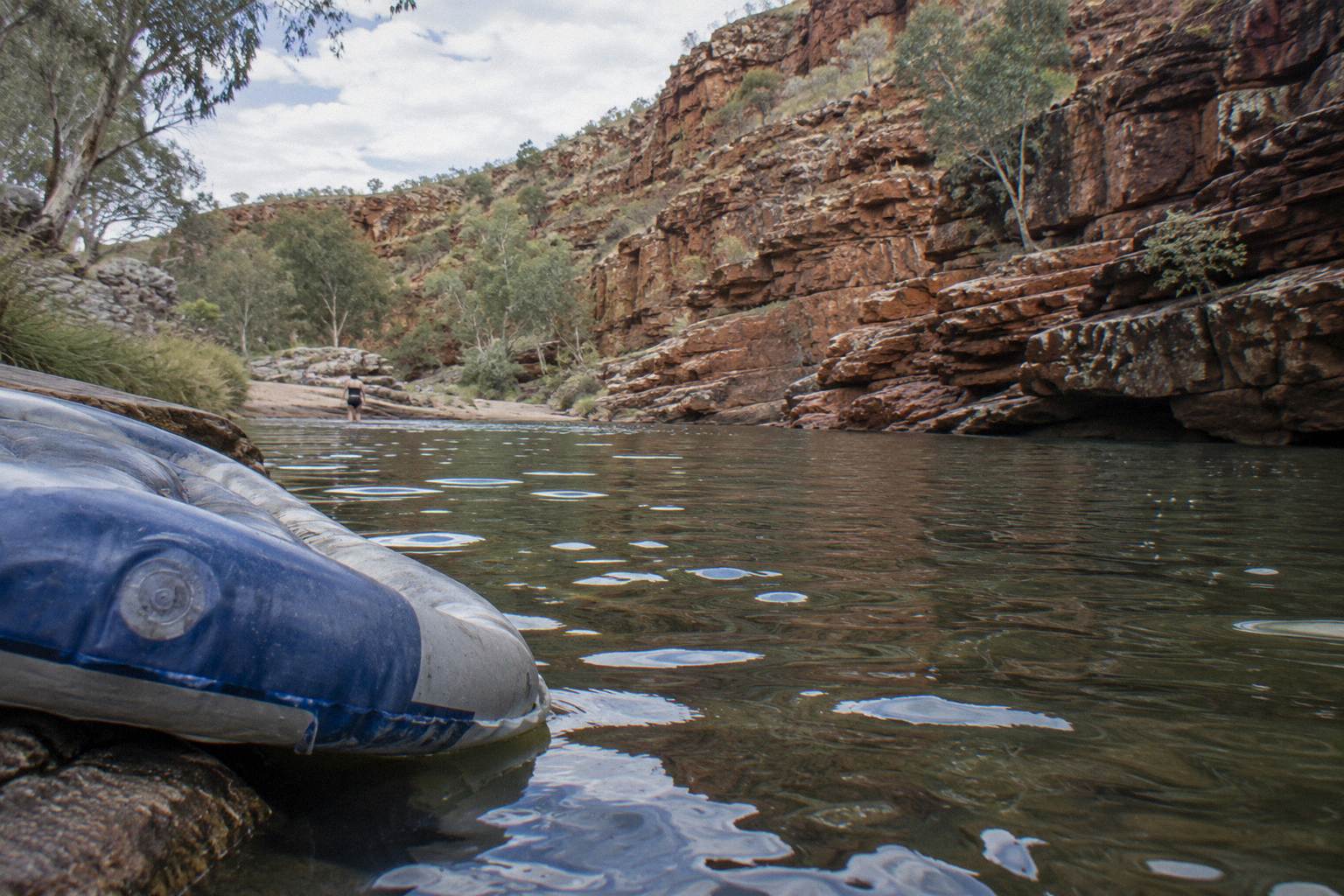
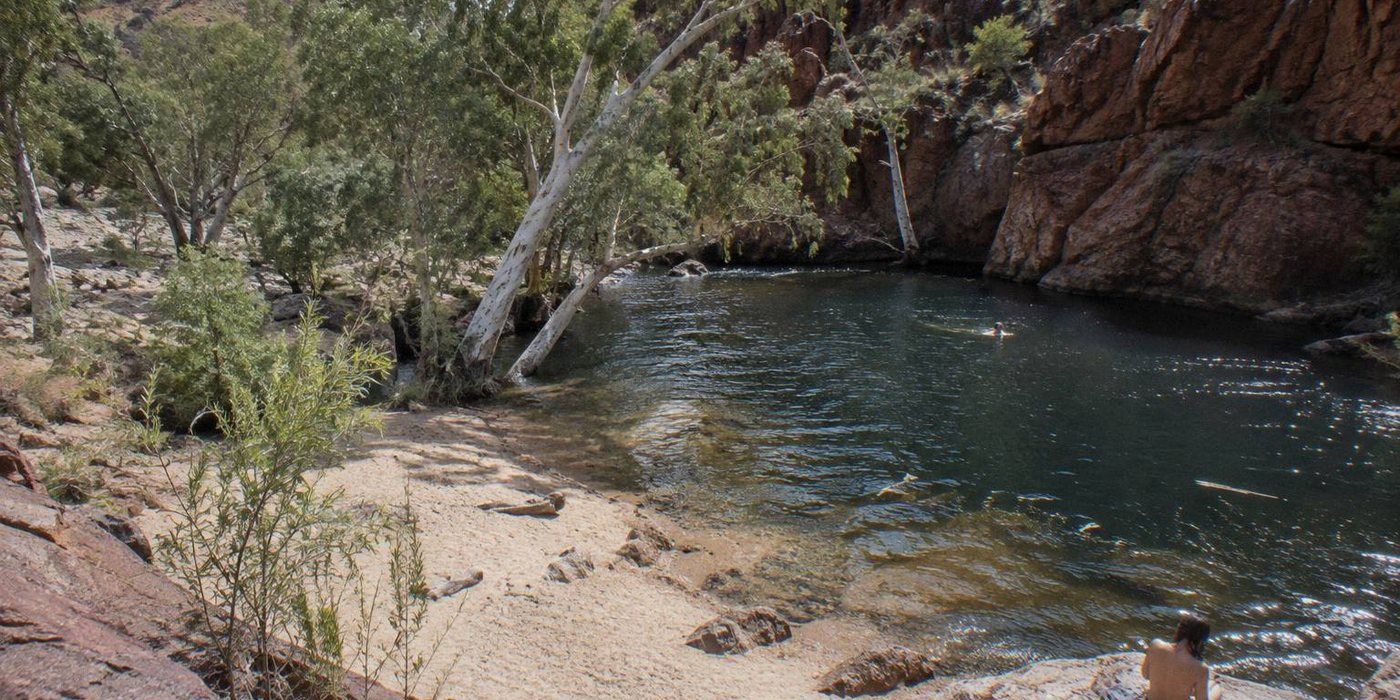
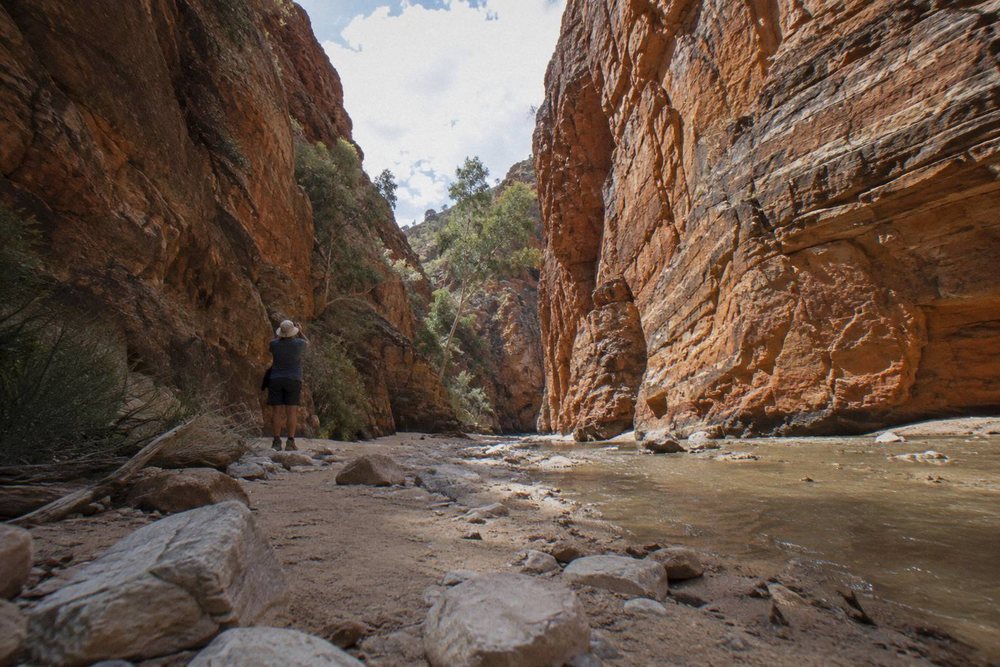
The waterholes are swimmable year round and cold year round, which reverses the usual logic. Winter months make them a scenic centrepiece, while the warmer months from October to April make them the highlight of the day. Swimming is only allowed at some spots: Simpsons Gap forbids it, and cold-water safety warnings apply everywhere, including a hypothermia risk at Ormiston even in summer.
The park's swimming guidance is blunt about the cold. The Ormiston Gorge waterhole sits 500 m from the visitor centre, reaches up to 14 m deep at its southern end, and carries an official warning of hypothermia risk even in summer, with no jumping or diving. Ellery Creek Big Hole is a five-minute walk from its car park and is described as ideal for swimming and extremely cold. Redbank Gorge's near-permanent waterhole is cold enough that a flotation device is recommended.
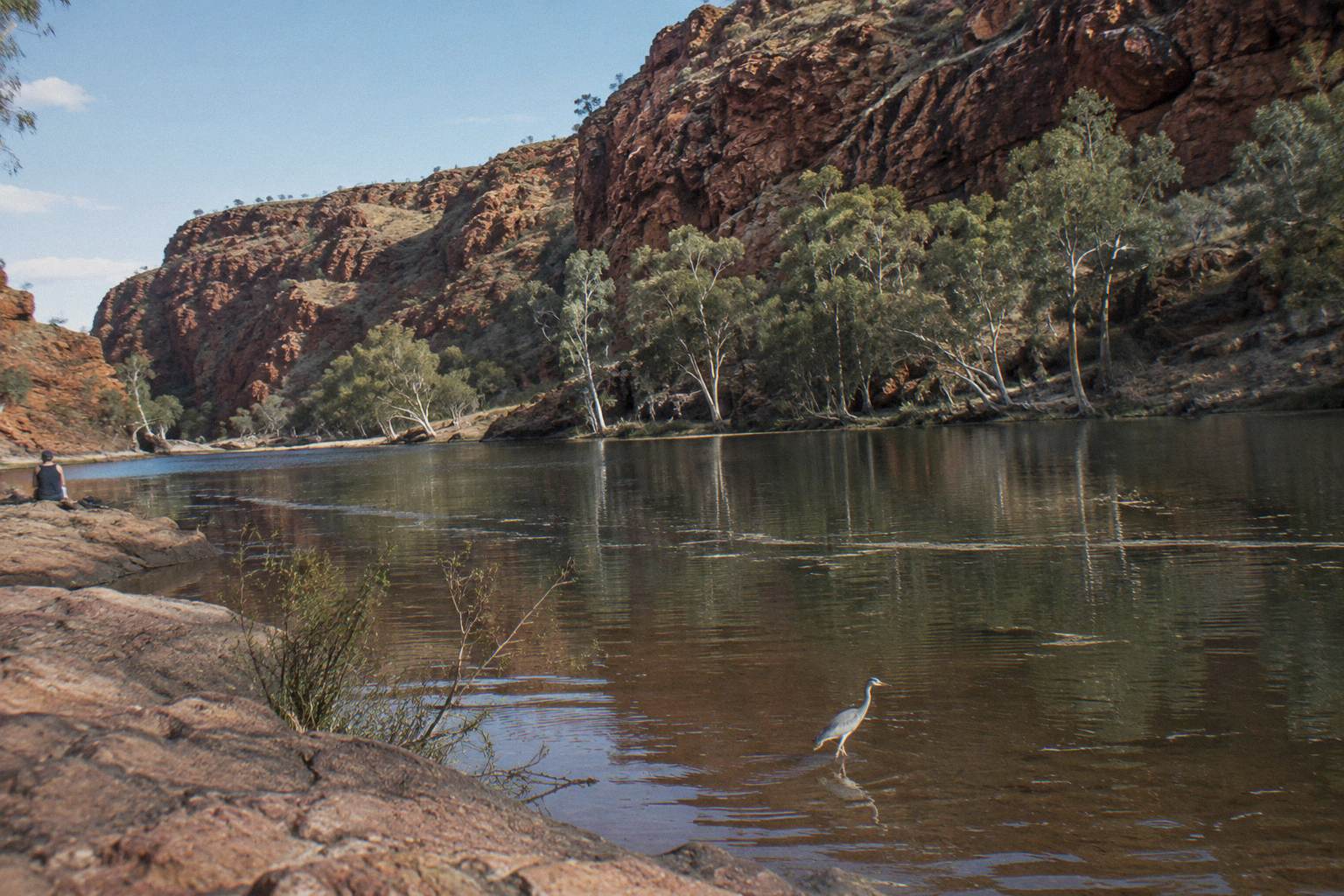
For tour timing, the practical pattern is this. In the cool months, a swim is optional and bracing, and many travellers skip it. From October through April, the waterhole stops become the moments the whole itinerary is built around, and tours that include them, such as the full-day options reaching Ormiston and Glen Helen, earn their longer runtime. Our swimming holes of the West MacDonnell Ranges guide lists which waterholes permit swimming and which are look-only.
One caution belongs to the wet months. Flash floods and storms are named in the official swimming guidance, and waterholes can rise or carry debris after heavy rain. Guides make the call on the day; the safe move is to treat the swim as a bonus rather than a booked feature.
Wet Season Roads And What Happens If It Rains
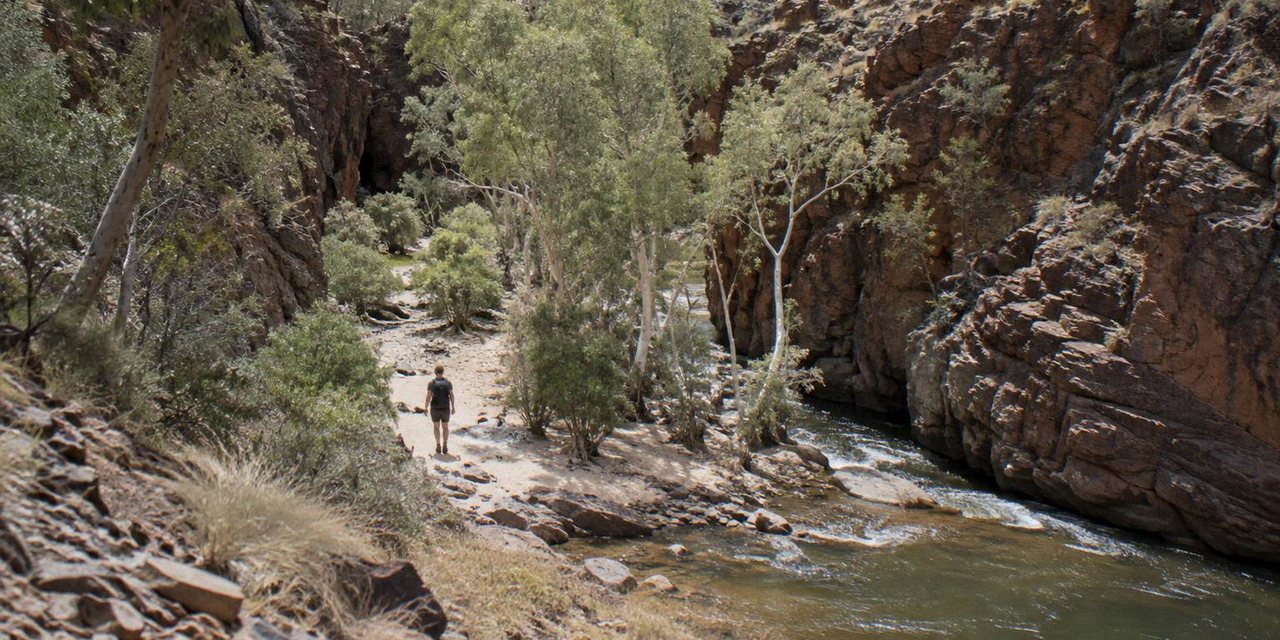
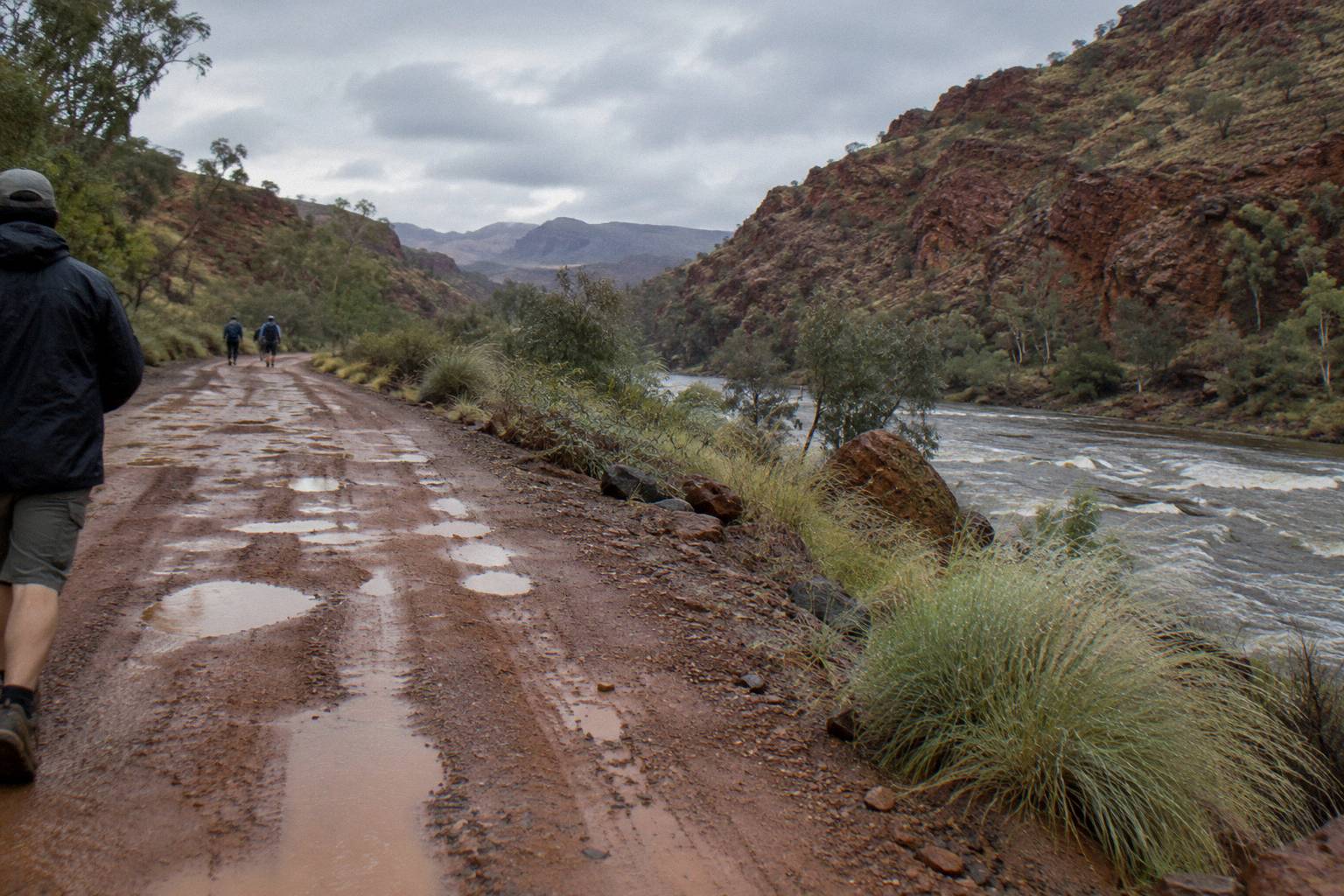
Rain is the least predictable input and the one that can change a route. The main access roads, Larapinta Drive and Namatjira Drive, are sealed, but the final approaches to some gorges are not: the last 2 km to Ellery Creek and the last 5 km to Redbank Gorge are unsealed, and Redbank is listed as high-clearance 4WD only. Heavy rain can make unsealed roads impassable for a short time.
For a coach or small-group tour, this rarely means cancellation. Most day tours stick to the sealed spine and the short unsealed approaches that suit their vehicles, and the itineraries are built around that. Alice Holiday Tours states on its own site that if attractions are closed for circumstances beyond its control, a suitable alternative is provided, which is the standard pattern across the roster: you get a different gorge, not a refund you did not want.
The longer trips spell this out explicitly. The booking terms for the "6-Day Astronomy Camping Trip" note that minor route and timing changes can occur for weather, road conditions or park closures, with a full refund if a core component is removed. That is a fair model for what to expect on any multi-day trip in the Centre: flexibility in the details, protection on the big promises.
Timing-wise, rain risk concentrates in the warmer months. There are no official wet-season dates for the ranges, but the practical read is that January and February carry the highest chance of a rain-affected day, while the April-to-September window is broadly dry. If you are touring in the wetter months, a tour is actually a better bet than a rental car: the driver knows the road conditions and the alternatives, and you are not the one deciding whether an unsealed section is passable.
The Best Season For A Larapinta Trail Tour
For the Larapinta Trail, the official season is clear: April to September, the cooler months. The trail runs over 230 km in 12 sections, each a one to two-day walk, and the official guidance says to walk only in the morning and late afternoon in hot weather, never alone, and to carry a satellite phone or personal locator beacon rather than rely on mobile coverage.
Section difficulty does not change with the season, but heat does. Sections range from 8.9 km to 28.9 km, with grades up to 5, and the long mid-trail sections, such as the 28.9 km stretch into Ormiston Gorge, are punishing enough in cool weather. The trail's summit finish, the 15 km return walk up Mount Sonder, is a 6-hour Grade 4 walk that most walkers do as a sunrise climb, which tells you how central the cool hours are to the whole route.
| Trail section | Route | Distance | Recommended hours | Grade |
|---|---|---|---|---|
| 1 | Telegraph Station to Simpsons Gap | 24.7 km | 9 | 4 |
| 3 | Jay Creek to Standley Chasm | 13.6 km | 5.5 | 4 |
| 6 | Hugh Gorge to Ellery Creek North | 28.9 km | 10.5 | 4 |
| 9 | Serpentine Chalet Dam to Ormiston Gorge | 28.9 km | 12 | Not stated |
| 11 | Finke River to Redbank Gorge | 26.3 km | 9.5 | Not stated |
| 12 | Redbank Gorge to Mt Sonder return | 15 km | 6 | 4 |
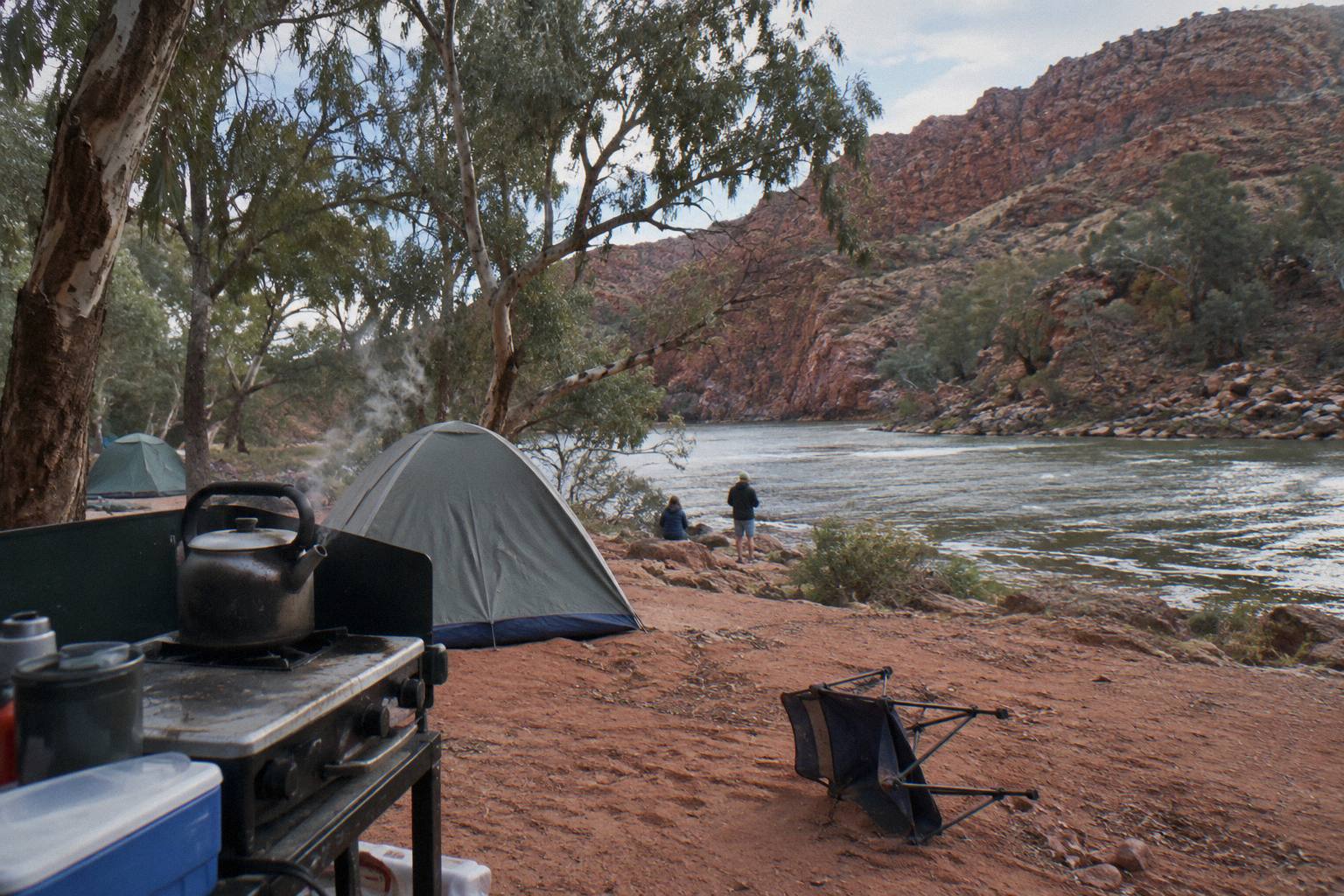
Guided treks inherit the same season. The "Larapinta 5-Day Safari Trek" from AU$3,125 per person covers around 14 km of guided walking in total from a private campsite, with all camping gear, meals and Alice Springs hotel pickup included, plus free cancellation up to 24 hours before. The guided "14-Day Larapinta Trail Walk" from Walking Country, rated 4.0 from 3 reviews, spends 13 nights in bush camps with tents and swags, and its price is on the listing rather than printed here.
Booking matters more on the Larapinta than anywhere else in the park. Every night on the trail and its 26 campgrounds must be booked and paid online before you go, and walking fees sit on top of the parks pass. Guided tours handle those logistics, which is one reason walkers choose them for the shoulder months when campsite availability tightens. Our Larapinta Trail guided walks guide compares the supported options in detail.
Which Tours Suit Which Season?
Match the tour to the month, not just the budget. Half-day morning tours suit the hot months, full-day coach and small-group tours peak in the April-to-September window, and multi-day camping trips reward the shoulder months of April, May and September, when nights are tolerable in a swag and days are kind on long walks.
The table pairs each part of the year with the roster options that fit it best, using the real prices and terms from each listing.
| Season | Best-fit tour | From | Why it fits |
|---|---|---|---|
| Hot months, October to April | "Half-Day Gorges, Emu Run", 5 hours | AU$135 | Morning-only timing, back before peak heat, Standley Chasm entry included |
| Hot months, fuller day | "Day Tour, Lunch Included", 10.5 hours | AU$163 | Lunch and chasm entry included, 3-4 km walks flexed to conditions, air-conditioned coach |
| Peak cool season | "9-Hour Coach Day Trip" | AU$249 | 4.7 from 336 reviews, covers the far gorges in comfortable walking weather |
| Cool season, small group | "Full Day, Small Group Only", 10 hours | AU$279 | Parks pass and chasm entry included, picnic lunch, small-group pace |
| Shoulder months | "West And East Ranges Combo", 10.5 hours | AU$289 | Both ranges in one mild-weather day, parks pass included |
| Cooler months, trekking | "Larapinta 5-Day Safari Trek", 5.5 days | AU$3,125 | Official walking season, guided sections, private campsite |
| Cool season, big loop | "3-Day 4WD Camping Trek", 3 days | AU$896 | Kings Canyon plus West Macs, parks pass included, cool nights for swags |
A note on prices and terms in that table: every figure is a from-price per person on the operator's live listing, and all of the day tours shown hold free cancellation up to 24 hours before, which makes an early shoulder-season booking low risk. The 24-hour window also means a forecast-driven change of plan in the hot months costs nothing if you act in time.
If you are planning around a family trip, the season interacts with the age limits on several tours: the "Day Tour, Lunch Included" and "Day Trip Plus Standley Chasm" tours both take children from 6 years accompanied, while the Emu Run trips welcome children from 2 years, which makes them the flexible school-holiday choice. Those details, and more, are in our West Macs tours with kids guide.
Booking Timing: When To Reserve And When To Wait
Reserve early for June and July and for any Larapinta trek, and book ahead for multi-day camping trips at any time of year. In the quieter hot months you can often decide a day or two out, since most day tours keep free cancellation up to 24 hours before. The 24-hour window is the single most useful term on the whole roster.
Two booking quirks are worth knowing. First, the NT Parks Visitor Pass is sold online only, bought in advance through the parks booking system, and it is excluded on several popular day tours, including the "9-Hour Coach Day Trip", "Half-Day Gorges, Emu Run", "Day Trip Plus Standley Chasm" and "Day Tour, Lunch Included". A 2-week adult pass costs AU$30 and an annual pass AU$60, so factor that into tour comparisons, since other operators include the pass in their headline price. Second, longer trips need more notice in every sense: the "4-Day Uluru Red Centre 4WD" requires cancellation 14 days ahead and the "6-Day Astronomy Camping Trip" 7 days, so a weather watch on those is a commitment, not a whim.
The full pass price ladder is worth a look when you are matching season to booking length, because a longer stay in the cool window can make a longer pass the better arithmetic.
| NT Parks Visitor Pass | Adult | Child 5-17 | Family (2 adults, 4 children) | Concession |
|---|---|---|---|---|
| 1-day | AU$10 | AU$5 | AU$25 | AU$8 |
| 3-day | AU$20 | AU$10 | AU$50 | AU$16 |
| 2-week | AU$30 | AU$15 | AU$75 | AU$24 |
| 1-month | AU$45 | AU$22 | AU$110 | AU$36 |
| Annual | AU$60 | AU$30 | AU$150 | AU$48 |
For the featured day trip on West MacDonnell Ranges Tours, the natural booking window is simple: lock in early if your dates fall in the peak cool months, and let the 24-hour cancellation window do the work in the shoulder season. The 9-Hour Coach Day Trip from Alice Springs covers Simpsons Gap, Standley Chasm and the western gorges in one comfortable cool-season day, with Standley Chasm entry and a bushman's lunch included and the parks pass as your only extra.
Whatever month you choose, pack for the version of the Centre you will actually meet: hat, water and layers in the cool months, and the swimming gear that turns a hot-month day from an endurance test into the best waterhole day of your trip. Our what to bring on a West Macs day tour guide has the full list.
Common Questions About The Best Time To Visit The West MacDonnell Ranges
What Is The Best Time Of Year To Visit The West MacDonnell Ranges?
April to September is the best window. That is the official cooler walking season, temperatures stay below the 40 °C peaks possible from October to April, and roads are generally dry. May to August is the most comfortable stretch for walking, swimming and long tour days.
Can You Do A West MacDonnell Ranges Tour In Summer?
Yes. Tours run year round from Alice Springs, but summer itineraries shift to early starts, shortened bush walks and longer waterhole stops, following official advice to walk only in the morning and late afternoon in hot weather. A half-day morning tour is often the best summer shape.
Is Winter Too Cold For Swimming At The Gorges?
The waterholes are cold all year, including at Ormiston Gorge, which carries a hypothermia warning even in summer. In winter most travellers treat the waterholes as scenery; from October to April they become the highlight of the day.
When Is The Wet Season In The West MacDonnell Ranges?
There are no official wet-season dates, but rain risk concentrates in the warmer months and heavy rain can make unsealed approach roads impassable for a short time. The main access roads, Larapinta and Namatjira Drives, are sealed.
When Should I Book A Larapinta Trail Trek?
Walk it between April and September and book well ahead: every campsite night on the trail must be booked and paid online in advance. Guided treks handle that logistics, and the shoulder months fill earliest.
Do Tours Get Cancelled For Heat Or Rain?
Rarely. Day tours adjust walks and timing to conditions, and operators typically substitute an alternative attraction if one closes. Most day tours hold free cancellation up to 24 hours before, so you can rebook around a heatwave forecast yourself.