What To Bring On A West MacDonnell Ranges Day Tour
Packing for the West MacDonnell Ranges is mostly about heat, sun and cold water. This guide covers the official safety advice, what your tour already includes, and what changes with the season.
Short answer
Bring plenty of drinking water, a hat, closed walking shoes, sun protection, layers for cold mornings and a towel if your tour stops at a swim-safe waterhole. Check your tour inclusions first: several trips include the NT Parks Visitor Pass, morning tea or lunch, so your bag stays small. Free cancellation applies up to 24 hours before on most day tours.
What Should You Pack For A West MacDonnell Ranges Day Tour?
Pack for three conditions at once: dry heat, strong sun and waterholes cold enough to take your breath away. The essentials are drinking water, a wide-brimmed hat, closed walking shoes, sunscreen, sunglasses, layers for a cool morning or evening, and a towel plus swimwear if your itinerary includes a waterhole stop. Everything else depends on the season and on what your specific tour already provides.
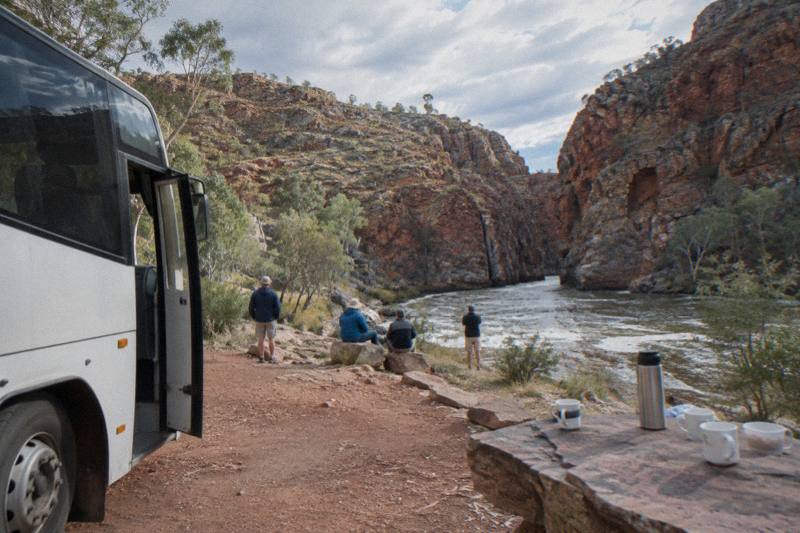
Tjoritja / West MacDonnell National Park stretches about 161 km west of Alice Springs, and a day tour covers a lot of that distance in an air-conditioned vehicle with short guided walks at each stop. The walking itself is modest, typically a few kilometres at gentle grades, so this is not a hiking-pack situation. What catches visitors out is the combination: temperatures that can exceed 40 °C between October and April, waterholes that stay extremely cold year round, and stops where you are outdoors for thirty to sixty minutes at a stretch with no shade beyond what the gorge walls give you.
The single most useful thing you can do before packing is read your tour's inclusions. The differences between trips are large: some include the NT Parks Visitor Pass, Standley Chasm entry, morning tea and lunch, while others leave the parks pass as an extra you buy online before you go. Packing a bag you do not need, or arriving without something the tour assumes you have, both come from skipping that step. This guide works through the official safety advice, the clothing logic, the pass question and the seasonal differences, with a full breakdown of what each rostered trip includes.
How Much Water Should You Carry, And What Does Official Advice Say?
The Northern Territory parks safety advice is simple and worth following exactly: carry and drink plenty of water, wear a hat, and avoid strenuous activity in the heat of the day. The same guidance applies across every gorge stop on a day tour. Bring a filled refillable bottle even when the vehicle carries onboard water, because walks at Ormiston Gorge, Standley Chasm and Simpsons Gap put distance between you and the bus.
The parks service repeats the water message on every relevant page for this country, and it is not boilerplate. The official heat warning notes temperatures can exceed 40 °C between October and April, and recommends checking Bureau of Meteorology heatwave warnings before heading out. On a guided tour your driver-guide manages the schedule around the heat, shifting walking stops to the cooler parts of the day where possible, but the drinking part stays with you. A bottle you can refill at each stop is the standard setup, and the park swimming and safety guidance is worth a read before you go.
One item you should leave out of the packing debate entirely is fire: fuel stoves or the free barbecues are the only flame allowed in the park, irrelevant on a day tour but a firm rule if you are extending your trip. Equally, do not plan on treating a gorge waterhole as a water source. Park notices describe the bore water at some sites as needing to be boiled, and the waterholes themselves are for swimming where permitted, never for drinking.
All three day trips above include hotel pick-up in Alice Springs and travel in an air-conditioned vehicle, which shapes what you carry: the vehicle does the heavy lifting between stops, and you only need what fits a walk and a waterhole.
What Clothing And Layers Actually Work In The Ranges?
Dress in light, breathable layers you can shed by mid-morning: desert mornings can be genuinely cold, especially between April and September, while midday sun is fierce year round. A long-sleeve sun shirt beats sunscreen alone for all-day gorge walking, and closed walking shoes with grip matter more than anything technical, because tracks range from paved paths to rocky gorge floors. A warm layer for the drive home is the item most often regretted.
The clothing logic for the West MacDonnells is not the same as for a coastal Australian summer trip. The Bureau of Meteorology's long-term averages for Alice Springs Airport show a climate with a wide spread between night and day temperatures, which is why layers decide comfort more than any single garment. A tour that leaves Alice Springs in the early morning can start in genuinely cold air and finish under full sun, and the same bag needs to cover both.
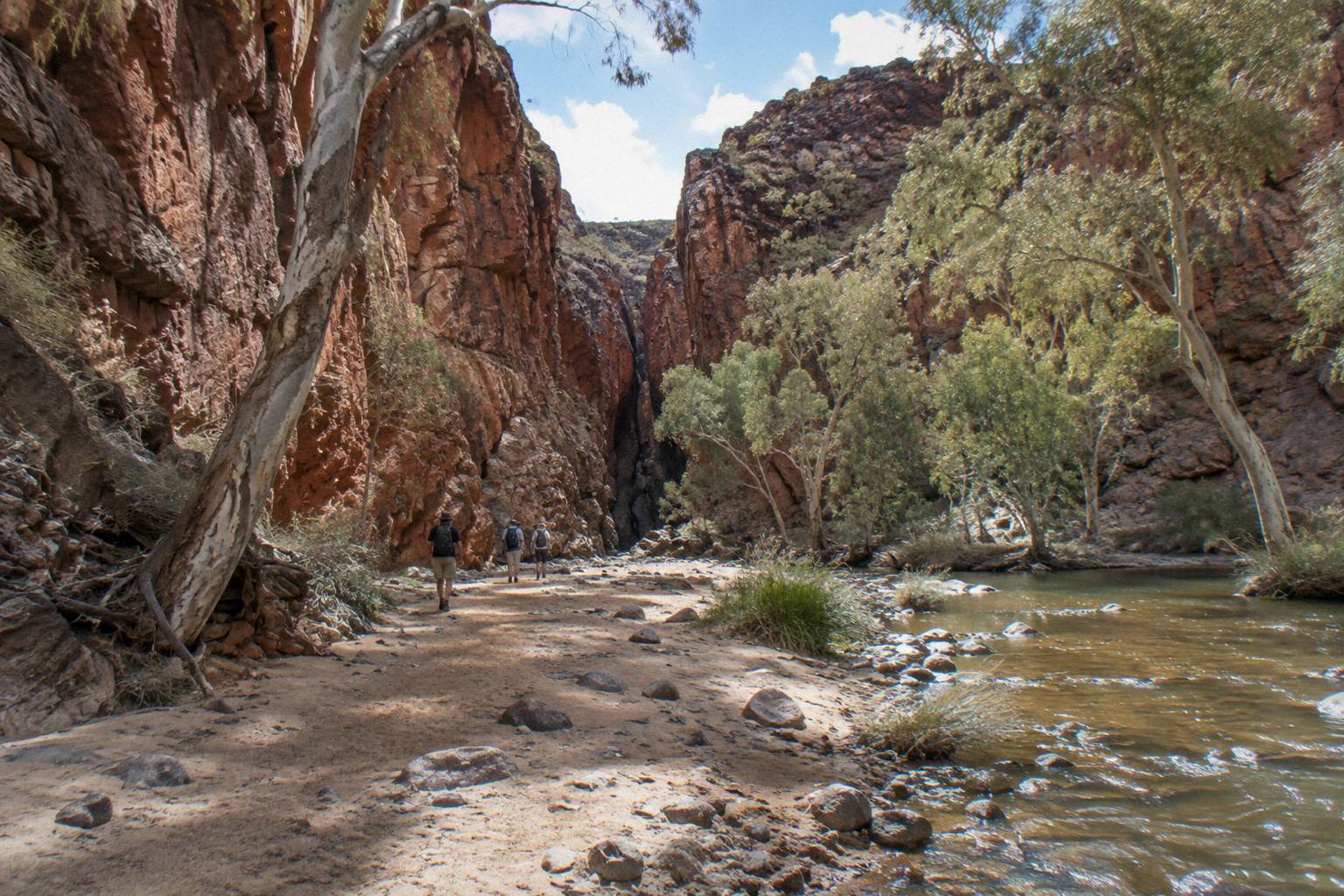
Footwear deserves a specific note. The walks on a typical day tour itinerary are short, but surfaces vary: cemented paths at Simpsons Gap, sandy and rocky sections at Ormiston Gorge, and the track into Standley Chasm which the operator describes as a 40 minute drive from Alice Springs on a sealed road followed by a walking track through the chasm itself. Enclosed shoes with a decent sole handle all of it. Thongs fail on the first rocky section and offer no sun protection for the top of your feet, which matters more than people expect at Australian latitudes.
| Item | Cooler months (April to September) | Heat season (October to April) |
|---|---|---|
| Base layer | Long-sleeve shirt or light fleece for morning | Light long-sleeve sun shirt for coverage |
| Warm layer | Fleece or jacket, worn morning and evening | One warm layer for after waterhole swims |
| Lower body | Long trousers or leggings | Light long trousers for sun protection |
| Feet | Closed walking shoes plus warm socks | Closed walking shoes plus breathable socks |
| Head and eyes | Hat, sunglasses, lip balm | Wide-brim hat, sunglasses, lip balm |
Beyond clothing, the small items list is short and non-negotiable: sunscreen, sunglasses, a broad hat, and a lip balm. The parks service hat advice is not casual; the Australian sun in the Centre is strong enough that a hat is the difference between a pleasant walk and a shortened one. If your tour includes a waterhole stop, add swimwear worn under your walking clothes or packed where you can reach it quickly, because change facilities are limited at most stops and a towel is your own to bring.
What Do The Day Tours Already Include, So You Don't Double-Pack?
Most West MacDonnell day tours include pick-up, an air-conditioned vehicle, a guide, Standley Chasm entry and some food, but they differ sharply on the NT Parks Visitor Pass: the Alice Holiday Tours trips include it, while the Emu Run, Autopia and Wildlife Tours day trips list it as an extra you buy online yourself. Checking this one line on your tour's live listing changes both your bag and your budget.
Here is the honest comparison across the rostered day trips. The "9-Hour Coach Day Trip" from Emu Run Experience runs from AU$249 per person, rates 4.7 from 336 reviews, and includes Standley Chasm entry, morning tea and a bushman's lunch, with the parks pass excluded. The "Day Tour, Lunch Included" from Wildlife Tours Australia runs from AU$163 per person and includes lunch, snacks, Standley Chasm entry and guided bush walks of roughly 3 to 4 km, again with the pass as an extra. The Alice Holiday small-group trips, "Half-Day Gorges, Alice Holiday" at from AU$155 and the "Full Day, Small Group Only" at from AU$279, both include the NT Parks Visitor Pass, drinks and snacks.
| Tour (short name) | From price | Food included | Parks pass | Standley Chasm entry |
|---|---|---|---|---|
| 9-Hour Coach Day Trip | AU$249 | Morning tea, bushman's lunch | Extra, buy online | Included |
| Half-Day Gorges, Emu Run | AU$135 | Morning tea | Extra, buy online | Included |
| Half-Day Gorges, Alice Holiday | AU$155 | Tea, coffee, soft drinks, light snacks | Included | Not listed as included |
| Day Trip Plus Standley Chasm | AU$220 | Lunch and snacks | Extra, buy online | Included |
| Full Day, Small Group Only | AU$279 | Picnic lunch, tea, coffee, snacks | Included | Included |
| Day Tour, Lunch Included | AU$163 | Lunch and snacks | Extra, buy online | Included |
Read that table against your packing list and the picture simplifies. On trips that include lunch you need only a small snack top-up and your own water bottle; on half-day trips with morning tea only, bring a light lunch for afterwards if you are heading on to other plans. Two tours on the roster, including the half-day Emu Run trip, carry no published rating at all, which is worth knowing so you weigh them on inclusions and price rather than assumed reputation. For deeper detail, our guide to small group versus coach touring in the West Macs explains what changes beyond the bag.
The featured trip on this site, the "From Alice Springs: West MacDonnell Ranges Day Trip", covers Standley Chasm entry and lunch, so the only paperwork left for you is the parks pass. You can check availability and read the full inclusion list before you finalise your packing.
Do You Need To Bring Your NT Parks Pass, Or Buy It In Advance?
You buy the NT Parks Visitor Pass online before you go: it is sold online only, through the parks booking system, and you need to be logged in to purchase it. An adult day pass costs AU$10, a 2-week pass AU$30, and an annual pass AU$60, with child, concession and family rates also available. NT residents are exempt but may be asked for proof. Bring confirmation on your phone.
This is the detail that most often disrupts a morning. The pass cannot be bought at the park gate, and several tours explicitly list it as an excluded item, meaning the driver cannot collect it from you on board. If your trip includes the pass in its price, as the Alice Holiday tours do, there is nothing to do. If it does not, buy the pass the night before from the official NT Parks visitor pass page and keep the confirmation accessible on your phone.
| Pass type | Adult | Child 5-17 | Family (2 adults, 4 children) | Concession |
|---|---|---|---|---|
| 1-day | AU$10 | AU$5 | AU$25 | AU$8 |
| 3-day | AU$20 | AU$10 | AU$50 | AU$16 |
| 2-week | AU$30 | AU$15 | AU$75 | AU$24 |
| 1-month | AU$45 | AU$22 | AU$110 | AU$36 |
| Annual | AU$60 | AU$30 | AU$150 | AU$48 |
Note that the 2-week pass at AU$30 is only triple the day rate, so anyone adding a second park day around Alice Springs saves immediately. Standley Chasm sits on privately operated land with its own separate entry fee, which is why it appears tour by tour in the inclusions table above rather than under the parks pass. Our longer guide to NT Parks passes and fees for West Macs tours works through the arithmetic for multi-day itineraries.
The "Half-Day Gorges, Alice Holiday" trip above is the cleanest option for anyone who wants the paperwork question to disappear: the pass, drinks and snacks are all inside the AU$155 from-price, and it rates 4.8 from 121 reviews. Other pages covering the same trip are gathered on West MacDonnell Ranges Tours.
What Should You Pack For Swimming And Walking Stops?
Bring swimwear, a quick-dry towel and something to hold wet clothes in, but leave inflatables, diving masks and jumping ambitions at home: park rules prohibit jumping, diving and swinging at the waterholes, the water is extremely cold, and some stops, including Simpsons Gap, do not permit swimming at all. Sturdy sandals with a back strap or old runners beat bare feet on rocky entries.
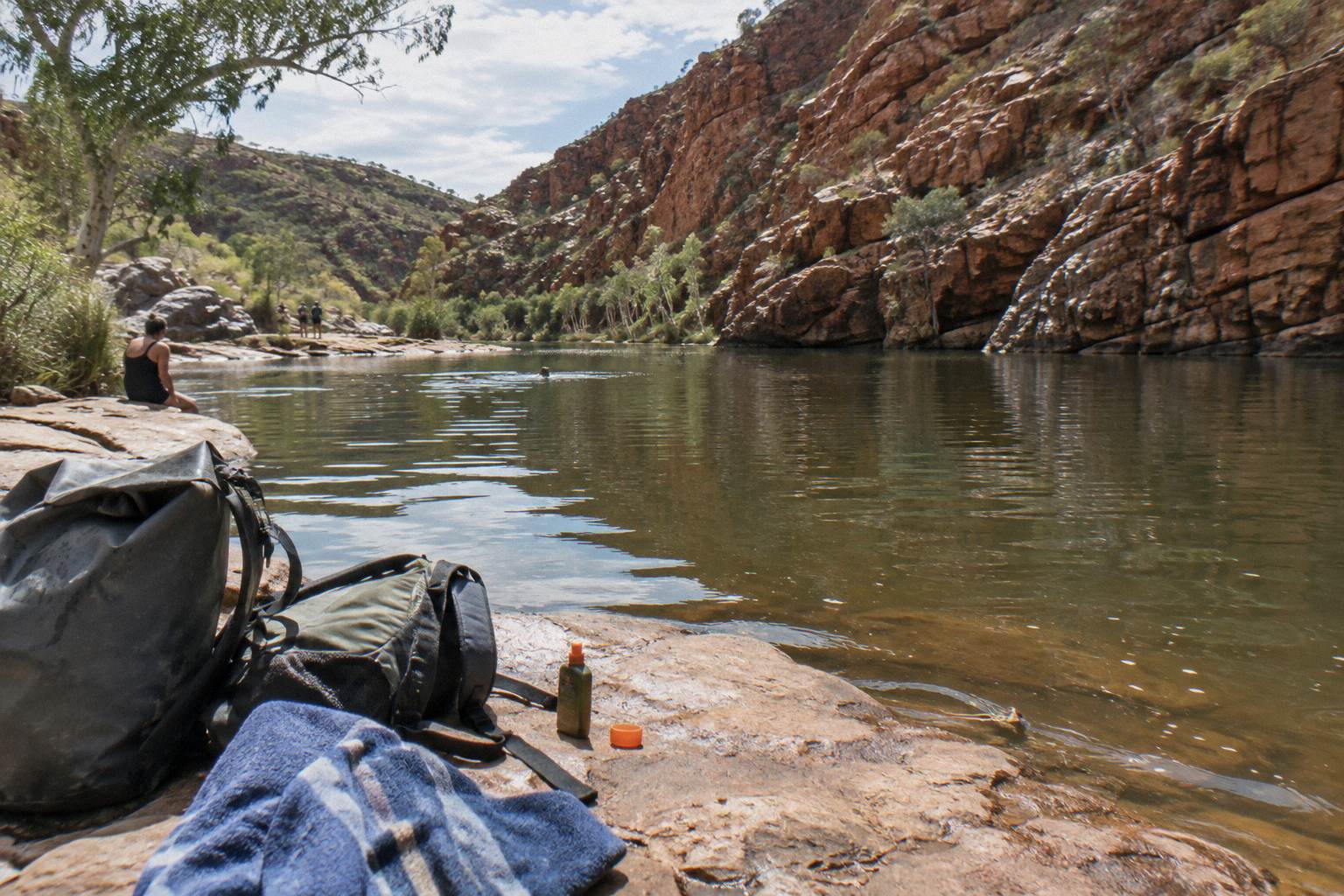
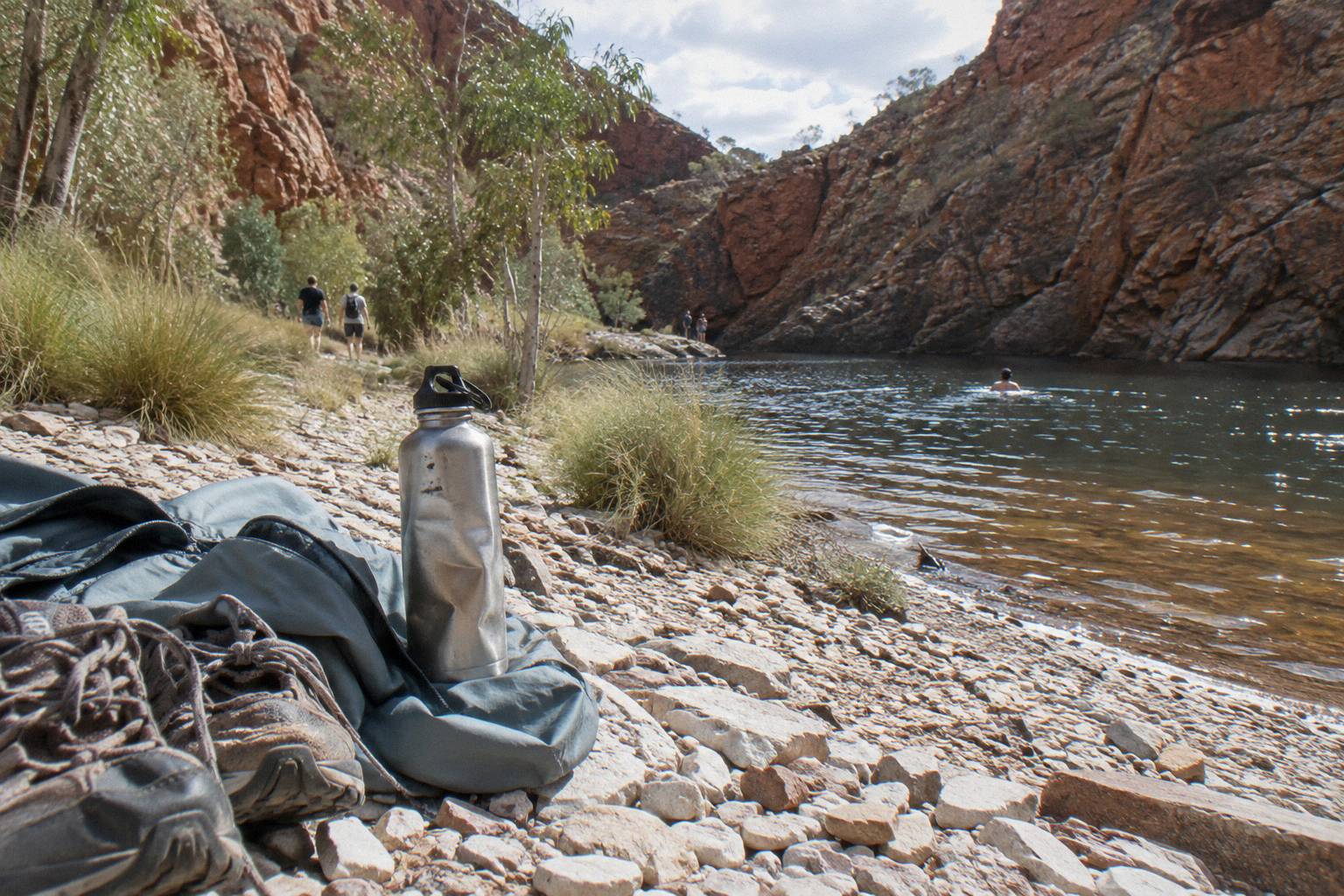
The swimming story in the ranges is genuinely unusual for Australia. Ormiston Gorge's permanent waterhole, 500 m from the visitor centre and up to 14 m deep at its southern end, carries an official hypothermia warning even in summer, which tells you the packing priority is a towel and warm layer for after the swim, not just the swim itself. Ellery Creek Big Hole's waterhole, a five minute walk from its car park, is described as ideal for swimming but extremely cold. Simpsons Gap prohibits swimming outright. Knowing which stop is which is half the packing decision, and our round-up of swimming holes in the West MacDonnell Ranges lists them stop by stop.
| Stop | Swimming permitted | What to pack for it |
|---|---|---|
| Simpsons Gap | No | Camera and walking shoes only; no swim gear needed |
| Ellery Creek Big Hole | Yes, waterhole 5 min from car park | Swimwear, towel, warm layer after |
| Ormiston Gorge | Yes, waterhole 500 m from visitor centre | Swimwear, towel, warm layer; hypothermia risk flagged even in summer |
| Glen Helen Gorge | Cool dip wording on official listing | Swimwear and towel, easy access from facilities |
| Serpentine Gorge | Walks and lookout, no swim note | Walking shoes, sun protection |
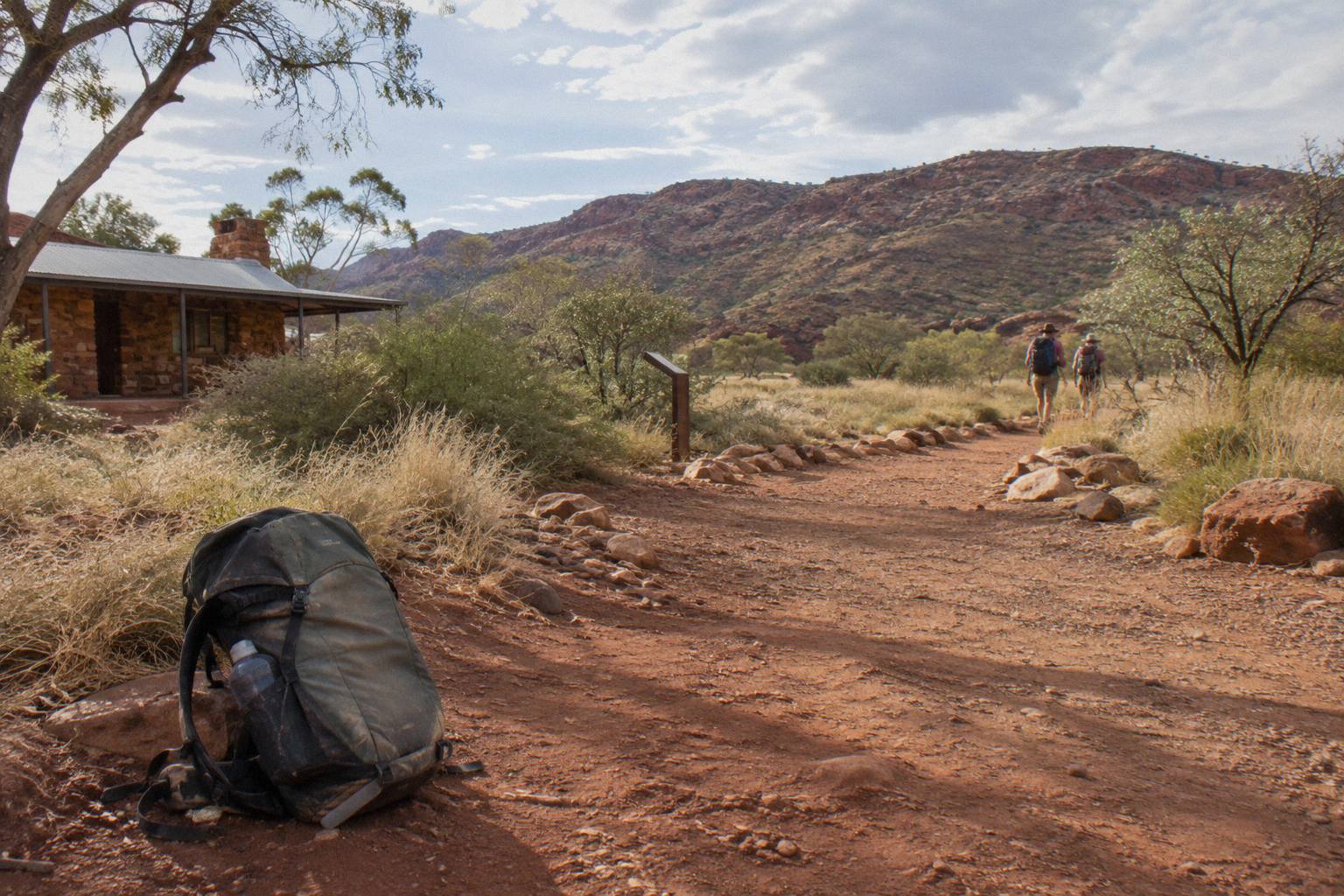
For the walking stops, the gear list is short because the walks are short, but a couple of items earn their place. A small daypack keeps hands free for the camera and the water bottle. A dry bag or plastic bag protects your phone at waterhole stops, where splashing is part of the fun. And insect repellent is worth a pocket of space in the warmer months, when still air near water attracts more attention than visitors expect.
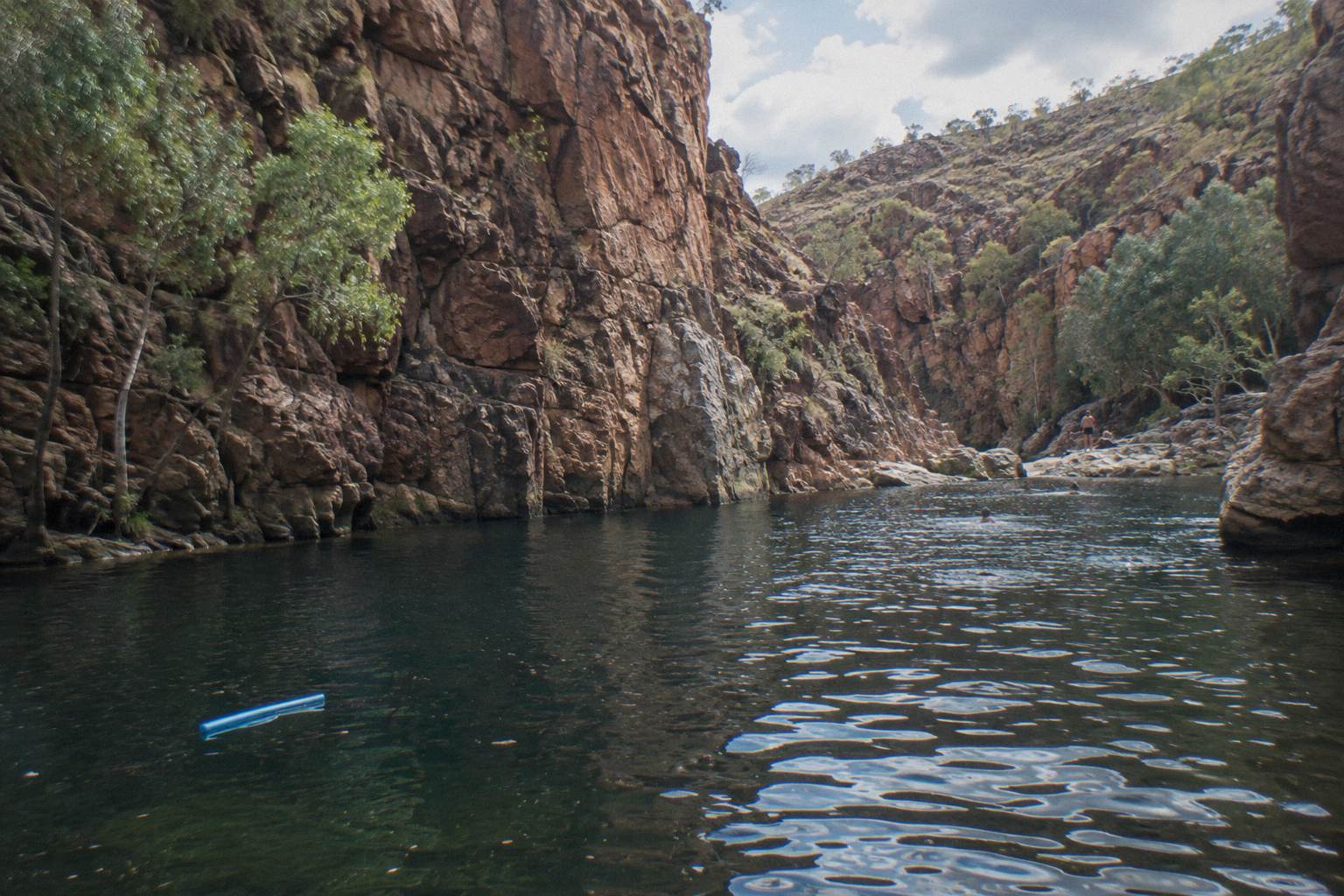
Flash flooding deserves one honest sentence even on a guided tour: storms in Central Australia can close unsealed access roads for a short period after heavy rain, and operators manage that risk by adjusting routes. The last 2 km into Ellery Creek and the last 5 km toward Redbank Gorge are unsealed, and Redbank is high-clearance 4WD only, which is exactly why tour vehicles and their route flexibility matter more than a private car for the far stops.
How Does The Packing List Change With The Season?
Between April and September, pack for cold mornings and evenings alongside sun protection: this is the walking season the parks service recommends, and the temperature spread across a single day is the widest of the year. From October to April, pack primarily for heat, with temperatures that can exceed 40 °C, more water than feels reasonable, and clothing that covers skin rather than exposes it.
The Bureau of Meteorology's Alice Springs Airport averages are the basis for the layers decision, and they describe a desert climate: the same day can deliver a morning that wants a fleece and an afternoon that wants shade. Rather than trust a single number, plan around the spread, and check the forecast and any official seasonal advice a day or two before your tour.
| Season | Typical conditions | Priority packing | Extras |
|---|---|---|---|
| April to September (cooler months) | Cold mornings and evenings, warm middays, low rain risk | Warm layer, beanie, closed shoes, full sun kit | Swim gear still useful: waterholes stay cold but swim stops are comfortable |
| October to April (heat season) | Daytime temperatures can exceed 40 °C | Maximum water, long-sleeve sun shirt, hat, electrolytes | Light long trousers rather than shorts for sun; skip midday exertion |
| Any season | Extremely cold waterholes | Quick-dry towel, dry change of clothes | Warm layer for immediately after swimming |
The counterintuitive item in that table is the warm layer in the heat season, and it is not a typo. Ormiston Gorge's official guidance flags hypothermia risk in the waterhole even in summer, so the coldest part of a hot-day tour can be the five minutes after your swim. The same reasoning puts a dry shirt in the bag on every tour with a swim stop.
What About Kids, Cameras And Everything Else?
Bring children aged two and over on the Emu Run trips and children aged six and over accompanied by an adult on the Autopia and Wildlife Tours day trips; Alice Holiday's combo tour sets its minimum at five. For the rest of the bag: a phone or camera, a small power bank, personal medication, and cash or card for any kiosk or stop where facilities are open, since kiosk opening varies through the year.
The age rules matter for packing because they decide whether you are carrying a child's spare clothes and snacks. Each tour's live listing carries its exact age policy in the notes, and the roster differences are real: an infant-friendly coach trip and a six-and-over small-group trip produce very different bags. The food side is easier, since the inclusions table above already tells you whether lunch, morning tea or snacks are covered, and a child who eats on schedule still benefits from a familiar snack in the daypack.
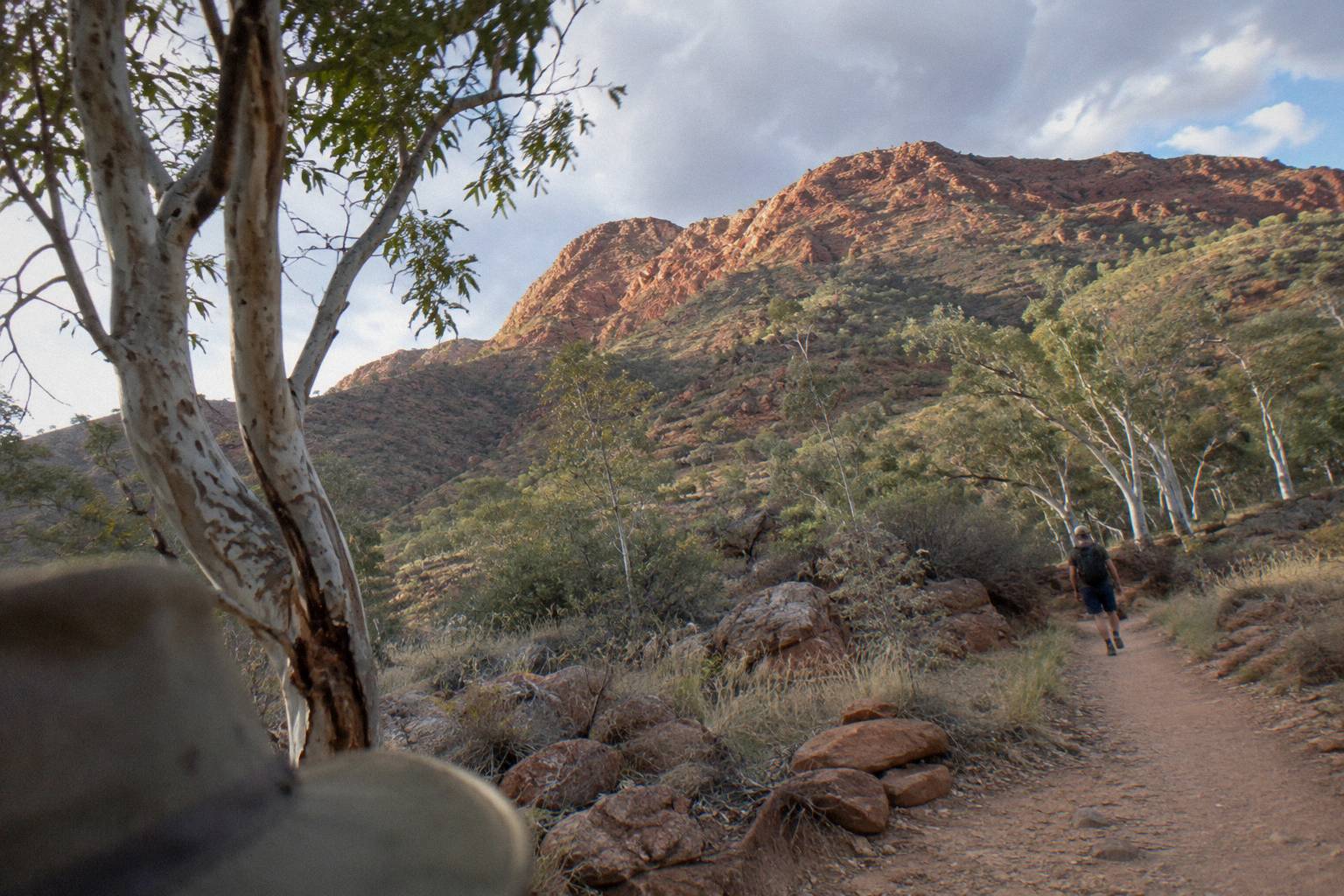
Photography packing deserves a line of its own, because the light in the ranges is the reason many people book. Gorge walls change character across the day, and Standley Chasm in particular rewards visits when the sun reaches deep into the narrow section, a subject our Standley Chasm photography light guide covers in detail. A phone handles most of it; bring a real camera only if you are willing to carry it on every short walk.
The final category is contingency. Tours run to the far gorges on roads that heavy rain can briefly close, and the operators' own terms handle this differently: Alice Holiday commits to providing a suitable alternative if attractions close for reasons beyond their control, and other operators note that minor route or timing changes can occur for weather, road conditions or park closures. Pack on the assumption that your exact stop list may shift by one gorge, and the day will still deliver. For the fuller logistics picture around timing and distances, see whether you can do the West MacDonnell Ranges in a day tour.
The Short Version: A Checklist You Can Pack From
Pack a refillable water bottle, hat, sunscreen, sunglasses, closed walking shoes, light long-sleeve cover, one warm layer, swimwear, a quick-dry towel and a dry bag for your phone, plus your parks pass confirmation if your tour excludes it. Skip inflatables, skip diving gear, and skip a second pair of shoes: the vehicle carries the weight between stops and your bag stays small.
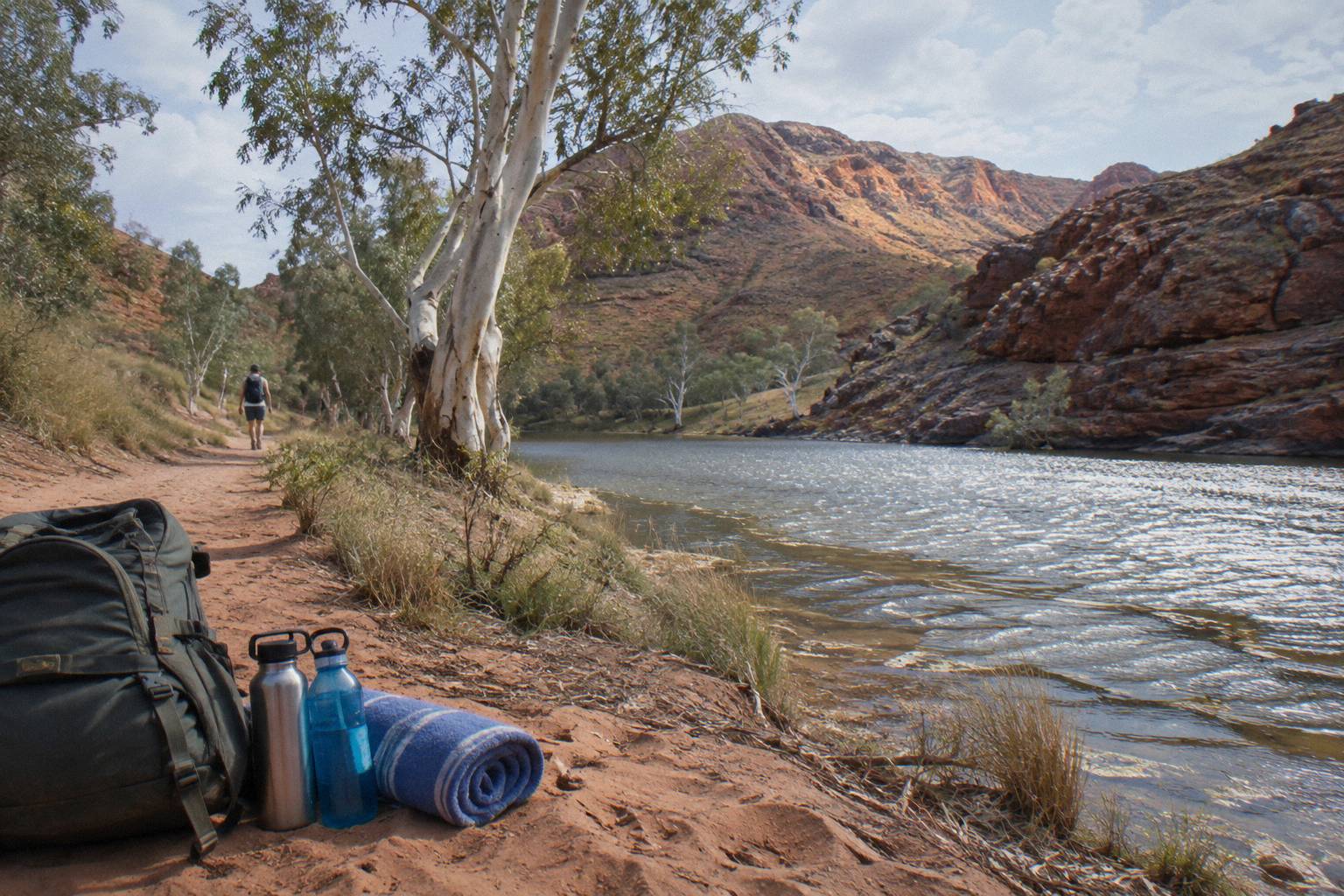
Everything above reduces to a fifteen-minute pack once you have answered two questions: what does my tour include, and what season am I travelling in. The inclusions table settles food and passes, the season table settles layers, and the swimming table settles the towel. If you are still choosing between trips, the comparison of West Macs tour prices and inclusions is the natural next read, and the same packing logic applies to every trip on it.
The "Day Trip Plus Standley Chasm" tour above suits travellers who want the maximum stop count in a small-group vehicle: it runs 10.5 hours, includes lunch, snacks, Wi-Fi on board and Standley Chasm entry, from AU$220 per person, rating 4.7 from 70 reviews. Its 24-hour free cancellation window means you can book early and still adjust your dates as the forecast firms up.
For a bag that stays simplest of all, the "Full Day, Small Group Only" trip above includes the parks pass, Standley Chasm entry and a picnic lunch, from AU$279 per person, rating 4.6 from 16 reviews: a genuine review pool, though a small one, worth weighing alongside the inclusions.
Common Questions About Packing For A West MacDonnell Ranges Day Tour
What Should I Bring On A West MacDonnell Ranges Day Tour?
Drinking water, a hat, sunscreen, sunglasses, closed walking shoes, light layers including one warm layer, swimwear and a towel if your itinerary has a waterhole stop, and your NT Parks pass confirmation if your tour excludes the pass. Check your tour's inclusions first: many include food, Standley Chasm entry or the parks pass.
How Much Water Should I Bring?
Official NT Parks safety advice is to carry and drink plenty of water, wear a hat and avoid strenuous activity in the heat of the day. Bring a filled refillable bottle; day tours travel in air-conditioned vehicles with onboard water on some trips, but gorge walks put distance between you and the bus.
Do I Need To Bring My NT Parks Pass?
You need a pass if your tour excludes it, and it must be bought online before you go through the parks booking system; it cannot be purchased at the park. Keep the confirmation on your phone. Alice Holiday tours, the 3-day camping trek and the 4-day Uluru trip include pass entry in their prices.
Should I Pack Swimwear For A Day Tour?
Yes, if your itinerary includes a stop where swimming is permitted, such as Ormiston Gorge, Ellery Creek Big Hole or Glen Helen Gorge. Simpsons Gap does not permit swimming. The waterholes are extremely cold year round, so pack a towel and a warm layer for after the swim, and note that jumping, diving and swinging are prohibited.
What Kind Of Shoes Should I Wear?
Closed walking shoes with a decent sole. The walks on day tours are short, from a few hundred metres to a few kilometres, but surfaces range from paved paths to sandy and rocky gorge floors, and sun on exposed feet is a real issue in the Centre.
Can I Bring Kids, And What Extra Should I Pack For Them?
Check your tour's age policy first: the Emu Run trips welcome children aged two and over, the Autopia and Wildlife Tours day trips take children aged six to 17 accompanied by an adult, and the Alice Holiday combo tour sets its minimum at five. Pack spare clothes, a familiar snack and extra sunscreen for children.