Does It Get Cold At Night On A Gorge Tour Out Of Alice Springs?
Alice Springs nights drop near freezing in June and July while tour days stay warm. Here is what the bureau data and tour itineraries actually say about cold on a gorge tour.
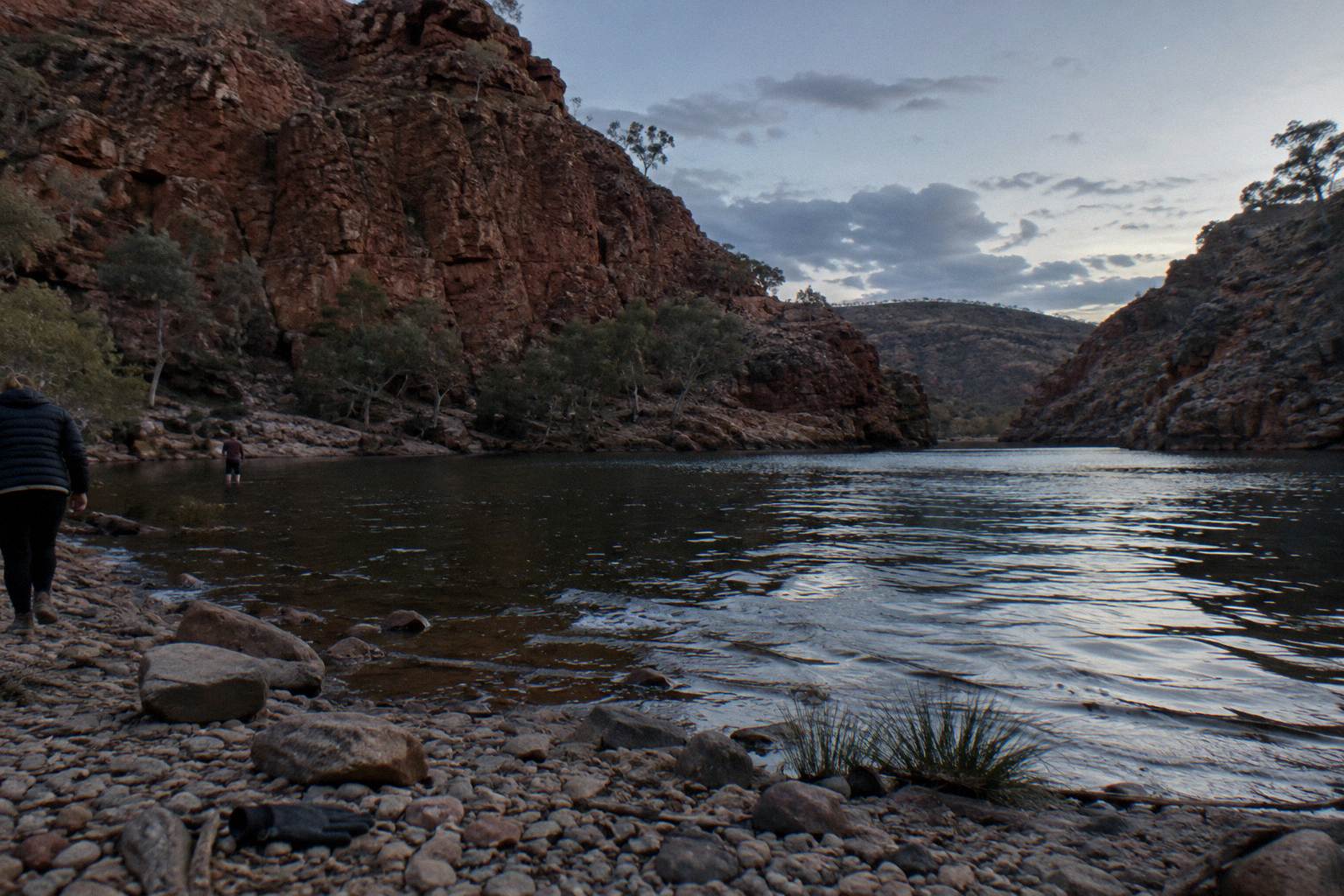
Yes, cold nights are real, but they only touch some tours. Bureau of Meteorology means for Alice Springs Airport put the June average minimum at 4.7 degrees and July at 3.9 degrees, while daytime temperatures in those same months stay warm. A day tour out of Alice Springs finishes before that evening drop arrives, so the cold matters mainly for sunset stops, camping tours and anyone swimming in the waterholes.
That single paragraph answers the question, but the detail behind it changes what you pack and which tour you book, so it is worth going slowly. Alice Springs has a continental desert climate: it is a long way from the moderating effect of any ocean, so heat builds fast through the day and radiates away fast after sunset. The same town that can exceed 40 degrees between October and April, the warning range published by NT Parks, regularly produces frost on winter mornings.
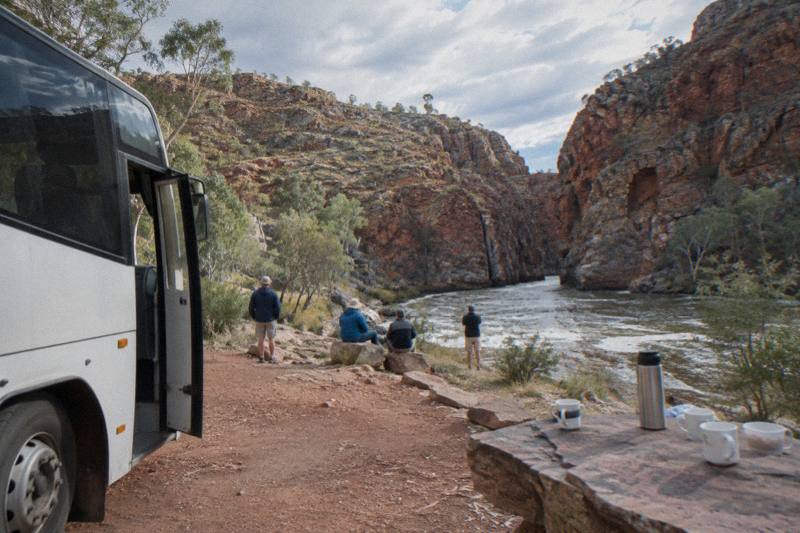
The practical consequence for visitors is the gap. On a June or July day tour you can stand at Simpsons Gap in the late morning in a t-shirt, then shiver at the same spot an hour after the sun drops behind the range. Locals plan around this without thinking. Visitors, especially those arriving from tropical parts of Australia or from Southeast Asia on Red Centre itineraries, are regularly caught out.
There is one honest limit to state up front. Night temperature figures for the gorges themselves, at Simpsons Gap or Ormiston Gorge or Redbank Gorge, are not published as separate station data. Everything reliable about desert cold here comes from the Alice Springs Airport record and from park safety notes about waterhole temperatures, and this article sticks to those. The gorges sit between roughly 18 and 135 km west of town along sealed Larapinta and Namatjira Drives, and desert nights across that short span do not differ in any way a traveller would feel.
How Cold Do Alice Springs Nights Actually Get?
The Bureau of Meteorology's 1981-2010 averages for Alice Springs Airport put the mean minimum at 4.7 degrees in June and 3.9 degrees in July. Those are averages, not extremes: individual winter nights fall below zero, and frost on the ground at dawn is routine in the coldest months. Daytime maximums over the same period stay warm, which is why winter is peak touring season.
The two mean-minimum figures are the ones worth memorising, because they describe a whole month of nights rather than a freak event. A mean minimum of 3.9 degrees in July tells you that most nights that month sit somewhere between about one and seven degrees at the coldest point before dawn. It does not tell you the coldest night of the month, which will be lower, sometimes low enough for ice on windscreen glass around town.
| Measure | Figure | What it means for a visitor |
|---|---|---|
| Mean minimum, June | 4.7 °C | Typical pre-dawn low, airport station |
| Mean minimum, July | 3.9 °C | Coldest average month of the year |
| Cold-season pattern | Nights fall sharply after sunset | Desert air holds little moisture, so heat escapes fast |
| Daytime pattern | Winter days stay warm | Peak touring season runs through these months |
| Heat season | Can exceed 40 °C, October to April | The opposite extreme, per NT Parks warnings |
Two features of desert air explain the size of the day-to-night swing. Dry air holds little heat, so once the sun is gone the ground cools quickly and the air above it follows. Clear winter skies, the same skies that make the Centre famous for stargazing, speed that loss up because there is no cloud blanket trapping warmth near the surface. The astronomy tours that run through the region depend on exactly the conditions that make the nights cold.
What this means for timing matters more than the numbers. The coldest part of any night is the hour or two before sunrise, not the moment the sun sets. A sunset stop at a gorge in July is usually still tolerable in a light jacket, say ten to fifteen degrees and falling. By 5 am at a campground it can be near freezing. Anyone booking a sunrise experience, the Mount Sonder summit walk being the classic example, is out in the coldest air of the day by design.
Does Alice Springs Get Cold At Night?
Yes, and measurably so in the middle third of the year. Alice Springs Airport averages a 4.7 degree minimum in June and a 3.9 degree minimum in July, with individual nights below zero. Between October and April the pattern flips entirely, and NT Parks warns temperatures can exceed 40 degrees. The cold is a winter-night phenomenon, not a year-round one.
Visitors often arrive with a mental image of the Red Centre as uniformly hot, and that image is wrong in both directions. Summer in Alice Springs is genuinely extreme, hot enough that park authorities advise walking only in the morning and late afternoon and checking heatwave warnings from the Bureau of Meteorology. Winter, by contrast, is close to perfect by day and genuinely cold by night. Tour operators run their busiest schedules through June, July and August precisely because the daylight hours are so reliable.
The phrasing of the question matters too. "Alice Springs" is the only place in the region with a long official temperature record, so every answer about cold nights in the West MacDonnells is really an answer about Alice Springs, carried west along Larapinta Drive. The park, officially Tjoritja / West MacDonnell National Park since its gazettal on 15 October 2014, stretches about 161 km west of town, and there is no weather station publishing nightly gorge figures inside that span. Nothing in the park's geography, low ranges and broad valleys, would create a meaningfully warmer or colder night than the airport record shows.
For tour planning, the useful framing is not "is it cold" but "when am I outside". Day tours run roughly 9 to 10.5 hours from mid-morning starts, so passengers experience the warmest part of the day and are back in town before the serious evening drop. Half-day tours finish earlier still. The only single-day products that brush real cold are those with a sunset component, and the roster has exactly one: the Simpsons Gap sunset watercolour painting class, a 3.5-hour evening trip from AU$175 per person with art materials, a charcuterie board and the parks pass included, on which you will want a warm layer from about an hour before sunset.
The half-day morning gorge tours are the lowest cold-exposure option of all, and how the half-day itineraries compare is worth a look if early starts in July appeal, since you will be standing outside at the trailheads in the coldest daylight hour.
How Cold Are The Waterholes, Even On A Warm Day?
Cold enough to be a safety issue rather than a comfort one. NT Parks describes most waterholes in Tjoritja as extremely cold, and warns of hypothermia risk at Ormiston Gorge even in summer. The Ormiston waterhole reaches depths of up to 14 m, and Ellery Creek Big Hole is described as extremely cold with no jumping or diving permitted.
This is the cold that catches people who did everything right about the night-time question. You can swim at Ormiston on a 25-degree July afternoon, in full sun, and still find the water cold enough to make your breathing shallow after a few minutes. Deep desert waterholes do not warm through the season the way a shallow beach does; the bulk of the water sits in shade at the base of a gorge and stays cold year-round. The rest of the planning pages sit on West MacDonnell Ranges Tours.
| Waterhole | What the park notes say | Cold exposure |
|---|---|---|
| Ormiston Gorge | Up to 14 m deep, extremely cold, hypothermia risk even in summer, no jumping or diving | Highest on any day tour |
| Ellery Creek Big Hole | Permanent waterhole, extremely cold, no jumping, diving or swinging | High |
| Redbank Gorge | Almost permanent waterhole, cold, flotation device recommended | High, 4WD access only |
| Glen Helen Gorge | Cool dip wording on the official listing | Moderate |
| Simpsons Gap | Swimming not permitted | None |
The official swimming guidance for the park is blunt: swim only where it is allowed, expect most waterholes to be extremely cold, and be aware of flash floods and storms. The Ormiston page carries the strongest wording of any stop, naming hypothermia as a risk regardless of season. That is not a reason to skip a swim, it is a reason to swim deliberately: get in, enjoy it, get out, and warm up in the sun rather than planning to float for an hour.
Some walks make the cold a feature of the route itself. At Ormiston, the Pound Walk loop and the Ghost Gum Loop both require a short swim or wade through deep cold water to complete, which is fine in the middle of a warm day and unpleasant at either end of one. If your tour allows free time at Ormiston and you want the full loop, plan it for the warmest hours. More detail on what the Ormiston waterhole is really like covers the swimming rules stop by stop.
For day tours, the waterhole cold and the night cold combine into one packing instruction: bring a layer you can put on over damp clothes. On the "9-Hour Coach Day Trip" run by Emu Run Experience, from AU$249 per person and rated 4.7 from 336 reviews, Standley Chasm entry, morning tea and a bushman's lunch are included, but the NT Parks pass is not, so it needs buying online before you go. If the itinerary allows a swim anywhere, the bus will be warm but the walk back to it will not be.
Which Tours Actually Put You Out At Night?
Only the multi-day camping tours. Day trips and half-day tours return to Alice Springs before the cold arrives; the Simpsons Gap sunset painting class runs into the first hours of the evening drop; the Larapinta and Red Centre camping tours put you outside through the coldest pre-dawn hours. On camping trips the night cold is not a footnote, it is the main packing problem.
Start with the day products, because they are the answer for most travellers. A 9 to 10.5 hour tour that departs Alice Springs in the morning is back in town by early evening at the latest. You will experience warm daylight, possibly cold waterhole water, and a cooling late-afternoon stop, but never a desert night. That is the whole appeal of the format for cold-averse travellers.
The 3.5-hour sunset painting class is the one scheduled evening product, and it is timed for the pleasant end of the cooling curve rather than the bottom of it. Sunset light on the gap is the point of the trip, and the temperature at that hour in winter is usually jacket weather rather than freezing weather. A fleece and long trousers cover it.
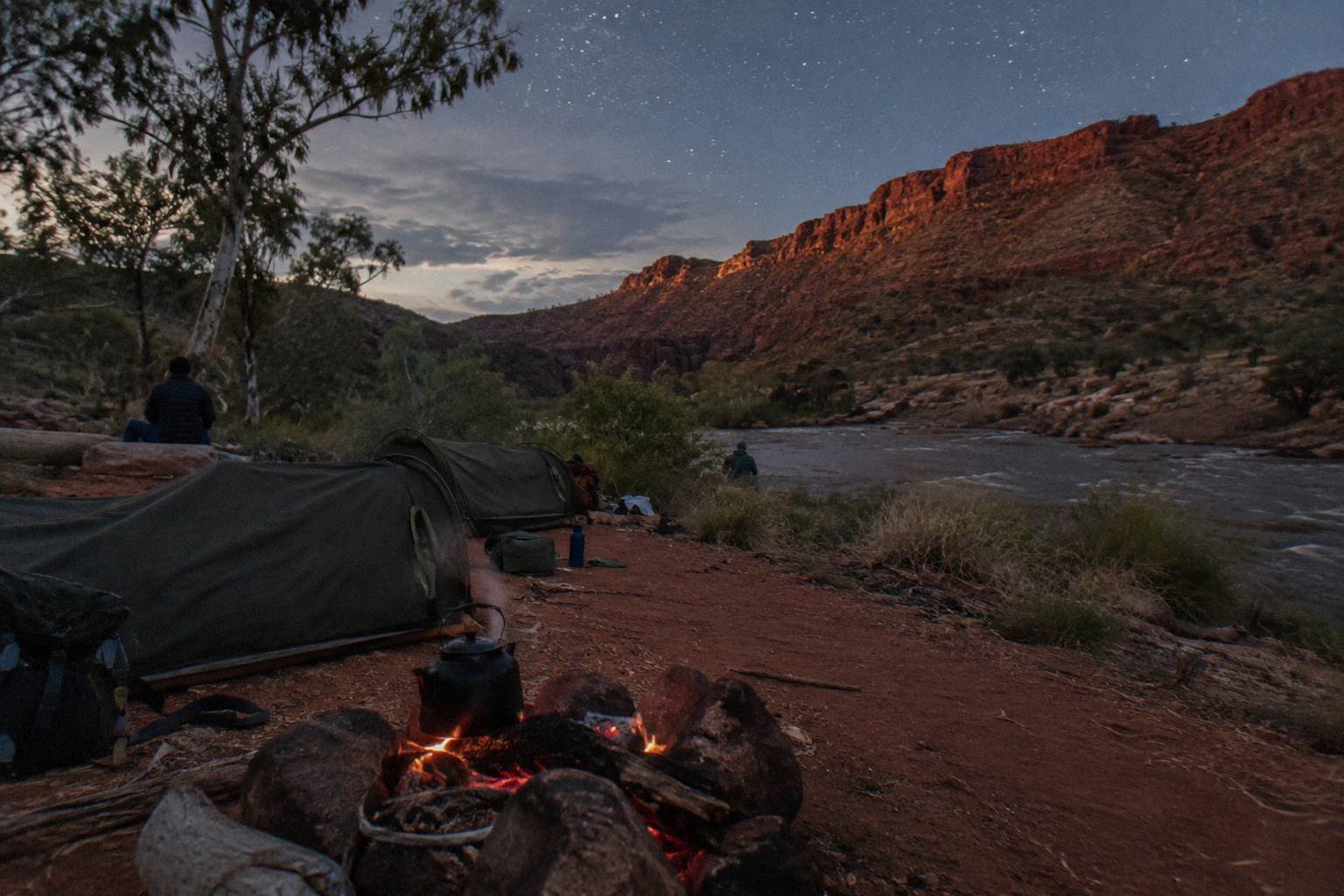
Camping tours are a different category. The "3-Day 4WD Camping Trek" with Autopia Tours, from AU$896 per person with two nights at permanent outback campsites and park pass entry fees included, and the "4-Day Uluru Red Centre 4WD", from AU$1,287 per person with three nights in permanent eco campsites, both run through winter nights at their camps. The category B campgrounds inside the park, such as those at Ellery Creek, Ormiston and Redbank, provide gas barbecues, toilets and, at Ormiston, showers, but no heating. Camping fees are booked and paid online in advance; you cannot pay at the park.
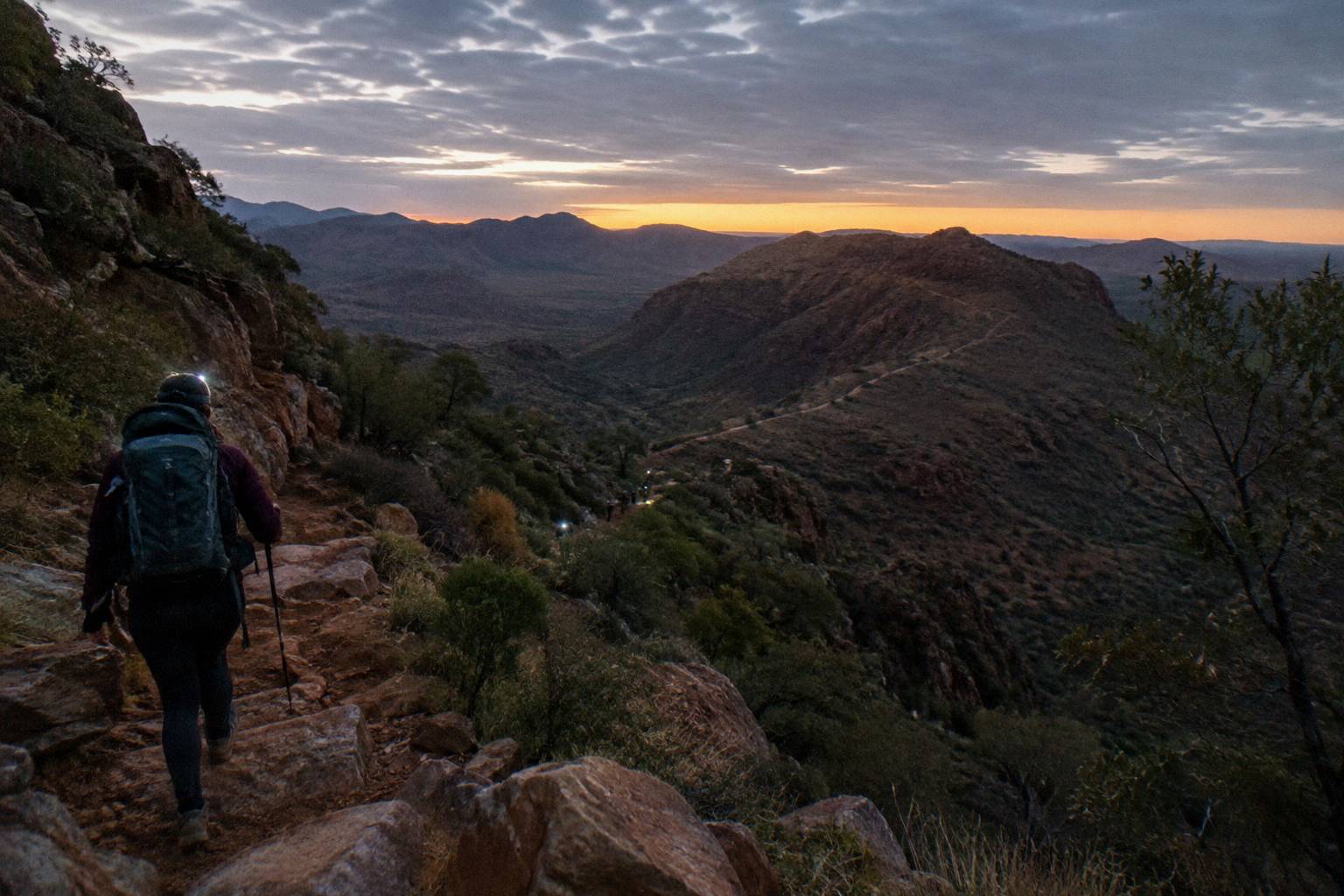
The clearest cold-weather comparison on the roster is the Larapinta option. The Larapinta Trail runs over 230 km in 12 sections from the Alice Springs Telegraph Station to the summit of Mount Sonder, and the official advice is to walk it between April and September, the cooler months, precisely because October-to-April heat is dangerous. The "Larapinta 5-Day Safari Trek" with Autopia Tours, from AU$3,125 per person, includes four nights at a private remote campsite with all camping equipment such as linen, pillows, blankets and sleeping bags supplied, plus meals, a courtesy hotel pick-up and free cancellation up to 24 hours before. Even with that gear list, the night hours at a trail camp in June or July are genuinely cold, and the pre-dawn start needed for the Mount Sonder sunrise walk, 15 km return, six hours, Grade 4, puts you on the track in the coldest air of the day.
The site's featured day trip makes the contrast neatly. The 9-Hour Coach Day Trip from Alice Springs covers the headline gorges in one daylight push, with pick-up included from Alice Springs hotels, so the night cold never touches you; a reader deciding between that and a camping trek is really deciding how much cold they want in their trip. More on that trade-off sits in whether you can do the West MacDonnells in a day tour.
What Should You Pack For The Cold?
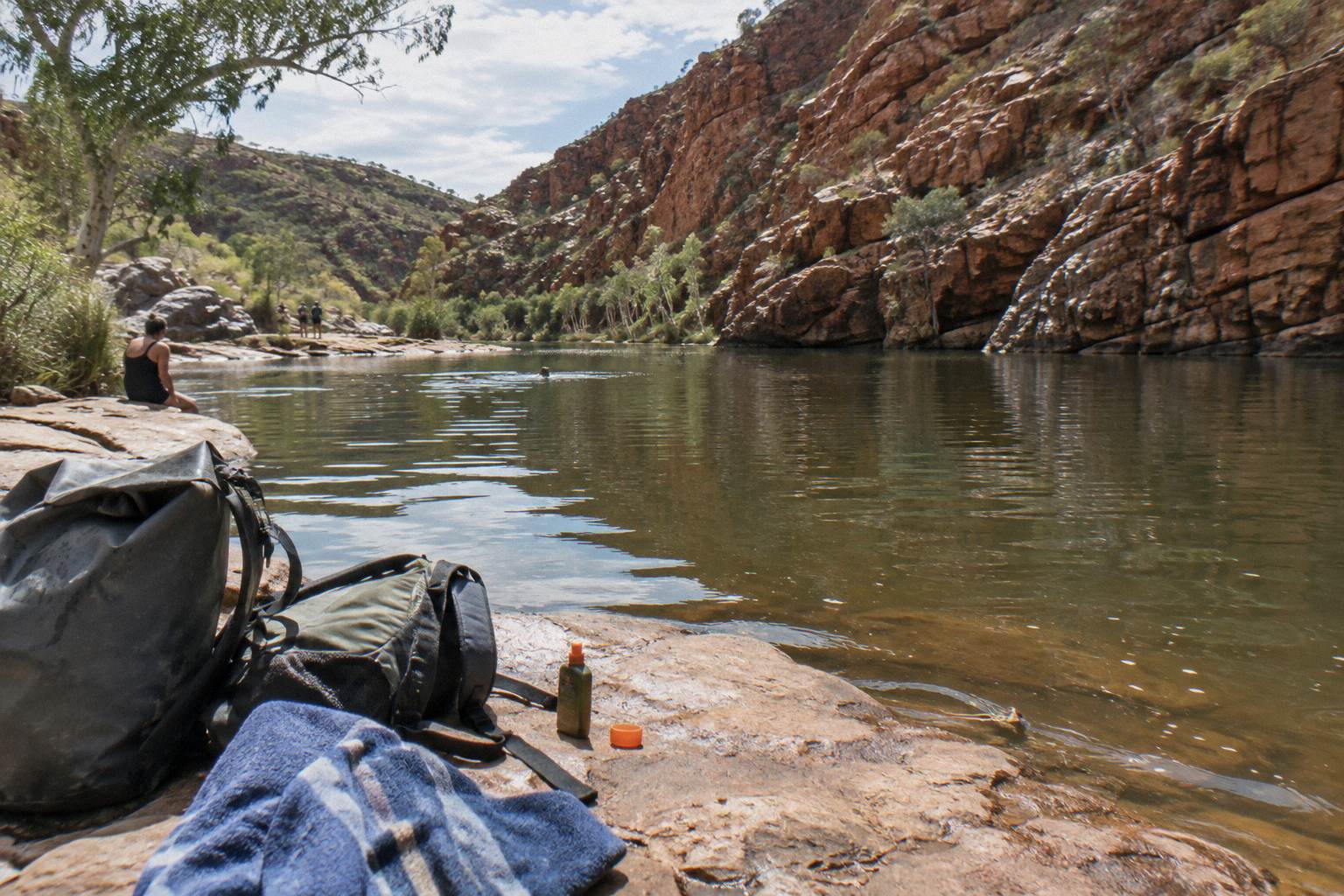
A warm layer and long trousers for any winter tour, a beanie and gloves if you are camping or chasing a sunrise, and a windproof outer layer for evening stops. For swimming, a quick-dry towel and clothes you can layer over damp skin. Pack for a day-to-night temperature range that can span well over 15 degrees, not for a single temperature.
The layering approach beats any single warm item. A t-shirt, a fleece and a light windproof shell cover everything from a warm midday walk to a sunset stop, and you can shed or add layers at the vehicle. On a shared coach day trip, space in a day bag is not a constraint, so there is no reason to travel light on warm clothing even for a product that finishes before dark.
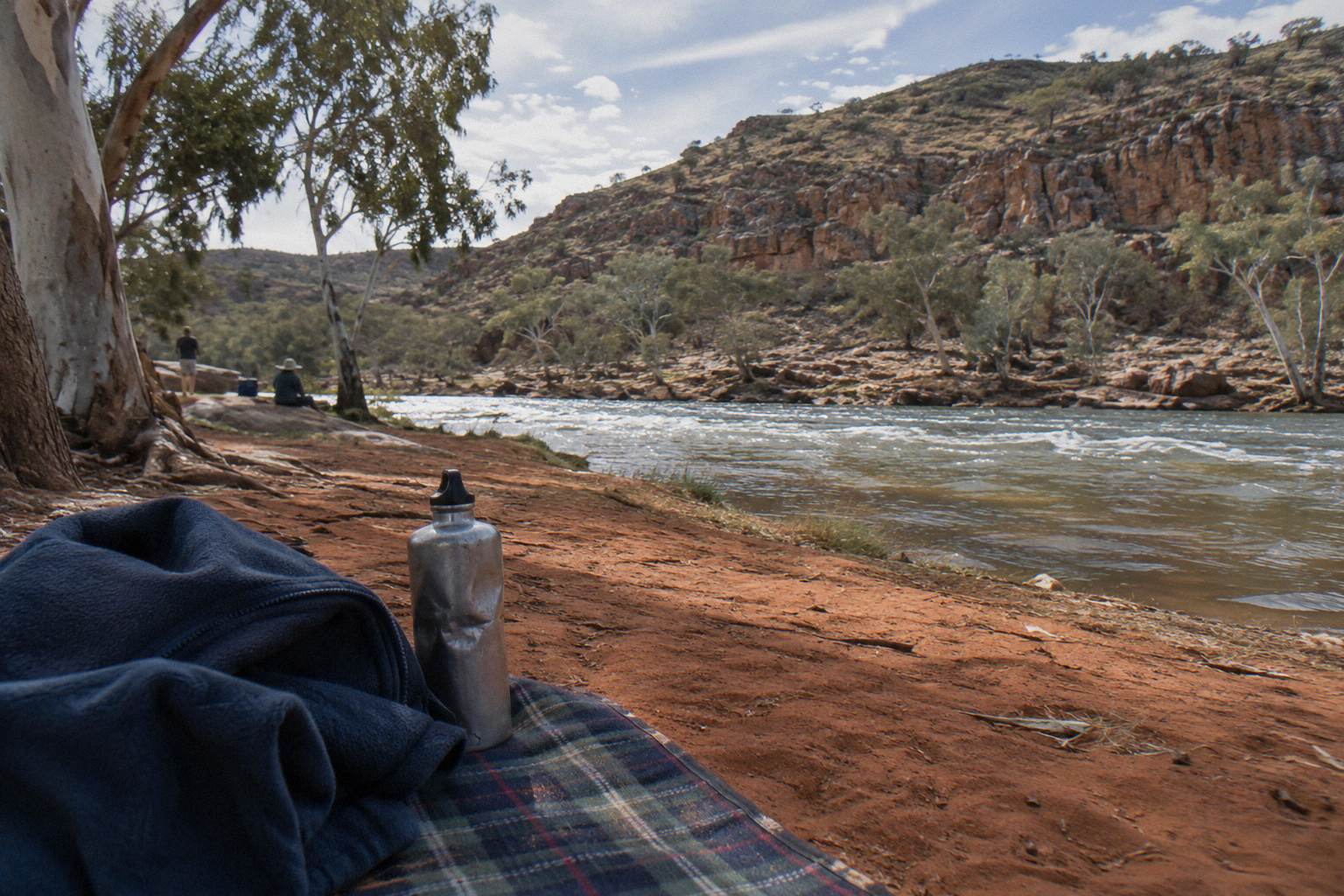
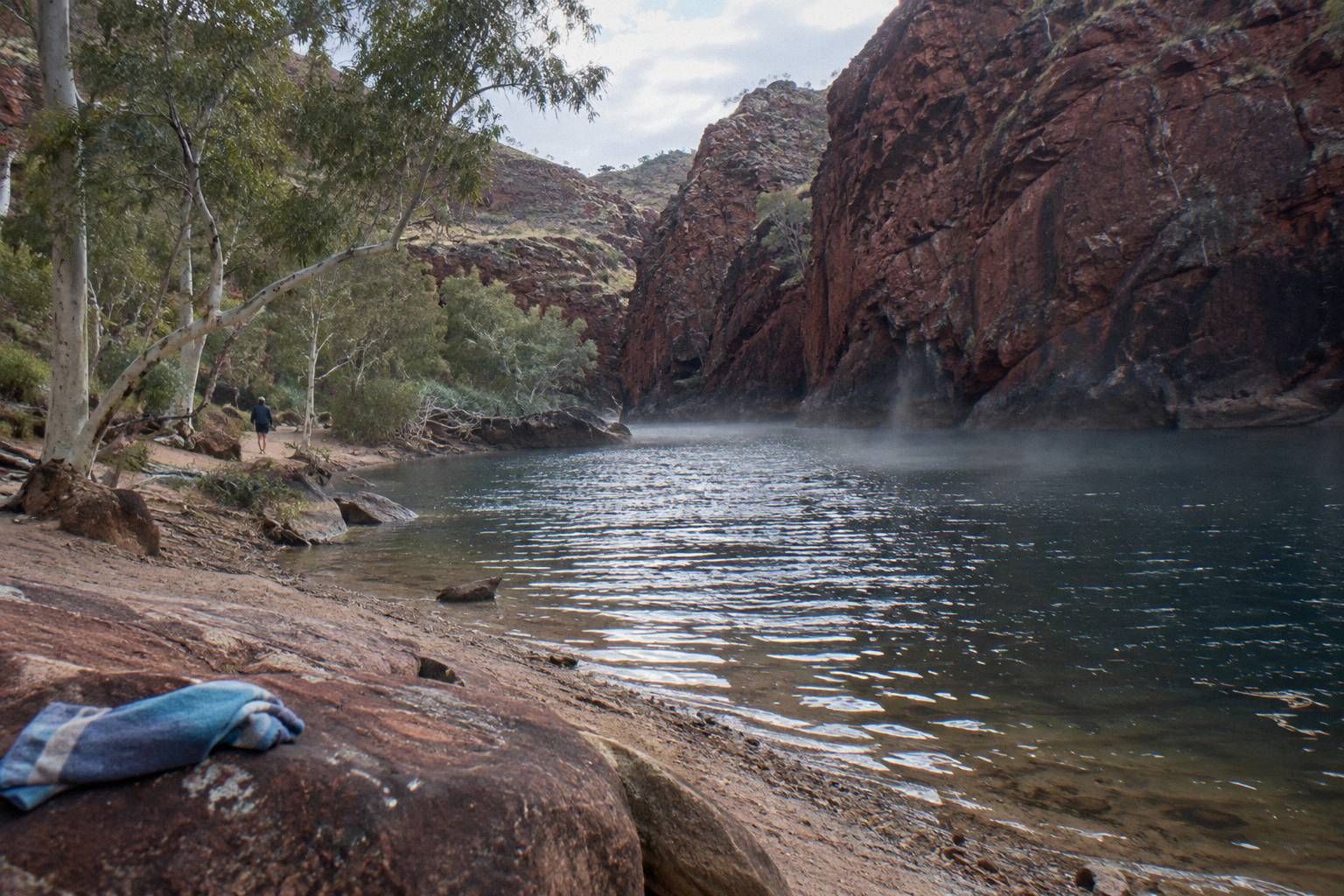
For the waterholes, the packing problem is the after-swim period rather than the swim itself. Cold water is bracing for a few minutes; standing around in wet clothes while the sun drops is what makes people properly cold. A dry layer waiting at the vehicle, and a towel that actually dries you, are the two items people forget. NT Parks safety guidance adds the universal desert list: carry and drink plenty of water, wear a hat, avoid strenuous activity in the heat of the day, and note the locations of emergency call devices on your route.
Camping tours change the list again. Fuel stoves or the free park barbecues are the only cooking option on the Larapinta Trail, open fires are not permitted, and each night must be booked and paid online before you go, so there is no booking a warmer campground on arrival. The supplied bedding on guided treks covers most of the night, but the hour around dinner and the hour around breakfast are yours to dress for. Extensive checklists for the day-tour version of this question are in what to bring on a West Macs day tour.
Seasonality closes the loop. The same packing list that seems absurd in a 40-degree November is exactly right in July, and the best time of year for a West MacDonnells tour question is really a temperature-range question. If your dates are fixed in the hot months, the cold article becomes a heat article and the layering runs the other way.
One cultural note that also affects evening plans: several of these stops are spiritually significant places, with dreaming trails crossing at Simpsons Gap and Standley Chasm described by its operators as sacred to the Arrernte people. Evening and sunrise visits are quiet ones, and warm quiet clothing fits them better than a rushed cold one.
Whether you lean toward the daylight format or the camping format, these three tours span the full range of cold exposure on offer out of Alice Springs.
Common Questions About Night Cold On Gorge Tours
Does It Get Cold At Night On A Gorge Tour Out Of Alice Springs?
Only on tours that keep you out after dark. Day trips return to town before the evening drop, while camping tours and any sunrise or sunset activity put you in single-digit temperatures. Alice Springs Airport averages a 4.7 degree minimum in June and 3.9 in July.
Does Alice Springs Get Cold At Night?
Yes, in the cooler months. The airport station's mean minimum is 4.7 degrees in June and 3.9 degrees in July, with individual nights below freezing. Between October and April the concern flips to heat, which can exceed 40 degrees.
Do I Need Warm Clothes For A Day Tour In Winter?
Yes, a warm layer and long trousers. Winter days are warm in the sun, but waterholes are extremely cold year-round, shaded gorge stops are cool, and the late-afternoon leg of the drive home can feel raw after a swim.
Is The Water Too Cold To Swim In?
The waterholes are extremely cold in every season, and NT Parks names hypothermia risk at Ormiston Gorge even in summer. Most people swim anyway, briefly, on warm afternoons. Bring a dry layer for afterwards.
Which Tours Are Coldest?
The camping itineraries. The Larapinta 5-day trek, the 3-day Kings Canyon and West MacDonnell 4WD camping trip and the 4-day Uluru adventure all sleep outdoors through winter nights, and sunrise walks start in the coldest hour of the day.
Does The Cold Affect Tour Cancellations?
Cold itself does not, but weather and road conditions can. Minor route and timing changes for weather, road conditions or park closures are flagged on camping tours, with a full refund if a core component is removed. Most day tours offer free cancellation up to 24 hours before.