Is Ellery Creek Big Hole Safe For Swimming On A Tour?
Ellery Creek Big Hole is a permanent, extremely cold waterhole in Tjoritja / West MacDonnell National Park. Here is what official park advice says about swimming there safely on a tour day.
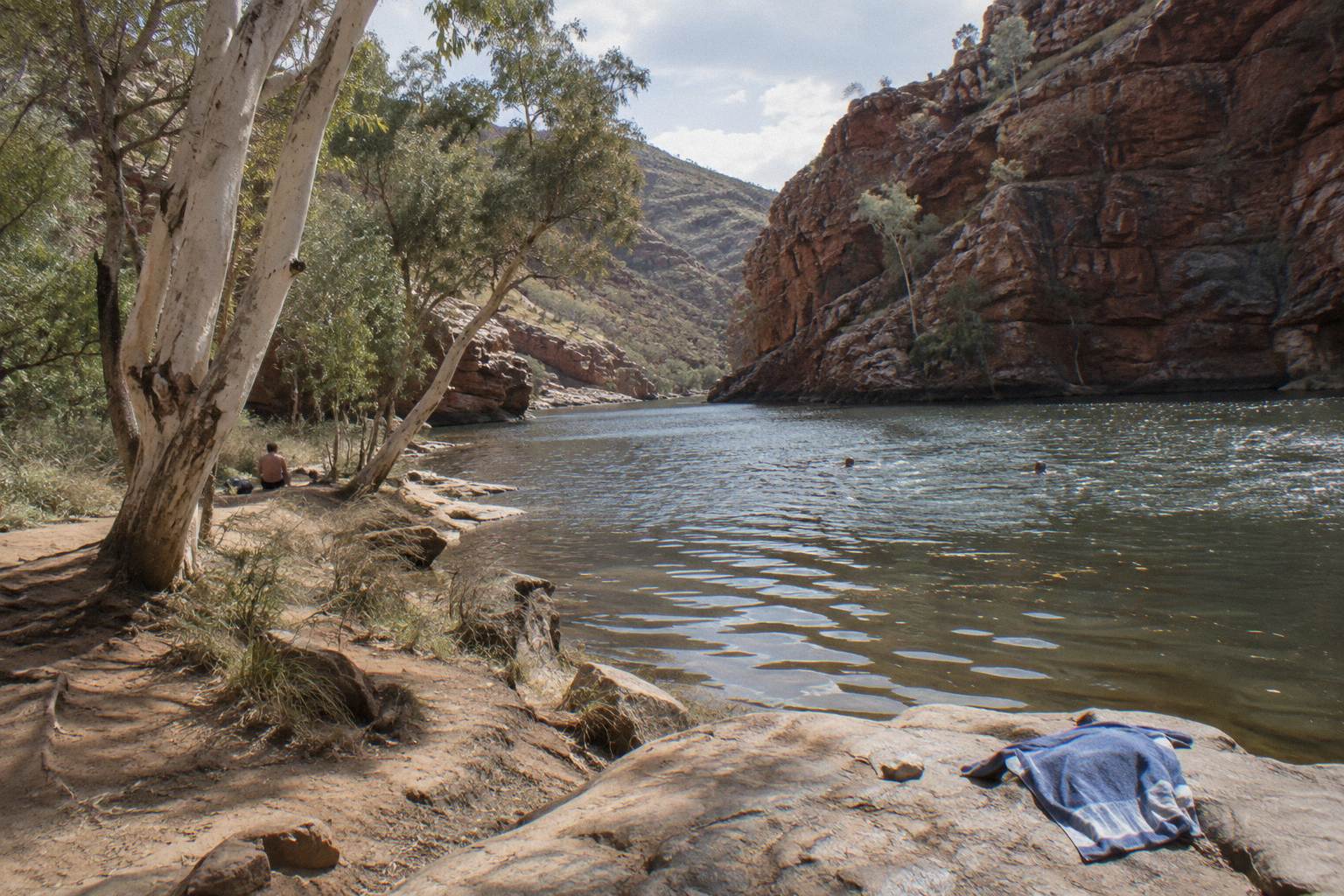
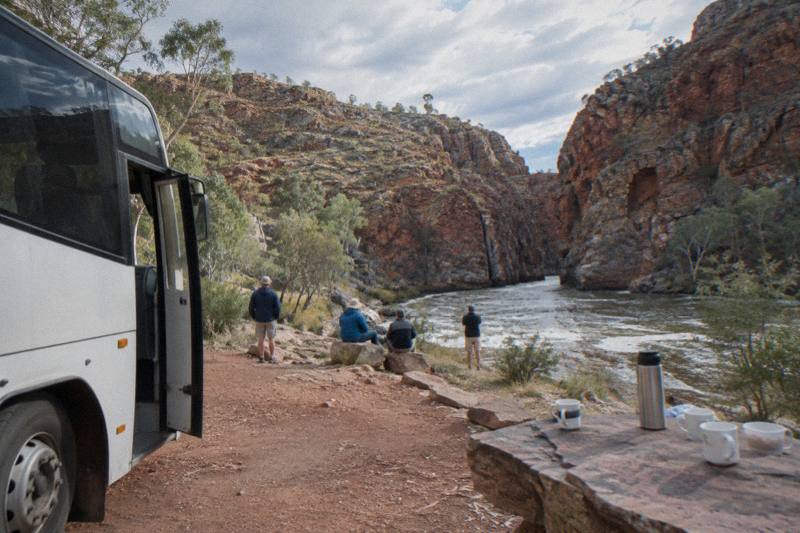
Yes, swimming is permitted at Ellery Creek Big Hole, and the official park page calls the permanent waterhole ideal for swimming, but it is also described as extremely cold, and jumping, diving and swinging are explicitly banned. The waterhole sits a five minute walk from the car park, so tour passengers can reach it easily in a normal stop, provided the guide's schedule allows time for a dip.
That is the short answer, and it comes almost entirely from the Northern Territory government's own park page for Ellery Creek Big Hole rather than from tour marketing. The distinction matters. A tour operator's photographs show people in clear water beneath red walls; the park page adds the conditions that photograph does not capture, including water cold enough to shorten a swim, a ban on any entry that involves speed or height, and roads that can be cut briefly after heavy rain. All three belong in any honest safety picture.
The question of whether it is safe on a tour, specifically, adds a second layer. Safety at a remote waterhole is partly about the water and partly about the window. A guided day trip typically allows a defined period at each stop, and a swim in near-freezing feeling water takes longer to recover from than it takes to do. Readers planning the practical side, including which stops a day trip covers and how long each one runs, can compare the options in the full day versus half day West Macs guide.
If a day trip to the ranges is already on the shortlist, these three operator listings cover the main formats from Alice Springs, from a small-group full day to a larger coach trip and a Standley Chasm-focused itinerary.
The rest of this article works through the official safety record one condition at a time: the cold, the banned entry styles, the flood and storm context, and what a tour day realistically leaves time for.
Why The Water At Ellery Creek Stays So Cold
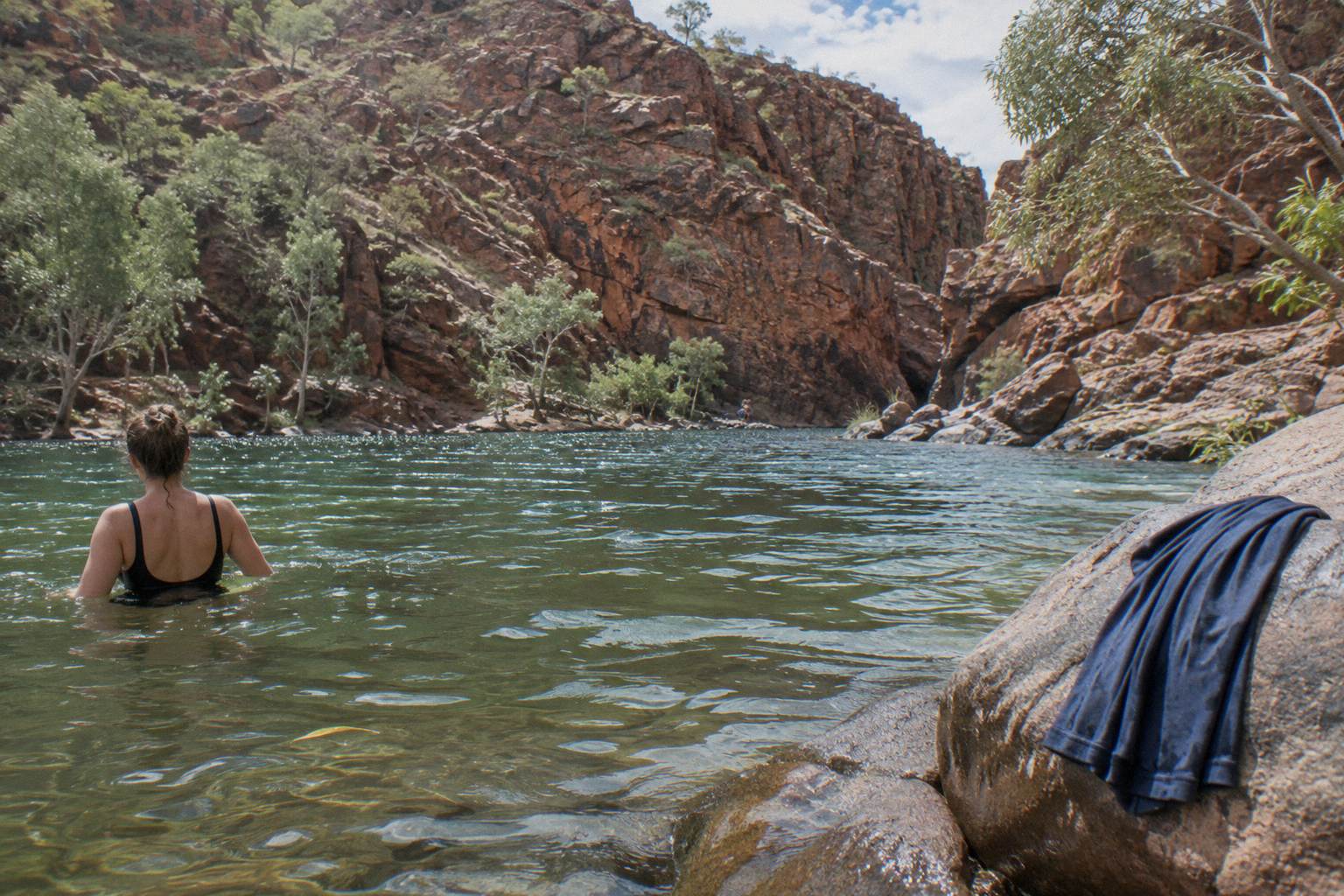
Ellery Creek Big Hole is a permanent waterhole, which is exactly why it is extremely cold: deep desert waterholes that never dry out stay far cooler than the air above them, and the park page states plainly that the water is extremely cold and ideal for swimming at the same time. Neither claim cancels the other. Swimmers enter for a short, bracing soak rather than a long training swim.
The word permanent does a lot of work here. Across Tjoritja / West MacDonnell National Park, which stretches about 161 km west of Alice Springs and covers 252,800 hectares, most creek beds are dry sand for most of the year. Ellery Creek Big Hole holds water year round, fed through the gap in the range, and that depth and shade keep the temperature down even when the desert air exceeds 40 °C between October and April, the range the park service gives for hot-season conditions.
Practically, cold water changes how a swim stop works. A quick plunge of a few minutes is one thing; staying in until your hands go clumsy is another, and climbing out over smooth rock with numb fingers is where cold-water incidents usually begin, not in the water itself. The park's own safety advice for the ranges, which applies at every waterhole, is to carry and drink plenty of water, wear a hat, and avoid strenuous activity in the heat of the day. Note the inversion: on a hot tour day the air is the hazard you manage before you swim, and the water is the hazard you manage during and after.
There is no posted water temperature figure on the official page, and this article will not invent one. What the page does give is behaviour guidance: swim, but treat the cold as real. Anyone who swims in alpine rivers or southern ocean beaches will recognise the feeling immediately. Anyone who has only swum in warm tropical water should treat a first Ellery dip as short by design.
The depth that keeps the hole permanent also explains the entry rules, which the next section covers directly.
The Entry Rules: No Jumping, No Diving, No Swinging
The official rule at Ellery Creek Big Hole is explicit: no jumping, no diving and no swinging. Entry is at water level only. The ban exists because a permanent waterhole has rock shelves and submerged timber whose position is invisible from above, and hitting either from height causes the injuries that close swimming holes across the outback. On a tour day the rule is not negotiable with a guide.
Jumping from the surrounding rocks is the single most tempting and least advisable thing to do at Ellery. The waterhole sits inside a narrow gap with flat slabs at the waterline that look, to an arriving visitor, like a natural diving platform. The park page forecloses that reading in three words: no jumping, diving or swinging. Submerged hazards shift after floods, so even a jump that was safe last season tells you nothing about this one.
For families on tour, the rule is worth stating to children before arrival rather than after. A guide managing a group at a remote site, an hour and a half or more from Alice Springs along sealed and unsealed road, has limited capacity to handle an injury, and every tour's schedule depends on the group moving on time. The safer framing is that the waterhole is a wading and swimming place, entered from the edge like a rock pool, not a jumping place at all.
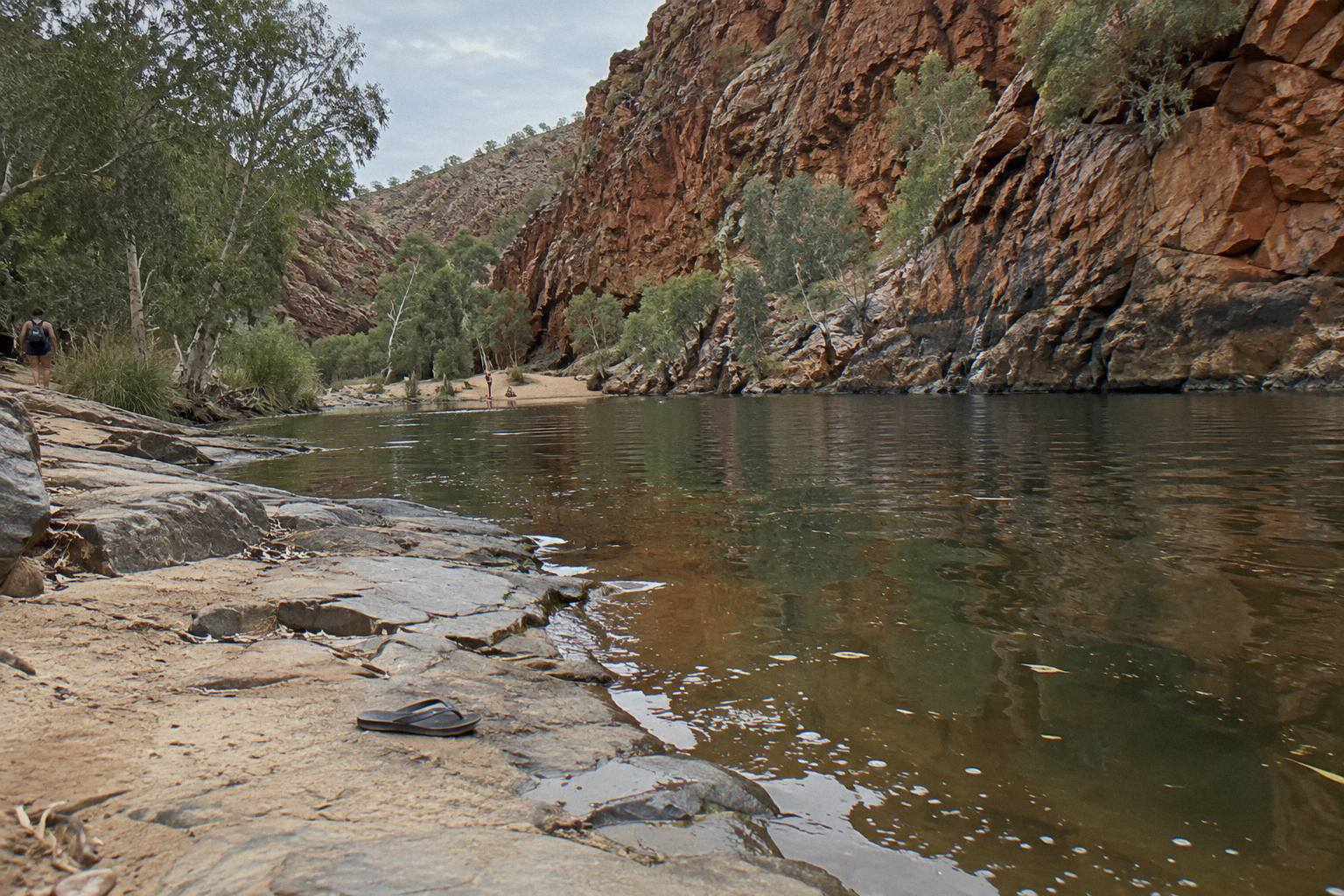
The same official page covers the facilities that surround the swim: gas barbecues, toilets, a fire pit, disabled access and water that must be boiled before drinking. The campground is category B, booked and paid online in advance, with no option to pay at the park. None of that changes the water, but it does mean a tour stop has genuine amenities, and it means independent travellers who arrive hoping to camp must have booked ahead.
Still weighing whether a guided day is the right format for a swim-focused visit?
The small-group full day run by Alice Holiday Tours is the listing this site features alongside this article. It runs 10 hours from Alice Springs with hotel pickup within 10 km of the town centre, includes Standley Chasm entry and the NT Parks Visitor Pass, and carries a 4.6 rating from 16 reviews, with free cancellation up to 24 hours before. Its itinerary names Anzac Hill, Simpsons Gap, Honeymoon Gap, Standley Chasm and the Ellery Creek loop country, so read the live listing for the current stop list before assuming swim time.
Does Any Tour Guarantee A Swim At Ellery Creek?
No tour on this site's roster promises a swim stop at Ellery Creek Big Hole, and no honest article should imply one. Guided day trips visit the waterhole as a sightseeing and walking stop with a defined time window; whether guests swim is a matter of time, season and the guide's judgement on the day. Book a tour for the gorge, not for a guaranteed dip.
That framing is deliberate. Tour itineraries list destinations and inclusions, and water is listed as scenery and as a walk destination, not as an aquatic activity. The West MacDonnell Ranges Full Day - Small Group Tour lists a visit that takes in Standley Chasm and the Ellery Creek area alongside tea, coffee, a picnic lunch and the parks pass. Nothing in those inclusions is a swim guarantee. Weather, road conditions and group pace all shift a schedule, and Alice Holiday Tours states on its own site that if attractions are closed for circumstances beyond its control, a suitable alternative is provided.
The honest way to plan is to treat a swim as a possible bonus on a day whose certain rewards are the gorge walls, the river red gums and the walking. Some passengers swim for three minutes and spend the rest of the stop dry and content. Others arrive in the cooler months, when the air is mild, and find the cold water genuinely pleasant for a short soak. The best time of year for a West MacDonnell tour guide covers the seasonal picture in more depth.
There is also a middle format worth knowing about: the Alice Springs West MacDonnell Ranges Day Tour with Lunch from Wildlife Tours Australia, 10.5 hours from AU$163 per person, including lunch and snacks, Standley Chasm entry, guided bush walks of roughly 3 to 4 km subject to fitness, and an accredited driver-guide, with the NT Parks pass as an extra bought online before you go. Walks, not swims, are the advertised activity.
Between the small-group and coach options, the walking-plus-lunch format suits travellers who want the gorges covered efficiently and are relaxed about whether water time happens. Swimmers should raise it with the operator before booking if it is a priority.
Rain, Unsealed Road And Flash Floods
The last 2 km of road into Ellery Creek Big Hole is unsealed, and the official page warns that roads can be impassable for a short time after heavy rain. The same storm systems that close the road also raise the flash flood risk the park service flags for all waterholes in the ranges. Neither is a reason to avoid Ellery; both are reasons to check conditions on the morning of a tour.
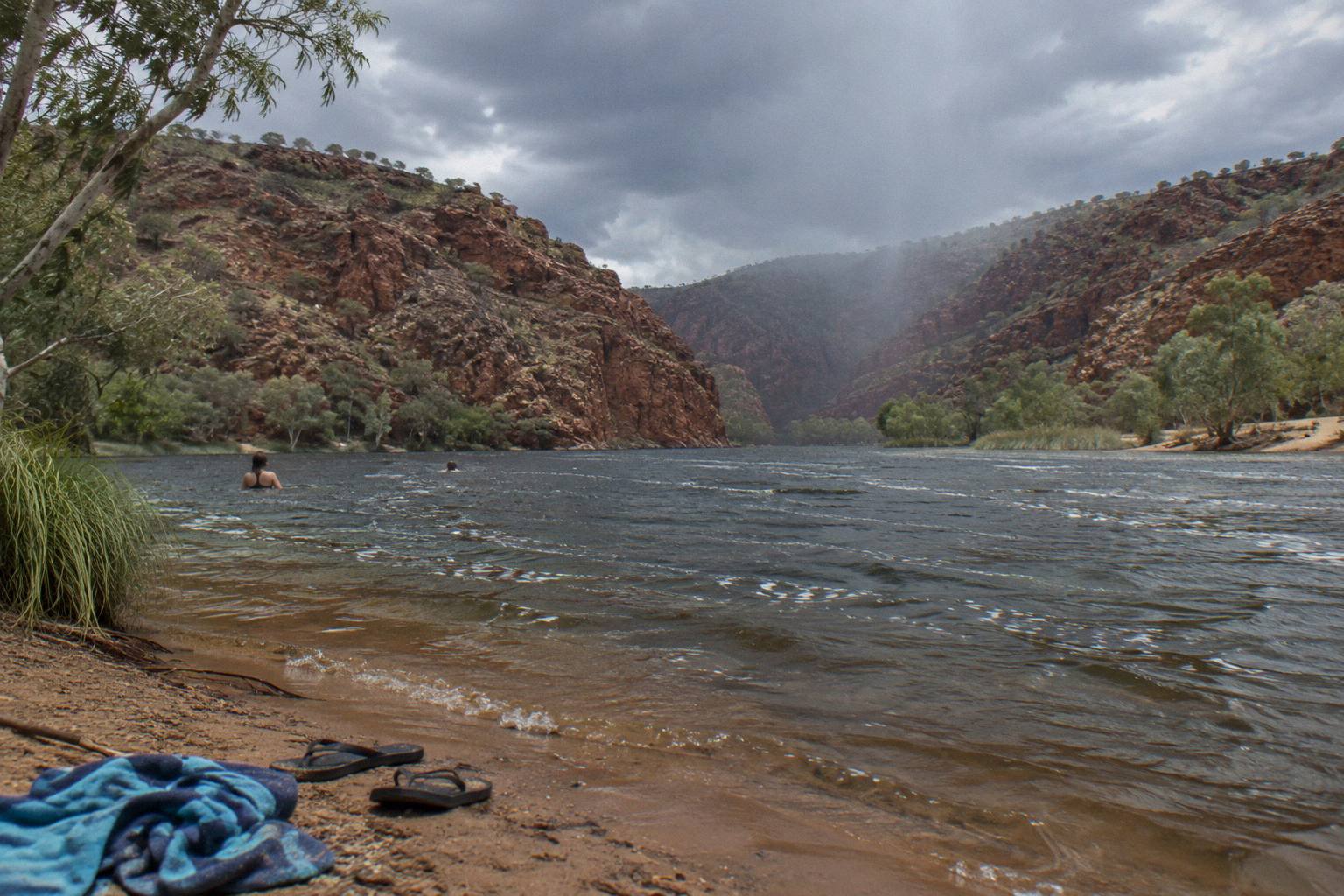
Flash flooding in Central Australia is not the slow rise of a coastal floodplain. Rain falling many kilometres away in the headwaters of a creek can arrive at a gorge as a wall of water under a blue local sky, which is why the swimming advice for the whole park pairs "swim only where allowed" with "flash floods and storms". A permanent waterhole sits in exactly the kind of narrow rocky channel that funnels that water. The practical rule the rangers give is situational: if storms are about, stay out of creek beds and away from the waterline, and if a guide calls the group back to the vehicle, that call is not a suggestion. The rest of the planning pages sit on West MacDonnell Ranges Tours.
The access detail matters for tours as much as private drivers. Most of the drive west from Alice Springs follows sealed Larapinta Drive and Namatjira Drive, but the final approach to Ellery is dirt, and a coach or small bus will simply not attempt it after significant rain. This is the mechanism behind those occasional days when a tour substitutes another stop, and the Alice Holiday policy of providing a suitable alternative when attractions are closed is designed for precisely this. It is also why cancellations and reroutes cluster in the warmer months, when storm activity is higher.
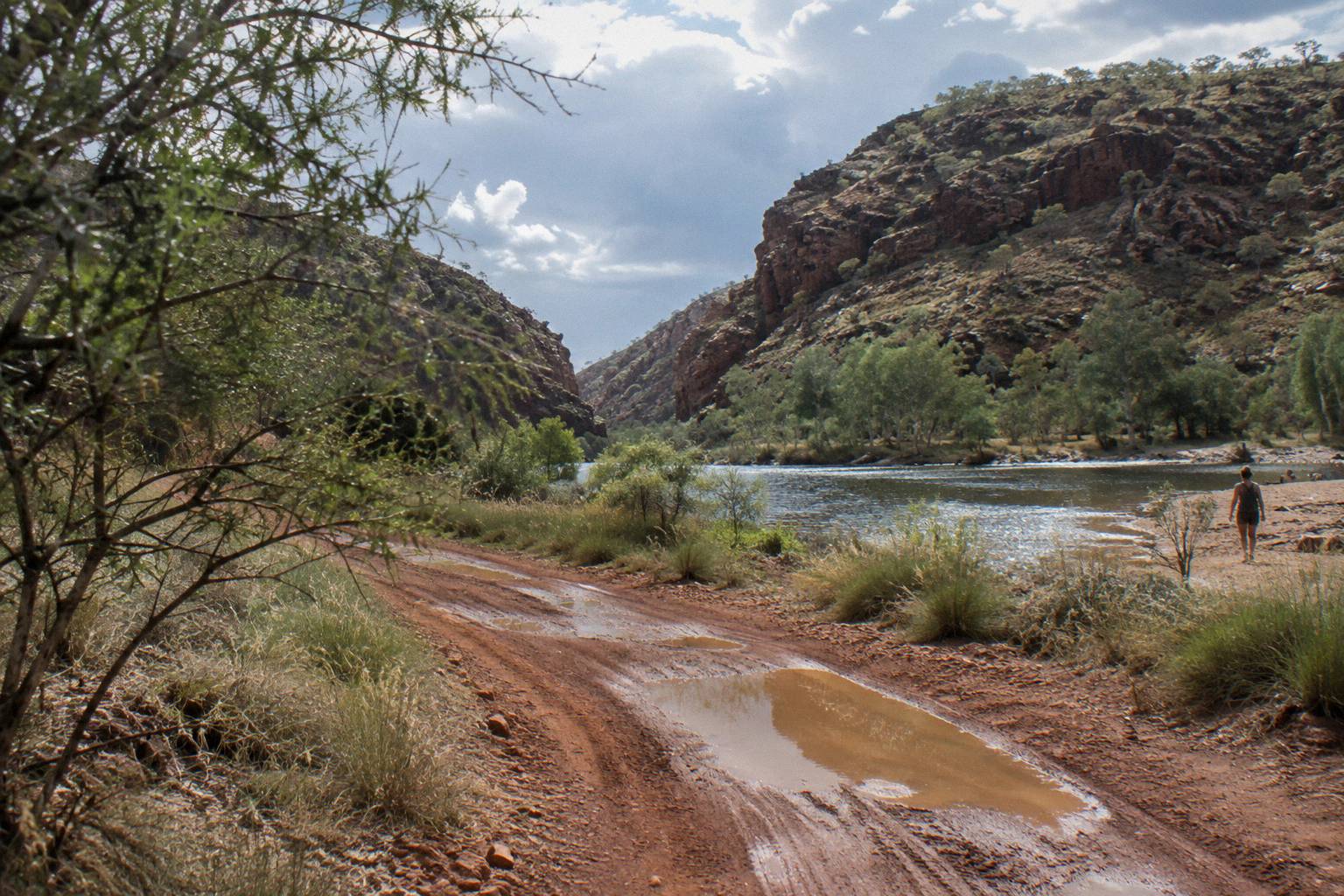
For all of this, Ellery remains one of the more accessible big waterholes in the park, which is a large part of its popularity with tours. Redbank Gorge, by contrast, sits behind 5 km of road marked high clearance 4WD only, which removes it from regular coach itineraries entirely. Ellery's 2 km of dirt is usually passable to everything from a coach to a caravan, outside the brief windows after rain. The Ellery Creek Big Hole tour guide on this site covers the stop's wider appeal.
The Bureau of Meteorology's heatwave warnings are the park service's named reference for hot-weather decisions, and the same morning check covers storms. A tour operator making the call has more local information than a visitor, which is one of the quiet arguments for guided travel in flood-prone country.
Ellery Creek Safety Facts At A Glance
The table below collects the official safety-relevant facts for Ellery Creek Big Hole in one place: what is permitted, what is banned, what the water is like and what the access involves. Every line traces to the Northern Territory park page or the park-wide swimming and safety advice, not to operator marketing. Read it before deciding how a swim fits into a tour day.
| Fact | Official position | What it means on a tour day |
|---|---|---|
| Swimming | Permitted; waterhole described as ideal for swimming | A dip is allowed if the stop allows time |
| Water temperature | Extremely cold, permanent waterhole | Keep swims short; expect a bracing plunge |
| Jumping, diving, swinging | Explicitly banned | Enter at water level only, including children |
| Walk from car park | 5 minutes, flat and short | Easy access in a normal tour stop window |
| Access road | Last 2 km unsealed | Can be impassable briefly after heavy rain |
| Storms | Flash floods and storms flagged park-wide | Stay out of the water if storms are about |
| Drinking water | Available but must be boiled | Bring your own bottle on the tour |
| Toilets and BBQs | Public toilets and gas BBQs on site | Real facilities at the stop |
Two lines deserve a second read. The first is the permanent waterhole line: permanence is why Ellery can be swum at all in a landscape of dry creek beds, and it is also why the cold never fully leaves the water. The second is the flash flood line, because it is the only hazard on the list that arrives from somewhere you cannot see. Everything else at Ellery is a rule you follow; flooding is a condition you watch for.
It helps to set Ellery beside its neighbours. Ormiston Gorge, 135 km west and sealed all the way, has a permanent waterhole 500 m from its visitor centre, up to 14 m deep at the southern end, described in nearly identical terms: extremely cold, hypothermia risk even in summer, no jumping or diving. The swimming at Ormiston Gorge guide unpacks that stop. Glen Helen Gorge, 132 km out, invites a cool dip near its restaurant and campsites. The pattern across the park is consistent: safe swimming in the West MacDonnells is cold, calm, feet-first swimming, and every official page says a version of the same thing.
How The Cold Compares With Ormiston And Glen Helen
Ellery Creek Big Hole, Ormiston Gorge and Glen Helen Gorge all hold near-permanent cold water, but the official descriptions differ in degree: Ormiston's waterhole carries an explicit hypothermia warning even in summer, Ellery's page stresses extreme cold without that warning, and Glen Helen uses gentler cool dip wording. Ellery therefore sits in the middle: colder than a casual dip, less formally hazardous than Ormiston.
That ranking is a reading of wording, and it should be used as a reading of wording. The park service writes differently about different sites because the sites differ: Ormiston's hole reaches 14 m in its southern end and holds that cold mass through summer, while Glen Helen's swimming spot on the Finke River system is shallower and more open. Ellery's depth is not stated on its page, which is why this article prints no number for it.
What the comparison settles is the practical question of expectation. A traveller who swam at Ormiston and found it brutal will find Ellery similar in kind, possibly gentler in degree. A traveller whose only outback swim was Glen Helen should expect more cold at Ellery, and should plan a shorter swim accordingly. In every case the entry rules are the same across the park: no jumping, no diving, swim only where allowed, and treat a storm sky as the end of swimming for the day.
The comparison is easier to read side by side:
| Waterhole | Distance from Alice Springs | Official cold wording | Swimming and access notes |
|---|---|---|---|
| Ellery Creek Big Hole | 2 km unsealed approach off the sealed drive west | Extremely cold, ideal for swimming | 5 minute walk from car park; no jumping, diving or swinging; road can close briefly after rain |
| Ormiston Gorge | 135 km, sealed | Extremely cold, hypothermia risk even in summer | Waterhole 500 m from visitor centre, up to 14 m deep; no jumping or diving |
| Glen Helen Gorge | 132 km | Cool dip wording | Carpark and coach parking, restaurant and campsites nearby |
| Redbank Gorge | Last 5 km unsealed, 4WD only | Cold, flotation device recommended | Waterhole 1 km from car park; not on regular coach itineraries |
The other shared feature among the first three is that all are walkable from a car park or coach parking, which is why all three anchor tour itineraries. The swimming holes of the West MacDonnell Ranges guide puts the full set side by side for anyone building a trip around water rather than walking.
What To Bring For A Swim Stop On A Tour
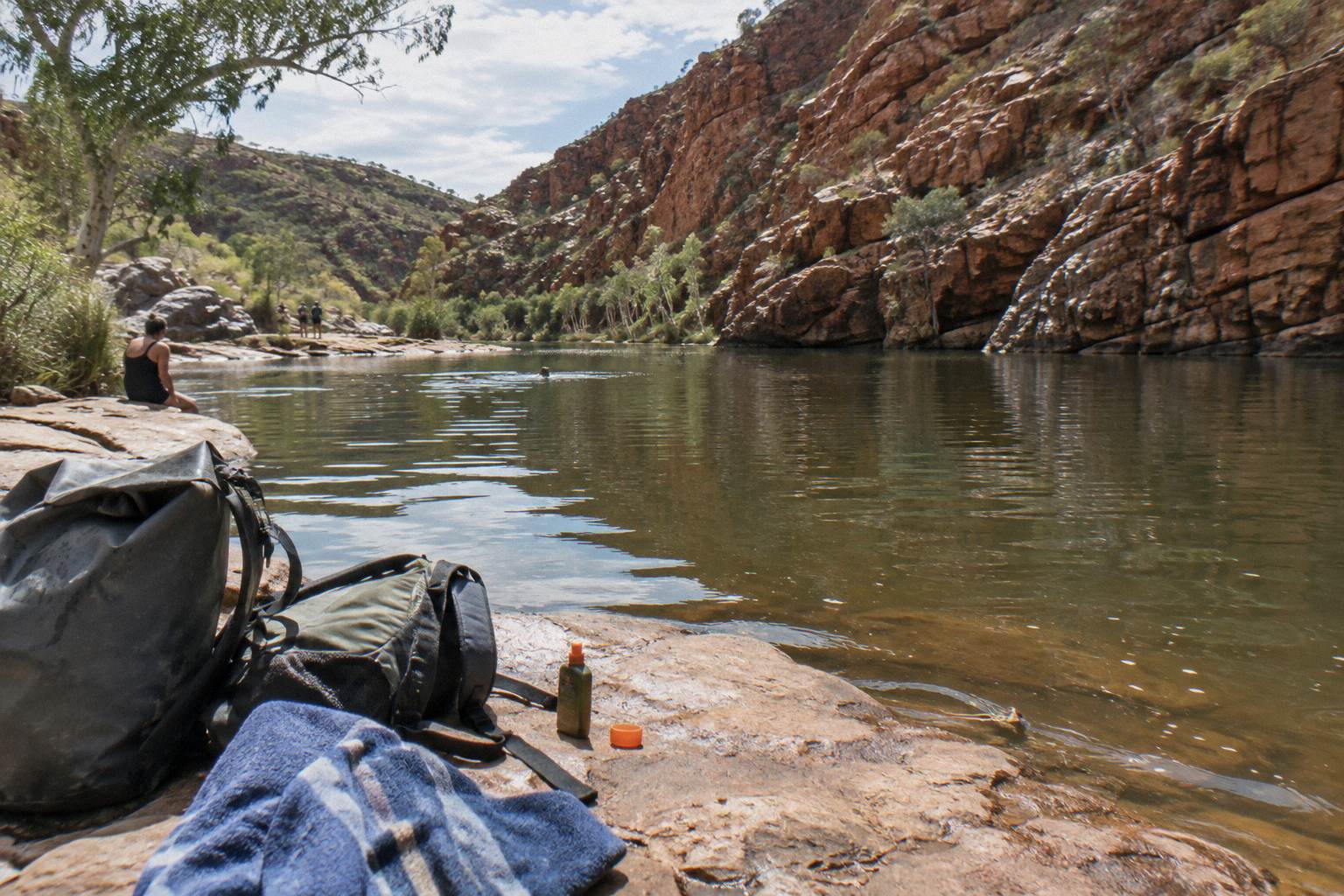
For a possible swim at Ellery Creek Big Hole, bring a towel, a swimsuit already worn under clothes or quick to change into, secure footwear for the 5 minute walk, drinking water and a warm layer for immediately after the swim. The cold that makes the waterhole refreshing also makes the first minutes out of it cold, and a tour bus will not wait for a slow, shivering change.
The warm layer is the item people forget. In the cooler months, when swimming conditions are at their best relative to the air, the contrast between water and air is at its sharpest, and wind through the gap can strip heat fast. A fleece or windproof layer worn while hair dries turns a good swim into a good memory; standing around wet in a cotton shirt does the opposite. Dry shoes matter for the walk back over gravel, since numb feet bruise easily.
Everything else on the list is standard day-tour kit, and the what to bring on a West Macs day tour guide covers the full loadout. Note that most full-day listings include onboard water or snacks: the small-group full day carries tea, coffee, snacks, water and a picnic lunch, while the Wildlife Tours day includes lunch and snacks but leaves the parks pass to you. Neither towels nor swimsuits appear on any roster listing's inclusions, so assume you provide your own.
A last note on the water onsite: Ellery has water available that must be boiled before drinking, per the park page. Tour vehicles carry their own supply, so refill from the vehicle, not the tap, unless you are camping and boiling. For campers, the category B campground must be booked and paid online, with no payment accepted at the park.
Booking A Tour With An Ellery Stop
The tours most likely to include Ellery Creek Big Hole are the full-day small-group and coach itineraries out of Alice Springs, from AU$279 and AU$249 per person respectively, plus a 10.5 hour Standley Chasm itinerary from AU$220. All three include Standley Chasm entry and free cancellation up to 24 hours before; the small-group trip bundles the NT Parks pass while the other two leave it as an online extra.
Checking the live listing for the current stop list is the one step that matters before booking, because itineraries are adjusted for season, road conditions and group. The 9-hour coach day trip from Emu Run Experience, rated 4.7 from 336 reviews, includes hotel pickup, Standley Chasm entry, morning tea and a bushman's lunch, with children aged 2 and over welcome. The Autopia West MacDonnell Ranges & Standley Chasm tour, rated 4.7 from 70 reviews, runs a small-group vehicle with lunch, snacks, guided bushwalking and onboard Wi-Fi, for children aged 6 to 17 accompanied by an adult. The Alice Holiday small-group full day, rated 4.6 from 16 reviews, is the pass-inclusive option.
None of the three is a swimming tour, and that is the point worth repeating at the booking stage. You are buying the gorge, the guide and the logistics; the waterhole is a destination within the day where a short, cold, legal swim is sometimes possible. Travellers who want swimming as the centrepiece rather than a bonus should read the operator's itinerary carefully or ask directly before booking.
For convenience, the same three listings again, side by side:
Whatever the format, the safety picture does not change: enter slowly, exit before you are too cold to climb out safely, keep children at the waterline, and let weather decide the rest.
Common Questions About Swimming At Ellery Creek Big Hole
Is Ellery Creek Big Hole Safe To Swim?
Yes. Swimming is permitted and the official park page describes the permanent waterhole as ideal for swimming, with the caveats that the water is extremely cold and jumping, diving and swinging are banned. Swim only in calm conditions and stay out of the water when storms are about, because flash floods are flagged for waterholes across the park.
Is Ellery Creek Big Hole Safe For Swimming On A Tour?
Yes, provided you treat it as a short cold plunge rather than a leisurely swim. The waterhole is a 5 minute walk from the car park, so a tour stop gives easy access, but no tour on this site's roster guarantees swim time. Weather, road conditions and the guide's schedule decide on the day.
How Cold Is The Water At Ellery Creek Big Hole?
The official page describes the water as extremely cold but publishes no temperature figure, and none should be guessed. It is a permanent waterhole, so it stays cool year round even when desert air temperatures exceed 40 °C between October and April. Plan a short swim and a warm layer for afterwards.
Can You Jump Or Dive Into Ellery Creek Big Hole?
No. The park page bans jumping, diving and swinging outright. Submerged rock and timber cannot be seen from above and shift after floods, and entry from height is the classic cause of serious injury at outback waterholes. Enter at water level only.
Can Rain Stop A Tour From Reaching Ellery Creek Big Hole?
Yes. The last 2 km of road is unsealed and can be impassable for a short time after heavy rain, and operators reroute or substitute stops when attractions are closed for reasons beyond their control. Checking conditions on the morning of the tour is sensible in the storm season.
Is Ellery Colder Than Ormiston Gorge For Swimming?
The two are described similarly, with one difference in degree: Ormiston's page carries an explicit hypothermia warning even in summer for its waterhole up to 14 m deep, while Ellery's page stresses extreme cold without that warning. Treat both as short-swim waterholes and enter feet first.