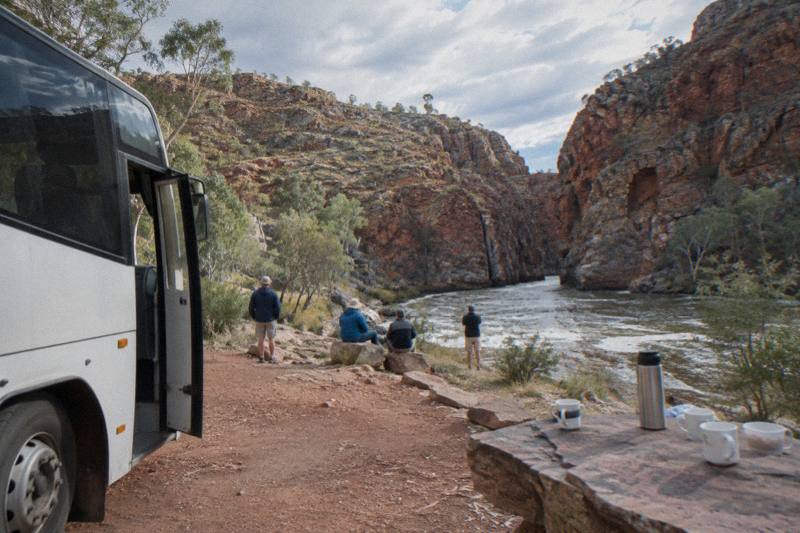
Ochre Pits On A West Macs Tour: Culture And Colours
The Ochre Pits sit 110 km west of Alice Springs inside Tjoritja / West MacDonnell National Park, a working quarry where Arrernte people have collected pigment for generations and one of the most photographed stops on a full day West Macs itinerary.
Short answer
The Ochre Pits are an active cultural quarry 110 km west of Alice Springs on Namatjira Drive, reached on sealed road in around 90 minutes. Several full day tours from Alice Springs stop here, from AU$163 per person, and day visitors need an NT Parks pass bought online. Expect a short walk from the carpark, a picnic area, and layered walls of red, yellow and white ochre.
Tjoritja / West MacDonnell National Park runs about 161 km west of Alice Springs, and along that corridor of sealed road sits one of the most quietly remarkable stops in the Red Centre. The Ochre Pits, 110 km from town, are not a gorge and not a swimming hole. They are a quarry: a carved cliff face banded in red, yellow and white, where Arrernte people have dug mineral pigment for longer than any record keeps count. The park itself was gazetted on 15 October 2014 under its dual name and covers 252,800 hectares on the homelands of Central Arrernte, Western Aranda and Luritja people, jointly managed with those Traditional Owner groups.
Most visitors arrive here on a day tour, sandwiched between Simpsons Gap in the east and Ormiston Gorge further west, and the stop usually lasts just long enough for a walk to the cliff face, some photos and a look at the interpretive signs. That brevity sells it short. This guide covers what the pits are, why ochre matters culturally, which tours actually stop here, what the visit involves, and how to plan around passes, seasons and safety.
What Are The Ochre Pits?
The Ochre Pits are a natural deposit of mineral ochre inside Tjoritja / West MacDonnell National Park where Arrernte people have traditionally quarried pigment for ceremonial and everyday use, leaving the cliff face striped in red, yellow and white bands roughly 110 km west of Alice Springs. Unlike every other headline stop in the West Macs, this one is not about water or walking. It is about colour and continuity, a place where the landscape itself is the raw material of culture, and where the digging marks of countless visits are part of what you are looking at.
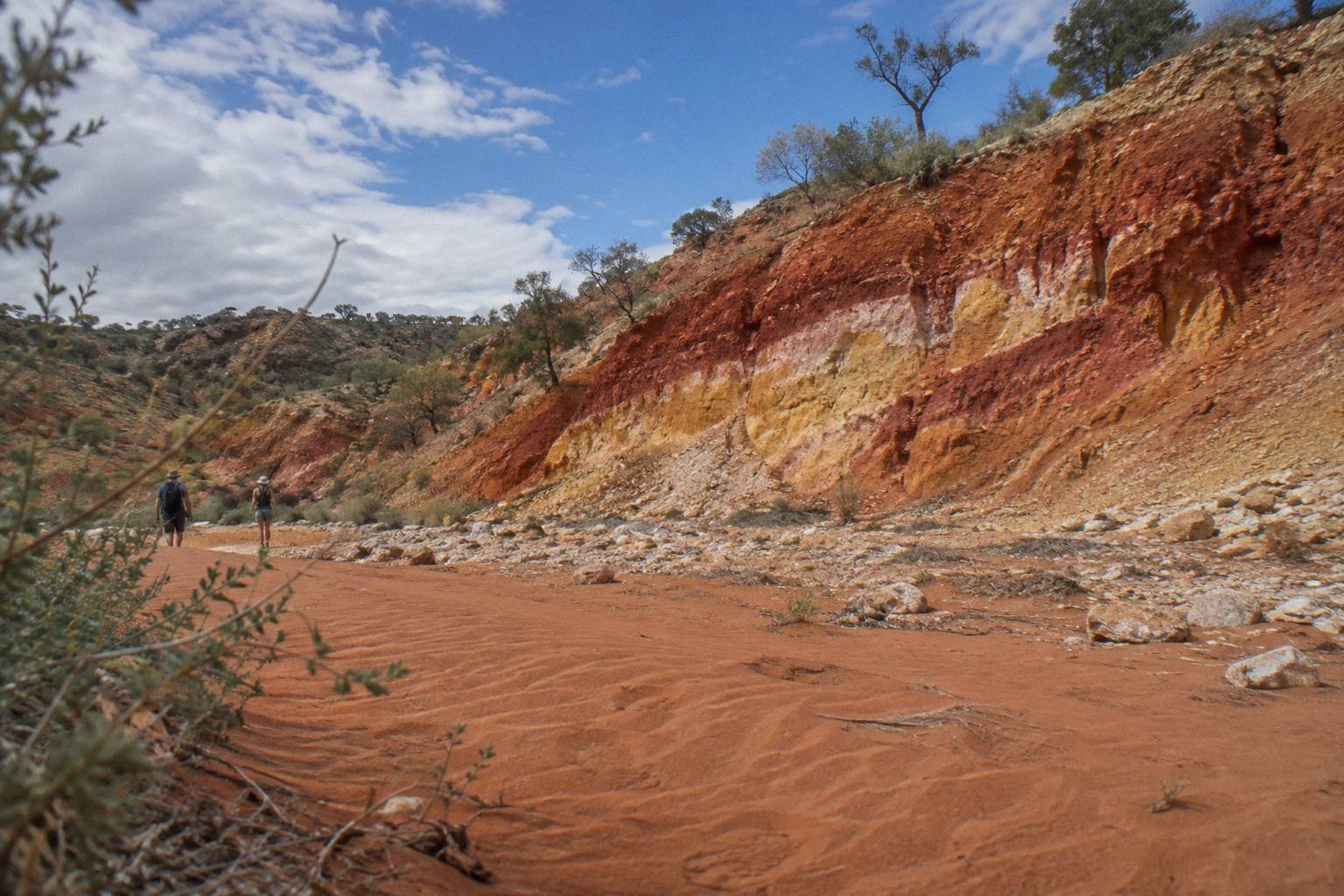
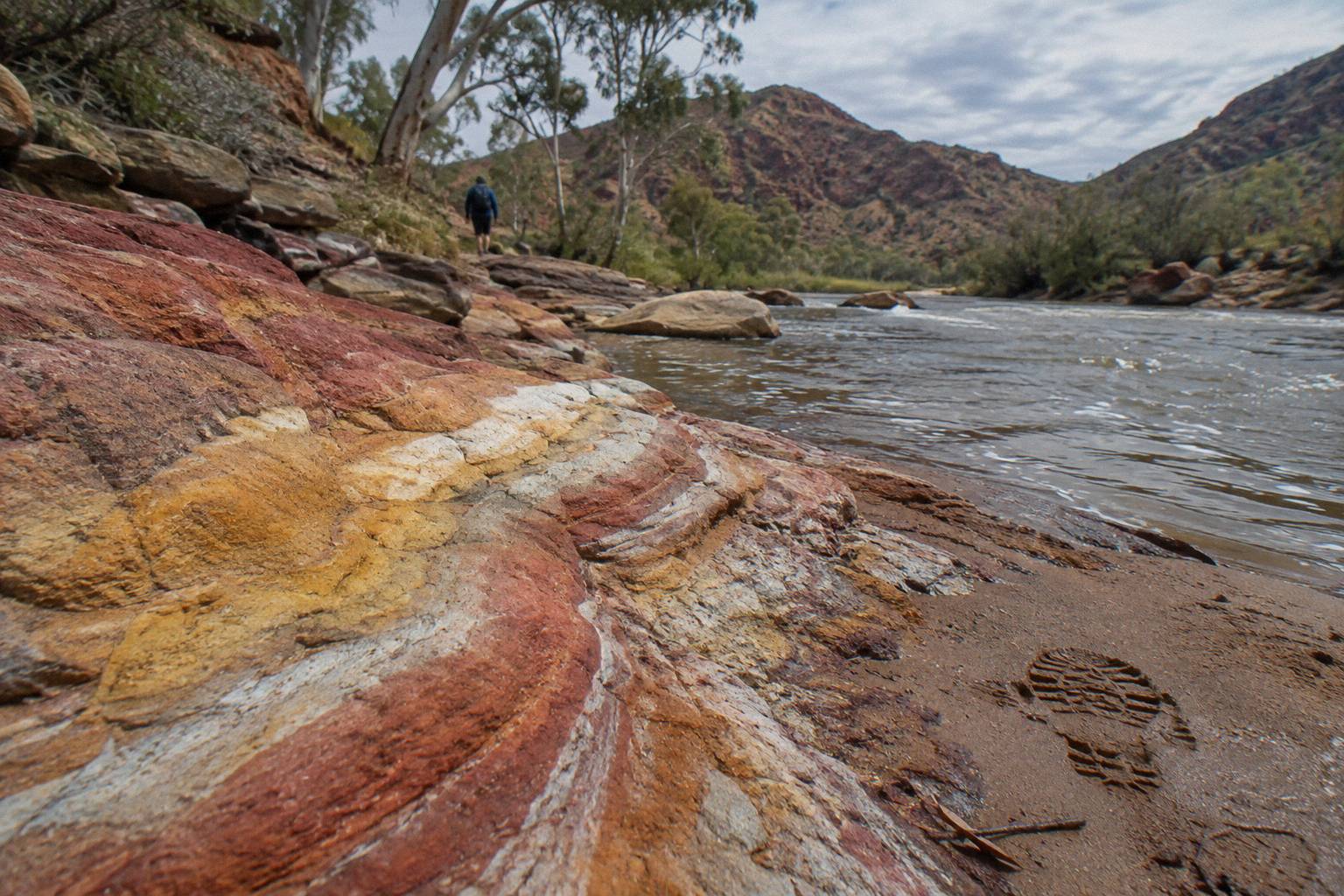
Ochre is naturally tinted clay, coloured by iron oxide, and it occurs here in a striking range of hues within a single small gorge. The walls look almost painted, though nobody painted them. Water moving through the rock over geological time laid down the bands, and the quarrying over generations exposed them in vertical face. For visitors it is one of the most photogenic five-minute stops in the park, provided the light is kind and you arrive when the tour groups are thin.
Here is the site in snapshot form, using only figures from official park and tourism sources.
| Detail | The Ochre Pits |
|---|---|
| Distance from Alice Springs | 110 km west, sealed road |
| Park | Tjoritja / West MacDonnell National Park |
| Site type | Cultural ochre quarry, banded cliff face |
| Facilities | Carpark, picnic area, interpretive signs |
| Walking | Short, flat path from carpark to the walls |
| Swimming | Not available at this site |
| Pass required | NT Parks pass, sold online only |
| Typical tour stop length | 20 to 40 minutes |
What gives the place its weight is that it is not a relic. Ochre from this area has been traded and used across the region, and the site remains significant to Arrernte people. That is why the framing here sticks to what official park and cultural sources state, and why touching the walls or taking pigment is simply not something any visitor should consider. The colour belongs where it is.
For trip planning, the practical takeaway is simple: the Ochre Pits are a short, accessible, high-impact stop that slots naturally into the middle of a full day West Macs loop. If your itinerary is heavy on gorges and waterholes, this is the stop that changes the texture of the day.
Where Are The Ochre Pits And How Do You Get There?
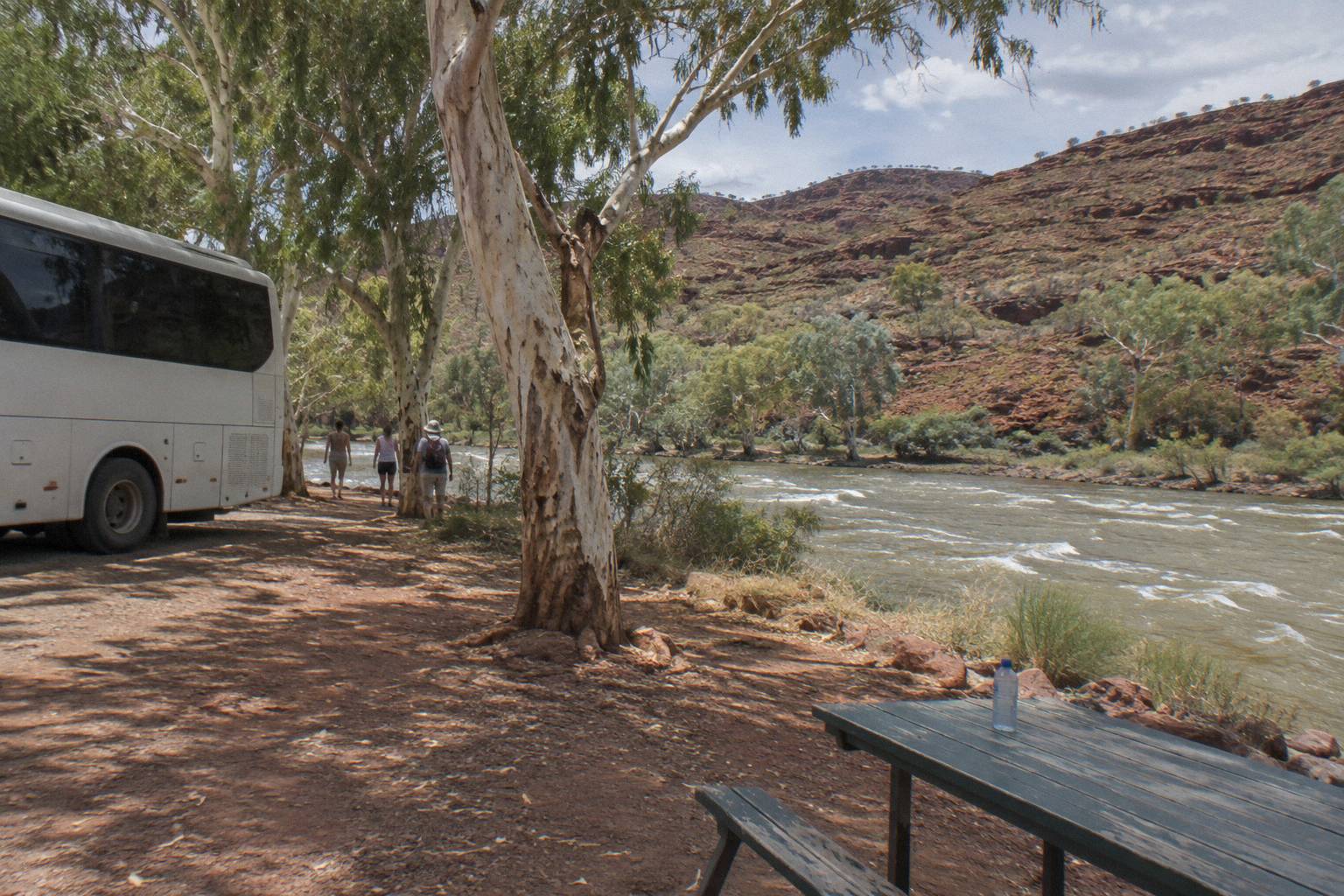
The Ochre Pits are 110 km west of Alice Springs along Larapinta Drive and Namatjira Drive, both fully sealed, placing them about 90 minutes from town by road, between Serpentine Gorge at 100 km and Ormiston Gorge at 135 km. There is a carpark and a picnic area at the site, and the walk from parking to the ochre walls is short and gentle. Self-drivers reach it comfortably in a conventional 2WD vehicle on the sealed highway corridor, the same road the tour coaches use.
The position on the map matters more than the drive time. The West Macs string their main stops west of Alice like beads: Simpsons Gap at an 18 km turn-off, then Serpentine Gorge, then the Ochre Pits, then Ormiston and Glen Helen at the far end. A tour that reaches the Ochre Pits has committed to the long middle of the park, which is why the stop appears almost exclusively on full day itineraries rather than half-day trips. Half-day tours turn around well before the 100 km mark.
If you are weighing guided versus independent, the trade-offs are familiar ones. A tour handles the 220 km plus round trip of driving, supplies a guide who can put the ochre in cultural context, and bundles the stop with Simpsons Gap, Standley Chasm and Ormiston in one day. Driving yourself gives you unlimited time at the walls and the freedom to linger for the changing light, at the cost of doing your own pass bookings and reading. Our overview of whether a West Macs day trip is worth the drive works through that comparison in detail.
Between the three tours above there is a genuine difference in how the day feels. The "9-Hour Coach Day Trip" from Emu Run Experience runs from AU$249 per person with a 4.7 rating from 336 reviews, on a shared coach with hotel pick-up and Standley Chasm entry included. The "Full Day, Small Group Only" trip from Alice Holiday Tours costs from AU$279 per person with the NT Parks pass folded in, and the "Day Trip Plus Standley Chasm" from Autopia runs 10.5 hours from AU$220 per person, rated 4.7 from 70 reviews. All three allow free cancellation up to 24 hours before.
Which Tours Stop At The Ochre Pits?
Full day West MacDonnell tours from Alice Springs are the ones that stop at the Ochre Pits, roughly 9 to 10.5 hours door to door and priced from AU$163 to AU$279 per person, while half-day trips of about 5 hours turn around east of the 100 km mark and never reach the site. Every rostered day tour here picks up in Alice Springs, includes a guide and transport, and treats the pits as one stop among four to six on the day's loop.
Here is how the main full day options compare on the details that matter at the booking stage.
| Tour | Operator | Length | From (per person) | Rating | Parks pass | Cancellation |
|---|---|---|---|---|---|---|
| 9-Hour Coach Day Trip | Emu Run Experience | 9 hours | AU$249 | 4.7 from 336 reviews | Extra, buy online | Free up to 24h before |
| Full Day, Small Group Only | Alice Holiday Tours | 10 hours | AU$279 | 4.6 from 16 reviews | Included | Free up to 24h before |
| Day Trip Plus Standley Chasm | Autopia Tours | 10.5 hours | AU$220 | 4.7 from 70 reviews | Extra, buy online | Free up to 24h before |
| Day Tour, Lunch Included | Wildlife Tours Australia | 10.5 hours | AU$163 | No reviews yet | Extra, buy online | Free up to 24h before |
The price spread tells a story. At AU$163 the "Day Tour, Lunch Included" trip is the budget entry, with Standley Chasm entry and lunch in the price but the parks pass as an extra. At the other end, AU$279 buys a small-group format with the pass included, which suits travellers who want fewer fellow passengers and simpler logistics. The mid-priced Autopia trip adds onboard Wi-Fi and a 10.5 hour pace. None of these figures include your own spending money, and all four pick up from Alice Springs accommodation.
The related tour on this page, the "From Alice Springs: West MacDonnell Ranges Day Trip", is the volume benchmark of the group: 336 reviews at 4.7 is by far the deepest review pool of any West Macs day trip on the roster, and its inclusions run to hotel pick-up, a bushman's lunch, morning tea and Standley Chasm entry. Children aged 2 and up are welcome. For a first visit that includes the Ochre Pits, it is the default many travellers land on, and you can check its live details here.
Half-day travellers are not shut out of ochre country entirely, just out of this particular pit. The half-day trips from Alice Springs run about 5 hours and from AU$135 to AU$155 per person, concentrating on Simpsons Gap, Honeymoon Gap and Standley Chasm. If ochre colour is the draw and time is short, our half-day tours from Alice Springs roundup shows what those shorter itineraries do cover.
Booking windows deserve a sentence of honesty. Day tours in the cooler months fill, especially small-group vehicles capped by their format, and the 24-hour free cancellation terms on the day trips mean early booking carries little risk. The multi-day Uluru and Kings Canyon combinations have stricter windows, 14 days on the 4-day and 7 days on the 6-day, so plan those with more care.
Why Ochre Matters To Arrernte People
Ochre is a ceremonial and artistic pigment that Arrernte people have quarried from this site for generations, and official park interpretation describes the landscape of the West Macs as the creation of ancestral beings in the mythological time, the foundation of spiritual beliefs and identity. The pits are a cultural site first and a photo stop second, and the order of those two facts shapes how you should behave there.
The cultural record that official sources give is deliberately concise. The park sits on the homelands of Central Arrernte, Western Aranda and Luritja people and is jointly managed with Traditional Owners. Tjoritja is the Western and Central Aranda name for the MacDonnell Ranges. Creation ancestors shaped this country in the mythological time, and that framing applies to the whole corridor, not just the famous gorges. At Simpsons Gap, park material notes that several dreaming trails and stories cross at an important spiritual site, and the Ochre Pits carry their own standing as a place where pigment for ceremony, art and trade has been dug by hand, layer by layer.
What that means on the ground is a set of boundaries that are cultural rather than merely regulatory. The ochre is not a souvenir. Visitors look, photograph and read, and do not climb the walls or take material. Tour guides on the full day trips typically give the cultural context as part of the stop's commentary, which is one quiet argument for a guided visit over a self-drive: the stories arrive with the view rather than from a sign you skim in five minutes.
For a fuller treatment of the park's cultural framework, see our guide to Tjoritja / West MacDonnell National Park. The short version is that every major stop in the ranges, from Simpsons Gap west, carries Arrernte significance, and the Ochre Pits are simply the stop where the cultural connection is the most visible in the rock itself.
What The Stop Actually Looks Like On A Tour
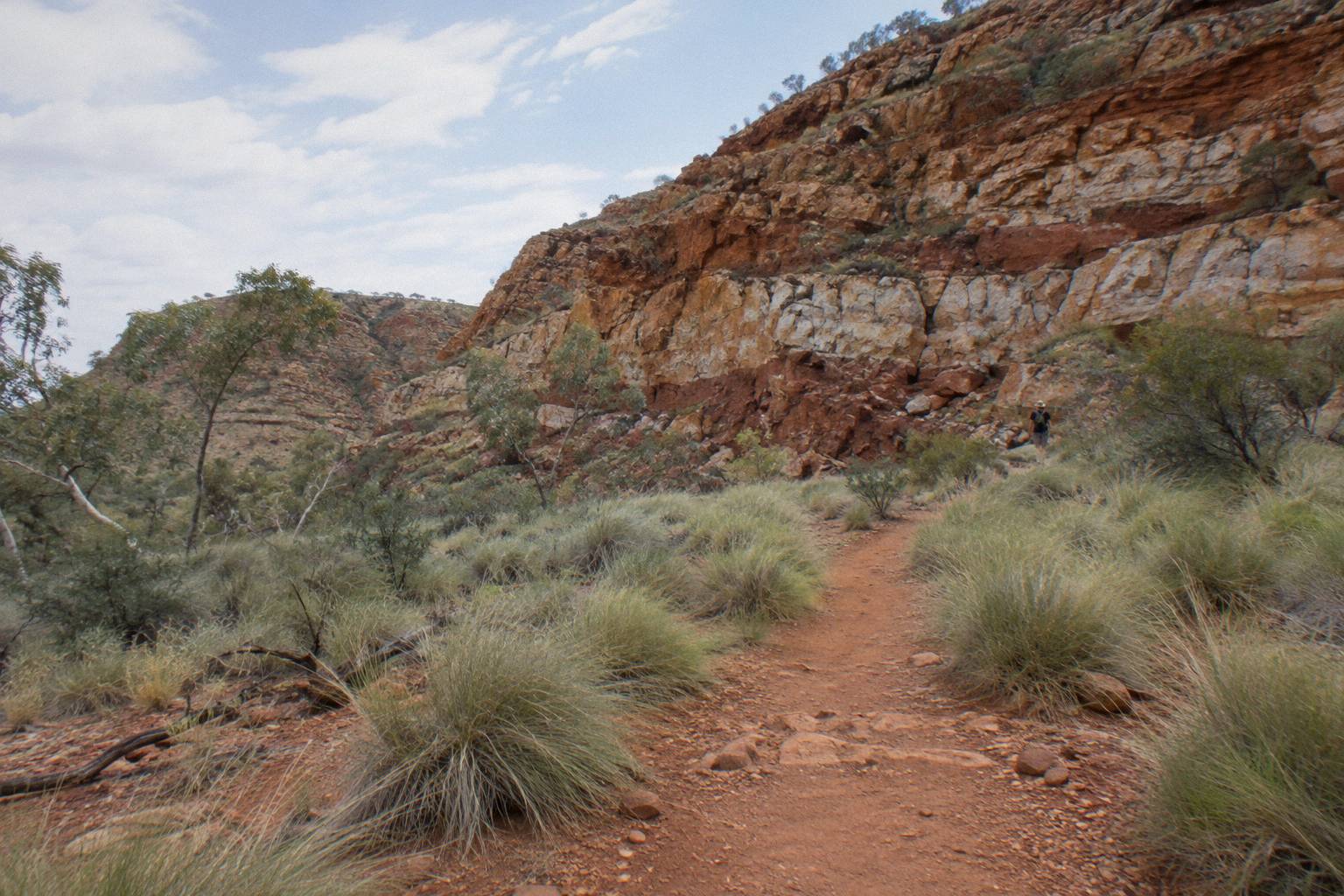
On a typical full day itinerary the Ochre Pits stop runs 20 to 40 minutes: park at the carpark, walk the short, flat path to the cliff face, take in the banded walls, read the interpretive material, and return, with a picnic area available if the guide schedules a break. There is no swim, no long walk and no lookout climb, and that is the point. The stop is compact by design.
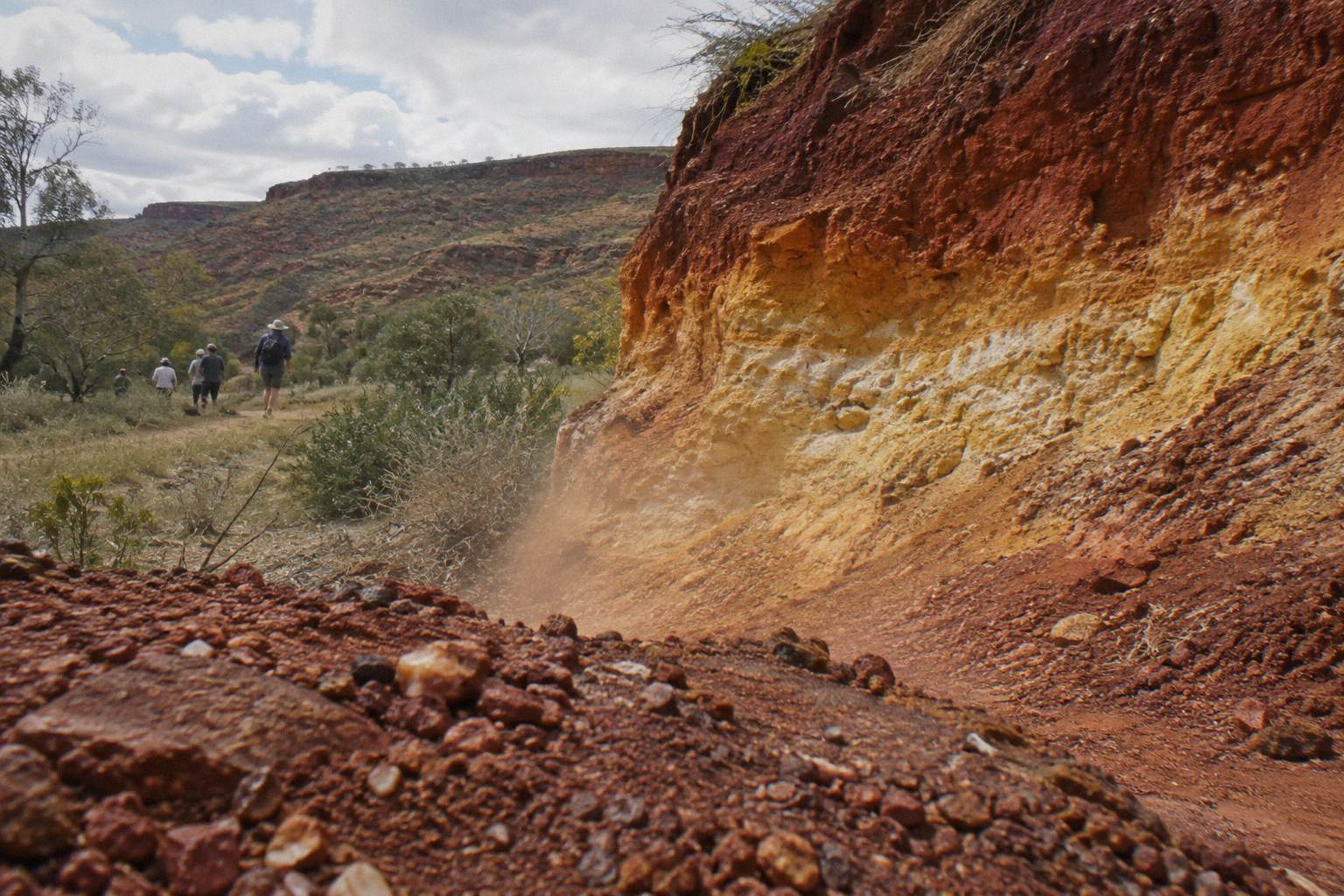
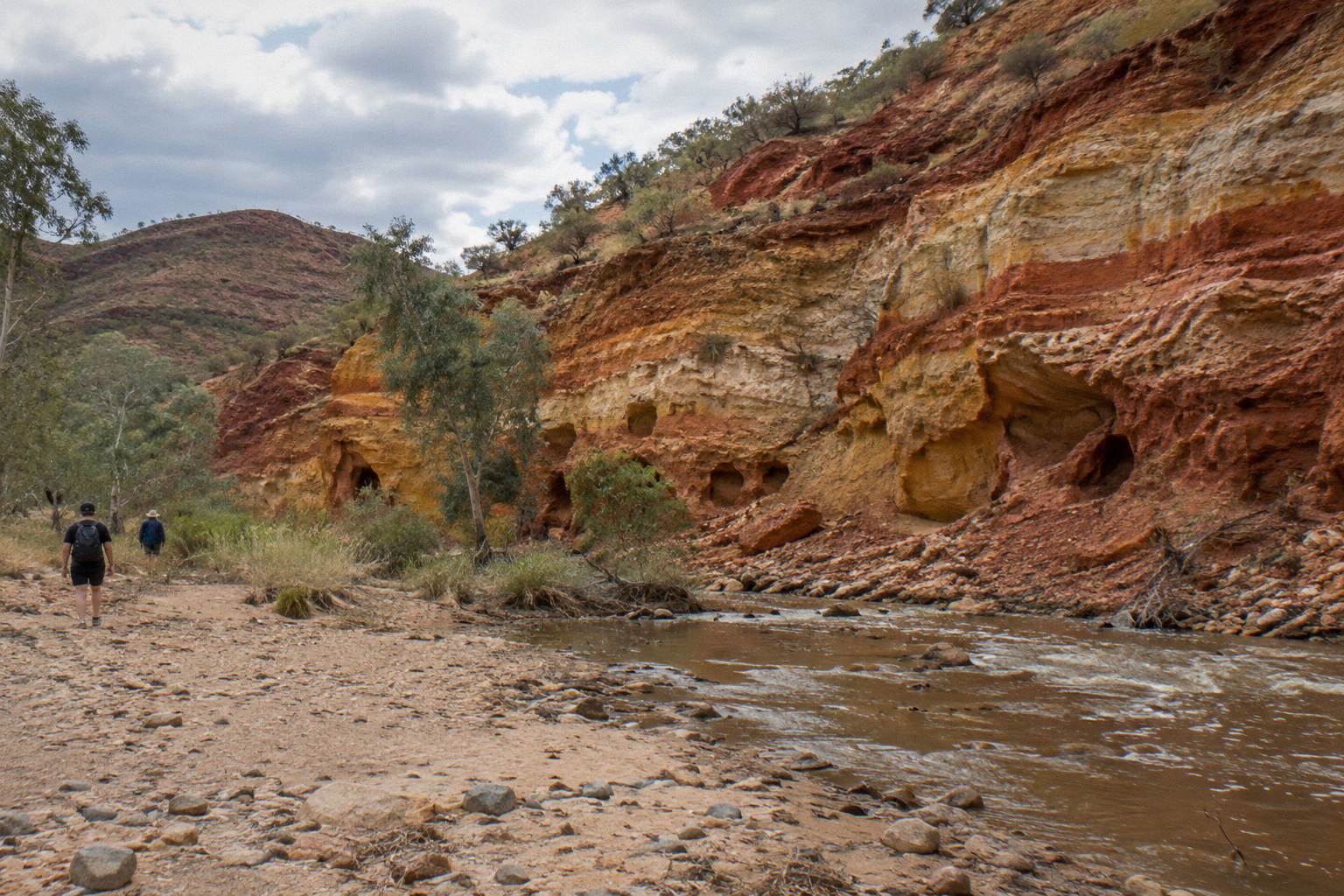
The wall itself is smaller in person than the wide shots suggest, maybe a few tens of metres of exposed face, but the intensity of the colour holds up. Bands of crimson, burnt orange, mustard and white stack like pastry, and the deeper cuts where ochre has been extracted give the face its sculpted character. Mid-morning to midday light, when most tours pass through, lights the face evenly. Late afternoon warms the reds further, which is why photographers sometimes plan a self-drive return.
Around the stop, the day's rhythm on a tour looks roughly like this: early pick-up in Alice Springs, Simpsons Gap or Honeymoon Gap first while the light is low, Standley Chasm around the middle of the day, then the Ochre Pits and Serpentine Gorge on the western push, and Ormiston Gorge as the anchor stop before the long drive back. Operators adjust order and timing for group fitness, weather and road conditions, and Alice Holiday states that if attractions close for circumstances beyond its control a suitable alternative is provided. Flexibility is built into these days; the Ochre Pits slot is short enough that it survives most reshuffles.
If you want a sense of the full sequence with timings and distances, our West Macs day tour itinerary walkthrough lays out a full loop hour by hour, and the Ormiston Gorge tour guide covers the stop that usually anchors the far end of the same day.
One thing not to expect: facilities beyond the carpark and picnic area. Keep expectations modest and the stop delivers exactly what it promises.
How The Ochre Pits Compare With The Other West Macs Stops
The Ochre Pits are the shortest-stop, culture-focused site on the West Macs corridor, sitting between Serpentine Gorge at 100 km and Ormiston Gorge at 135 km, and they are the only headline stop with no waterhole, no lookout climb and no swimming. That difference is what earns the stop its place; a day of gorges alone starts to blur, and the ochre breaks the pattern.
| Stop | Distance from Alice Springs | Main draw | Swimming | Time on a tour |
|---|---|---|---|---|
| Simpsons Gap | 18 km turn-off | Rock gap, rock wallabies at dawn and dusk | Not permitted | 30-45 min |
| Standley Chasm | 50 km (40 min drive, sealed) | Narrow chasm, private entry fee | Not a swim stop | 60-90 min |
| Serpentine Gorge | 100 km | Gorge walk, lookout | Limited | 30-45 min |
| Ochre Pits | 110 km | Banded ochre cliff, cultural site | No | 20-40 min |
| Ormiston Gorge | 135 km | Permanent waterhole, walks | Permitted, extremely cold | 60-90 min |
| Glen Helen Gorge | 132 km | Finke River gorge, refreshments | Cool dip possible | 45-60 min |
Distances there are road distances from Alice Springs as published by Tourism NT and the NT parks authority. The pattern to notice is clustering: from Serpentine Gorge west, the stops sit close enough together that a full day tour can chain four of them without rushing, which is precisely what the 9 to 10.5 hour itineraries do. The Ochre Pits, in the middle of that cluster, cost the least time of any of them.
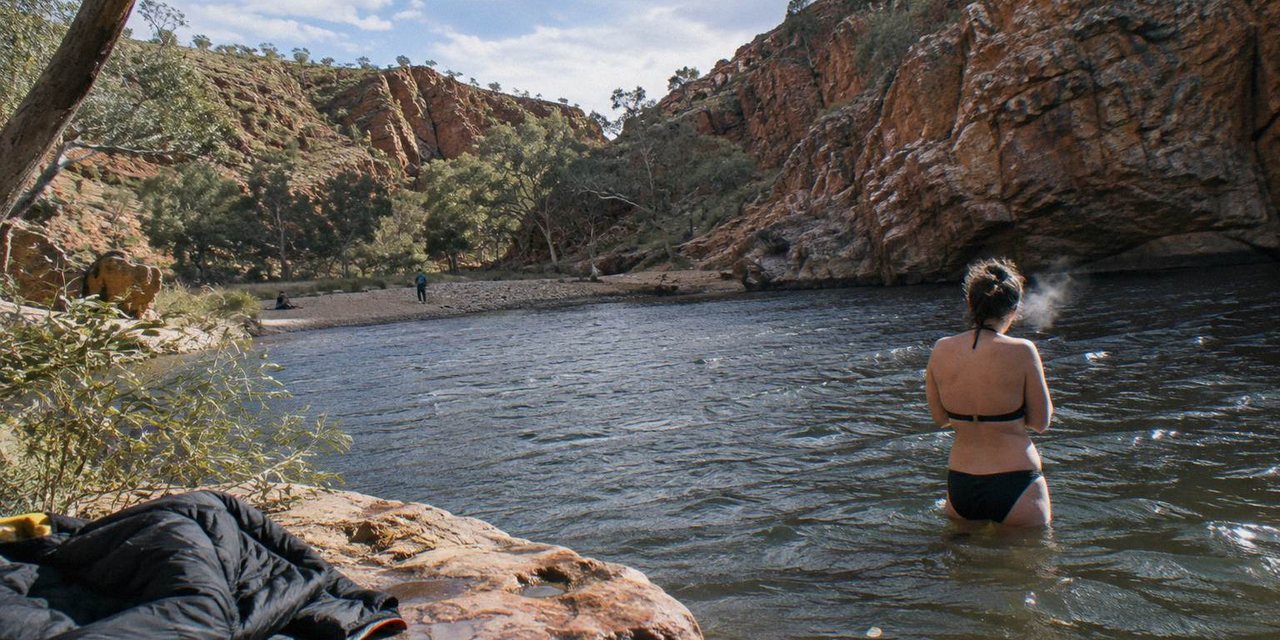
Swimming deserves a flag here even though it does not apply to the pits, because travellers often plan a dip at the far stops. Park guidance is that most waterholes in the ranges are extremely cold, Ormiston's waterhole reaches up to 14 m deep at its southern end and carries a hypothermia risk even in summer, and jumping and diving are not permitted. Our guide to swimming holes in the West MacDonnell Ranges covers where a swim is allowed and what cold really means out here.
For travellers deciding between a full day and a half day purely around this stop, the numbers do the arguing: half-day trips cannot reach 110 km and return inside 5 hours with stops, full day trips do it comfortably. Our full day versus half day comparison runs the full decision.
Do You Need A Parks Pass To Visit The Ochre Pits?
Yes, the Ochre Pits sit inside Tjoritja / West MacDonnell National Park and visitors need an NT Parks pass, sold online only before you go, from AU$10 per adult for one day, while NT residents are exempt, and whether your tour covers the pass depends on which trip you book. This is the single most common cost surprise on West Macs itineraries, because the pass situation splits the roster cleanly in two.
| Pass type | Adult | Child 5-17 | Family | Concession |
|---|---|---|---|---|
| 1-day | AU$10 | AU$5 | AU$25 | AU$8 |
| 3-day | AU$20 | AU$10 | AU$50 | AU$16 |
| 2-week | AU$30 | AU$15 | AU$75 | AU$24 |
| 1-month | AU$45 | AU$22 | AU$110 | AU$36 |
| Annual | AU$60 | AU$30 | AU$150 | AU$48 |
The pass is bought through the NT parks booking system, logged in, in advance; it cannot be sorted at the site. Camping and walking fees are extra to the pass itself. Standley Chasm, which most full day itineraries also visit, is privately operated and charges a separate fee, which is why the inclusion of Standley entry is worth checking on any tour you price. Full details are in our NT Parks pass and fees guide.
On the tour side, the split is this. Pass included: the Alice Holiday half-day, full-day small-group and West-and-East combo trips, the 3-day 4WD camping trek, the 4-day Uluru trip and the watercolour class. Pass excluded, buy your own: the Emu Run coach day trip and half-day, the Autopia Standley Chasm day trip, and the Wildlife Tours lunch day trip. When you compare a AU$220 tour without the pass against a AU$279 tour with it, the AU$10 to AU$30 pass narrows the real gap.
The two-to-three-week pass tiers matter if you are combining the West Macs with a longer Red Centre stay, and the official pass page at nt.gov.au carries the current categories.
Best Time Of Day And Season To Visit
The cooler months from April to September are the recommended season for the whole West Macs corridor, with tour itineraries passing the Ochre Pits most often in the middle of the day, while between October and April temperatures can exceed 40 °C and the parks authority advises avoiding strenuous activity in the heat of the day. The pits themselves involve so little walking that heat matters less here than at Ormiston or on the Larapinta, but the drive and the rest of the day's stops still answer to the season.
Midday light on the banded wall is flat and honest, which suits most visitors fine, and the warm tones deepen toward late afternoon. Self-drivers with photography in mind sometimes time a westbound run to catch the pits in afternoon light and Ormiston earlier. Tour passengers take the schedule as it comes, and the stop's brevity means light luck rather than planning decides the photos.
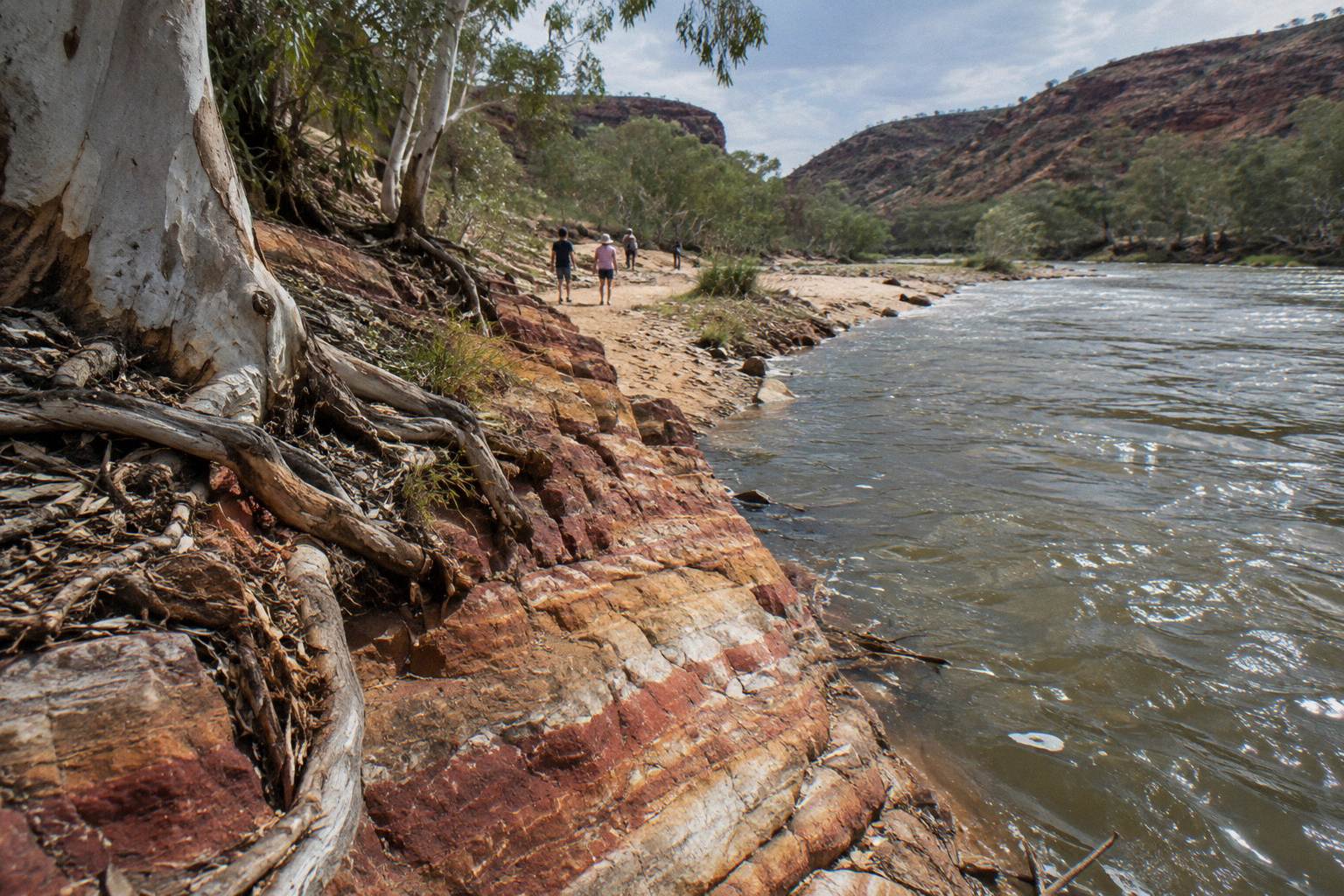
Seasonally, the shoulder months of April to May and August to September balance comfortable walking temperatures against thinner crowds than the July peak. Rain is the wildcard: park material notes unsealed sections of road in the park, including the last stretches to some sites, can be impassable for a short period after heavy rain. The Ochre Pits sit on the sealed corridor, but a flooded side road or a closed walk elsewhere can reshape a tour's day, which is one more quiet argument for booking a guided trip on which the operator absorbs the rerouting. For depth, see our best time for a West Macs tour guide.
What To Bring And How To Behave At The Site
Bring sun protection, plenty of drinking water and closed walking shoes, follow the parks authority's heat and safety guidance, and at the pits themselves treat the ochre as look-only: no climbing the walls and no taking pigment, in a site that remains a living cultural quarry for Arrernte people. The stop is short and gentle, so the packing list is short too.
The parks authority's standing safety advice for the region is to carry and drink plenty of water, wear a hat, avoid strenuous activity in the heat of the day, and note the locations of emergency call devices. For a day tour these basics are mostly handled for you, with transport, commentary and often water on board, but personal sun protection is always yours to bring. Our what to bring on a West Macs day tour checklist covers the full kit for the whole day, including the swim stops the pits lack.
Behaviour at the site comes down to respect for an active cultural place. Stay on the formed paths and viewing areas, keep hands off the ochre face, and leave everything as found. Group tours move through in clumps, so a few minutes of patience usually buys you the wall to yourself. The interpretive material at the site rewards a proper read rather than a glance; the five extra minutes are the difference between a photo stop and an understanding of what you photographed.
Families fit the stop easily. There is no difficult terrain, no swim risk and no long stretch without shade breaks, and the colour of the walls tends to hold children's attention better than a second gorge would. Age policies vary by operator, from 2 years and up on the Emu Run coach trip to minimums of 5 or 6 on the small-group formats, so check the terms per trip if you are travelling with young kids, or start with our West Macs tours with kids guide.
Booking Tips And What Cancellation Terms Really Say
Every full day West Macs tour on the roster picks up in Alice Springs, prices from AU$163 to AU$279 per person, and carries free cancellation up to 24 hours before travel, with the main decision variables being group size, whether the parks pass is included, and whether Standley Chasm entry is bundled. Read as a set, the terms are forgiving enough that early booking costs you almost nothing.
The 24-hour window applies to all the day trips discussed here, along with the half-days and the 3-day camping trek and the 5-day Larapinta safari. Longer combinations tighten: 14 days on the 4-day Uluru, Kings Canyon and West Macs camping tour, and 7 days on the 6-day astronomy trip, whose booking terms also note that minor route and timing changes may occur for weather, road conditions or park closures, with a full refund if a core component is removed. That clause is worth knowing about on any Red Centre booking, because outback itineraries flex by design.
On group size, the honest summary is that coach and small-group formats deliver the same stops with different atmospheres. The shared coach trips, from AU$163 and AU$249, carry more passengers and the deepest review pools. The small-group trips at AU$279 cap numbers and include the parks pass. The 4.7 from 336 reviews on the coach day trip and 4.7 from 70 on the Autopia trip both reflect real, sustained satisfaction; the 4.6 from 16 reviews on the Alice Holiday full day is solid but from a small pool, and the AU$163 Wildlife Tours day trip has no reviews yet, which is a fact rather than a fault.
One practical note on timing your booking: because the pass-excluded tours require you to buy your own NT Parks pass online anyway, self-drivers and independent-minded travellers can piece together the same day themselves for the cost of fuel, a pass and a Standley Chasm entry. What the tour price really buys is the driving, the guiding and the scheduling. For travellers who value culture explained at the site rather than inferred from a sign, at the Ochre Pits that difference is worth more than at almost any other stop on the circuit, and West MacDonnell Ranges Tours exists precisely to make that kind of comparison honest.
For the geology-curious, Tourism NT's official page on the site, northernterritory.com, is the reference for the 110 km distance and the site's basic facilities.
Common Questions About The Ochre Pits
How Far Are The Ochre Pits From Alice Springs?
The Ochre Pits are 110 km west of Alice Springs along the sealed Larapinta and Namatjira Drive corridor, roughly 90 minutes of driving each way, between Serpentine Gorge at 100 km and Ormiston Gorge at 135 km.
Do You Need A Parks Pass For The Ochre Pits?
Yes. The site is inside Tjoritja / West MacDonnell National Park and visitors need an NT Parks pass bought online in advance, from AU$10 per adult for one day. NT residents are exempt. Some tours include the pass in the fare and some treat it as an extra, so check the inclusions before you compare prices.
Can You Swim At The Ochre Pits?
No. The Ochre Pits are a cultural quarry site with no swimming. The swim stops on a full day West Macs itinerary are further west at places like Ormiston Gorge and Glen Helen Gorge, where park guidance warns the waterholes are extremely cold.
Which Tours Stop At The Ochre Pits?
Full day West Macs tours from Alice Springs, roughly 9 to 10.5 hours and from AU$163 to AU$279 per person, call in at the pits. Half-day tours of about 5 hours turn around east of the site and do not reach it.
Can You Take Ochre From The Ochre Pits?
No. The site is a significant cultural place where Arrernte people have traditionally quarried pigment, and visitors should not climb the walls or remove any material. Look, photograph and read the interpretive signs, and leave the ochre exactly where it is.
How Long Do You Spend At The Ochre Pits On A Tour?
Typically 20 to 40 minutes. The walk from the carpark to the cliff face is short and flat, and there is a picnic area at the site, so the stop is compact by design within a day that also includes Simpsons Gap, Standley Chasm and Ormiston Gorge.