Can You Walk The Larapinta Trail Alone Or Should You Book A Trek?
Official safety advice, costs, booking rules and guided trek options for the Larapinta Trail, comparing solo walking against guided tours from Alice Springs.
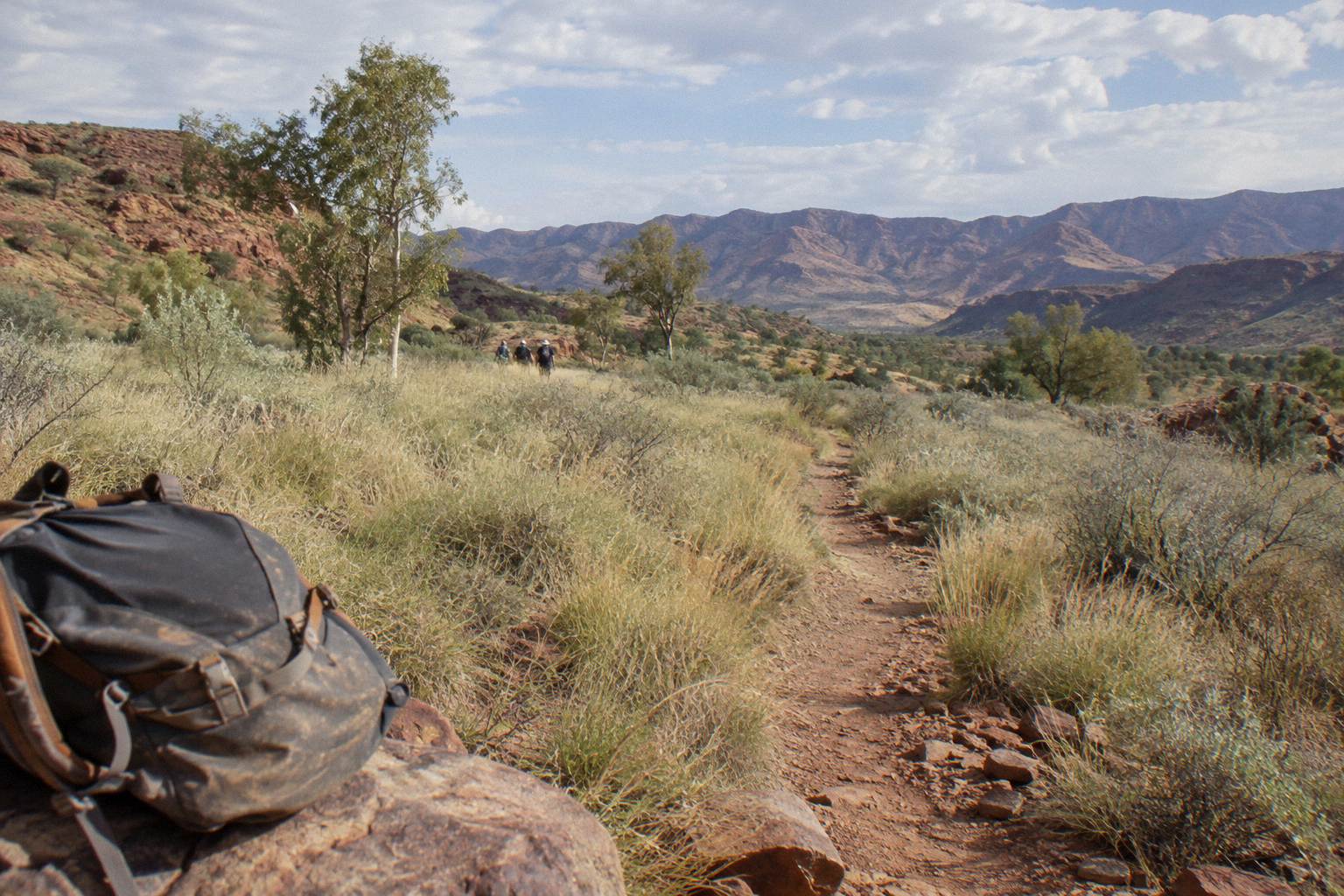
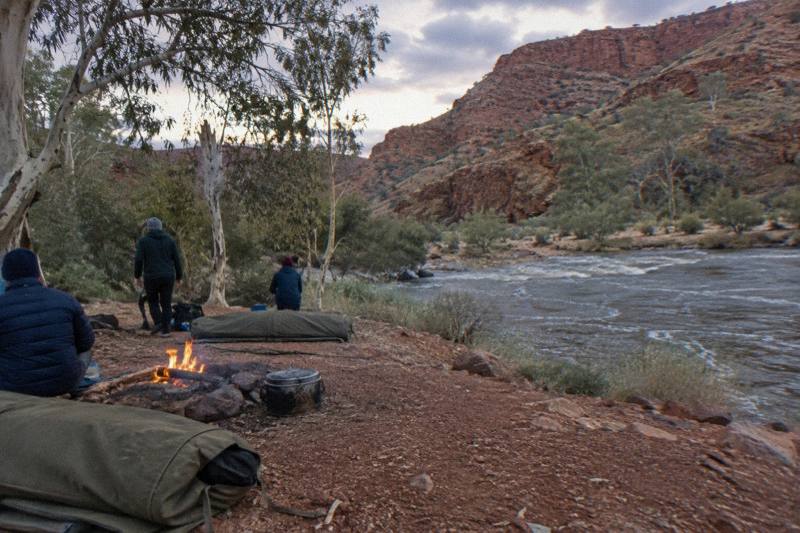
Yes, you can walk the Larapinta Trail alone: the trail is public, signposted and open to independent walkers who book and pay for every campsite online before setting out. But the official advice is unambiguous: do not walk alone. Temperatures can exceed 40 °C between October and April, there is no reliable mobile coverage, and the park service tells walkers to carry a satellite phone or personal locator beacon.
The Larapinta Trail runs more than 230 km through Tjoritja / West MacDonnell National Park, split into 12 sections that each take one to two days. It starts at the Alice Springs Telegraph Station and finishes at the summit of Mount Sonder, with individual sections ranging from 8.9 km to 28.9 km. Independent walkers have completed the full traverse for decades, and nothing about the track itself requires a guide: the route is marked, the campgrounds are designated, and the booking system is open to anyone with an account and a credit card.
The real question is not permission but preparation. A solo traverse means carrying or caching food, treating water, working through 12 sections of Grade 4 and Grade 5 walking, and managing your own safety across a landscape where daytime heat and near-freezing nights can occur in the same week. The park's own planning guidance, published at the official Larapinta Trail planning page, states the essentials plainly: walk in the cooler months from April to September, walk only in the morning and late afternoon when it is hot, do not walk alone, and carry a satellite phone or personal locator beacon rather than relying on mobile phones.
Guided treks exist precisely because that preparation list defeats many travellers. A supported walk strips out the logistics, the gear hauling and the satellite communicator hire, and replaces them with a driver, a cook and a camp that is already standing when you arrive. The trade is money and flexibility: you walk the sections the operator walks, on the days the operator walks them. This article works through both sides, using the official park rules and the actual guided products available from Alice Springs, so the decision rests on facts rather than trailside folklore.
If you already know you want support on the track, these are the three guided options that fit the solo-versus-trek decision best: the five-day supported safari, the 14-day guided Larapinta walk, and a shorter Red Centre camping trip that samples the West MacDonnell ranges without committing to the whole trail.
What The Official Safety Advice Says About Walking Alone
The Northern Territory parks service advises walkers not to walk alone, to carry a satellite phone or personal locator beacon, to avoid relying on mobile phones, and to plan for heat that can exceed 40 °C between October and April. Walking is recommended only in the cooler months, April to September, and only in the morning and late afternoon on hot days.
That advice comes straight from the official trail planning guidance, and it is worth reading in full before any solo plan goes further. The safety messaging is consistent across every park page for Tjoritja / West MacDonnell National Park: carry and drink plenty of water, wear a hat, avoid strenuous activity in the heat of the day, and note the locations of emergency call devices. The swimming guidance carries a similar tone, warning that most waterholes are extremely cold and that flash floods and storms are real hazards in this country.
Heat is the headline risk. The warning wording is specific: temperatures can exceed 40 °C between October and April, and walkers are told to check the Bureau of Meteorology's heatwave warnings before and during a walk. A solo walker who runs out of water two ridges from help has no partner to walk out and raise the alarm, which is the practical reason behind the do-not-walk-alone line. A personal locator beacon closes some of that gap, but only if it is actually carried and registered.
Water and fire rules shape daily routine as much as safety. Fuel stoves or the free barbecues at campgrounds are the only cooking options: open fires are not permitted on the trail. Every night must be booked and paid for online before you go, a rule that applies to the 26 designated category B campgrounds along the track plus the private campground at Standley Chasm. There is no turning up and paying at the park, the same policy that applies to campgrounds like Ellery Creek Big Hole, where the booking must be made and paid online in advance.
None of this forbids solo walking. It stacks the conditions a solo walker must meet before the first kilometre: an online booking for every night, a beacon or satellite phone, a stove, enough water capacity for hot days, and a season choice that avoids the worst heat. Walkers weighing up the difficulty in more detail can read how hard the Larapinta Trail hike actually is, and those planning section choices can start with the full Larapinta Trail sections breakdown.
What Solo Walking Actually Costs And Requires
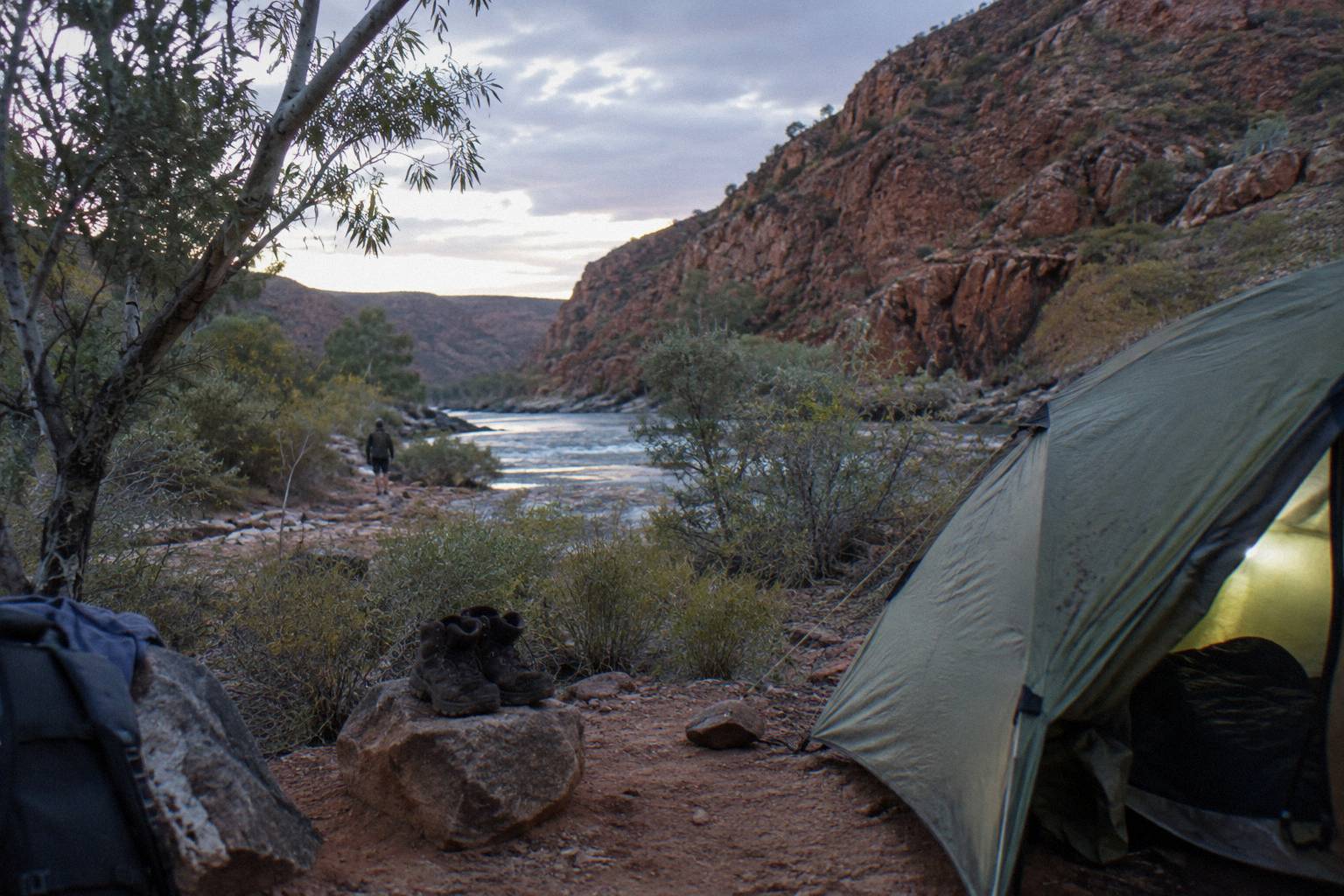
A solo traverse needs an NT Parks Visitor Pass for every walker, online booking and payment for every campsite night, walking trail fees, a fuel stove, water treatment and a hired or owned satellite phone or locator beacon. An adult two-week parks pass costs AU$30, and the strongest sections fall inside that window for a typical 14 to 20 day end-to-end walk.
The pass structure matters more than most first-time visitors expect. Visitors to the Northern Territory need an NT Parks Visitor Pass, sold online only, logged in to the parks booking system, before arrival. NT residents are exempt but may be asked for proof. Camping and walking fees are extra to the pass itself. Adult pricing runs AU$10 for one day, AU$20 for three days, AU$30 for two weeks, AU$45 for one month and AU$60 for an annual pass, with child, family and concession rates scaled below those figures.
| Solo walking requirement | What it involves | Where the cost lands |
|---|---|---|
| NT Parks Visitor Pass | Online purchase before you go, per visitor | AU$30 adult two-week pass covers a typical traverse window |
| Campsite bookings | Every night booked and paid online in advance | Walking and camping fees on top of the pass |
| Communications | Satellite phone or personal locator beacon, not a mobile | Hire fee or purchase, typically the largest hidden cost |
| Cooking | Fuel stoves or campground barbecues only, no open fires | Stove plus fuel canisters |
| Water | Carry and drink plenty; treat or boil tank and creek supplies | Treatment gear plus capacity for hot stretches |
| Food | Carried the whole way, or resupplied by arrangement | Full 14 to 20 days of food weight on your back |
Resupply is the logistical heart of a solo walk. Some walkers post food drops to lodges or arrange pickups along Namatjira and Larapinta Drive, both sealed access roads that cross the trail at several points. Others carry everything and accept a heavy pack for the first week. Water is available at designated campgrounds but requires treatment or boiling, and the park notes boil-water advisories at sites such as Simpsons Gap, where the Ghost Gum Walk has also been closed due to storm damage. These are the details that decide whether a solo plan survives contact with the track.
The season choice is the other fixed constraint. The cooler months from April to September are the recommended window, and within that window the shoulder edges carry the best balance of daytime walking temperatures and cold nights. Walkers asking how many days it takes to walk the Larapinta Trail usually land between two and three weeks for a full traverse, which frames both food planning and pass length.
How Hard Is The Trail For An Independent Walker?
The 12 sections range from 8.9 km to 28.9 km and are graded 4 and 5 on the harder stretches, with recommended walking times from 4 to 12 hours per section. Section 9, Serpentine Chalet Dam to Ormiston Gorge, is the longest day at 28.9 km and about 12 hours, while section 4 and section 5 carry Grade 5 ratings.
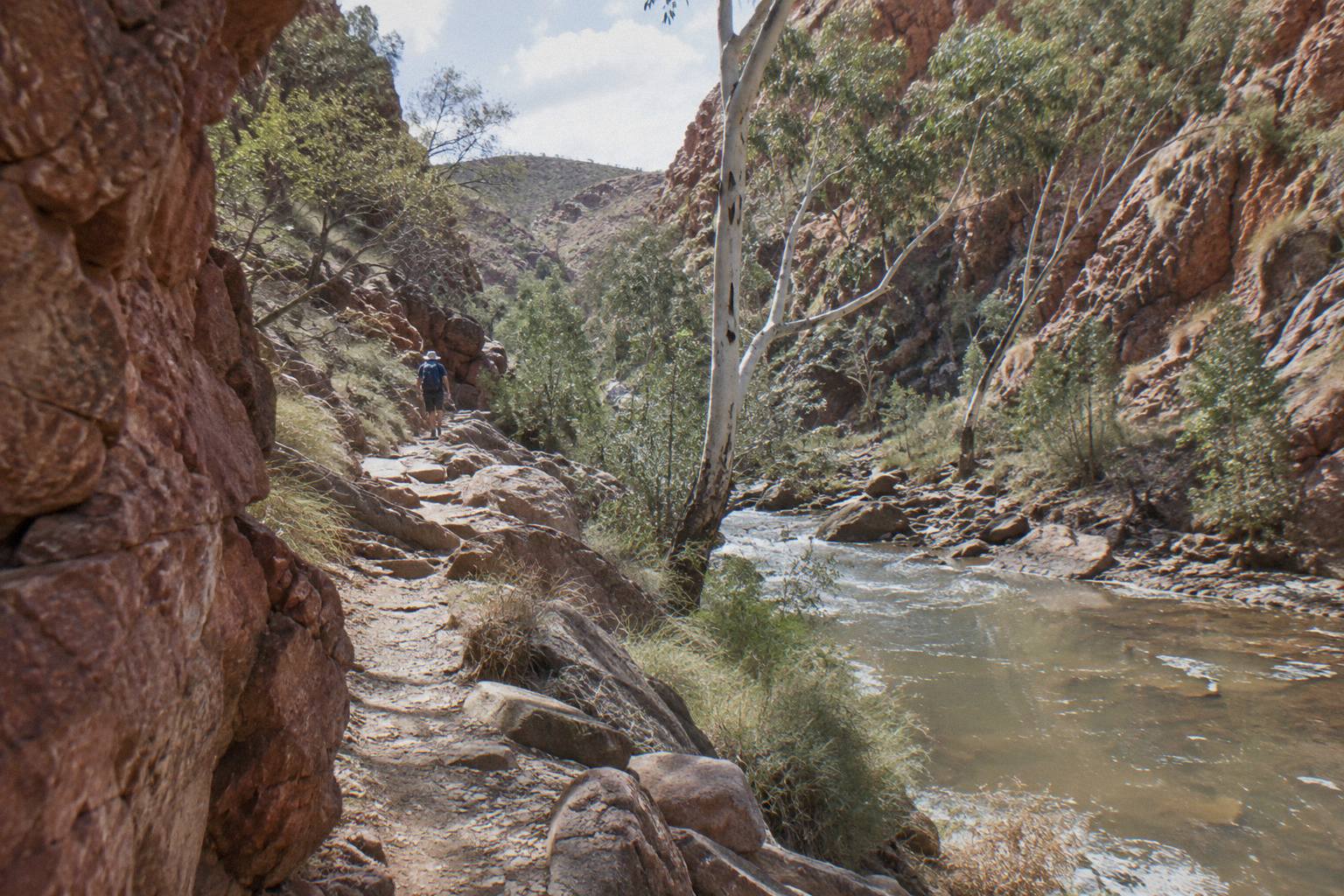
The grade numbers tell the story. Grade 4 means rough track, steep sections and directional signage that demands route-finding skill. Grade 5, which applies to Section 4 from Standley Chasm to Birthday Waterhole and Section 5 from Birthday Waterhole to Hugh Gorge, means the track is rough and indistinct in places and that walkers need a high level of fitness and self-reliance. Hugh Gorge in particular is a slot country walk where the track follows the creek bed and flash flood awareness matters.
| Section | Route | Distance | Recommended time | Grade |
|---|---|---|---|---|
| 1 | Telegraph Station to Simpsons Gap | 24.7 km | 9 hours | 4 |
| 2 | Simpsons Gap to Jay Creek | 26.2 km | 8.5 hours | 4 |
| 3 | Jay Creek to Standley Chasm | 13.6 km | 5.5 hours | 4 |
| 4 | Standley Chasm to Birthday Waterhole | 17.9 km | 8.5 hours | 5 |
| 5 | Birthday Waterhole to Hugh Gorge | 14.9 km | 9.5 hours | 5 |
| 6 | Hugh Gorge to Ellery Creek North | 28.9 km | 10.5 hours | 4 |
| 7 | Ellery Creek North to Serpentine Gorge | 12.8 km | 5 hours | 4 |
| 8 | Serpentine Gorge to Serpentine Chalet Dam | 13 km | 5.5 hours | 4 |
| 9 | Serpentine Chalet Dam to Ormiston Gorge | 28.9 km | 12 hours | 4 |
| 10 | Ormiston Gorge to Finke River | 8.9 km | 4 hours | 4 |
| 11 | Finke River to Redbank Gorge | 26.3 km | 9.5 hours | 4 |
| 12 | Redbank Gorge to Mount Sonder return | 15 km | 6 hours | 4 |
Two patterns stand out for a solo planner. First, the back-to-back long days: sections 6 and 9 are both 28.9 km, and they sit far enough apart that fatigue accumulates between them. Second, the short days cluster in the middle and end, which lets a tired walker recover before the Mount Sonder summit finish. Section 12, the Redbank Gorge to Mount Sonder return, is a 15 km, 6 hour Grade 4 walk that most trekkers do pre-dawn for sunrise on the ridge.
An independent walker with strong route-finding, heat management and multi-day pack experience can treat this table as a training brief. A walker without that background should treat it as a warning label. The trail's reputation as one of the world's great walks is earned on the Grade 5 sections, and those are exactly the sections where a solo mistake costs the most.
What A Guided Trek Covers Instead
A guided Larapinta trek moves the camp by vehicle, supplies all meals and camping equipment, provides a trained guide and carries the communications and safety gear, at prices from AU$3,125 per person for a five-day supported walk to a 14-day guided product. Guided walkers carry only a day pack.
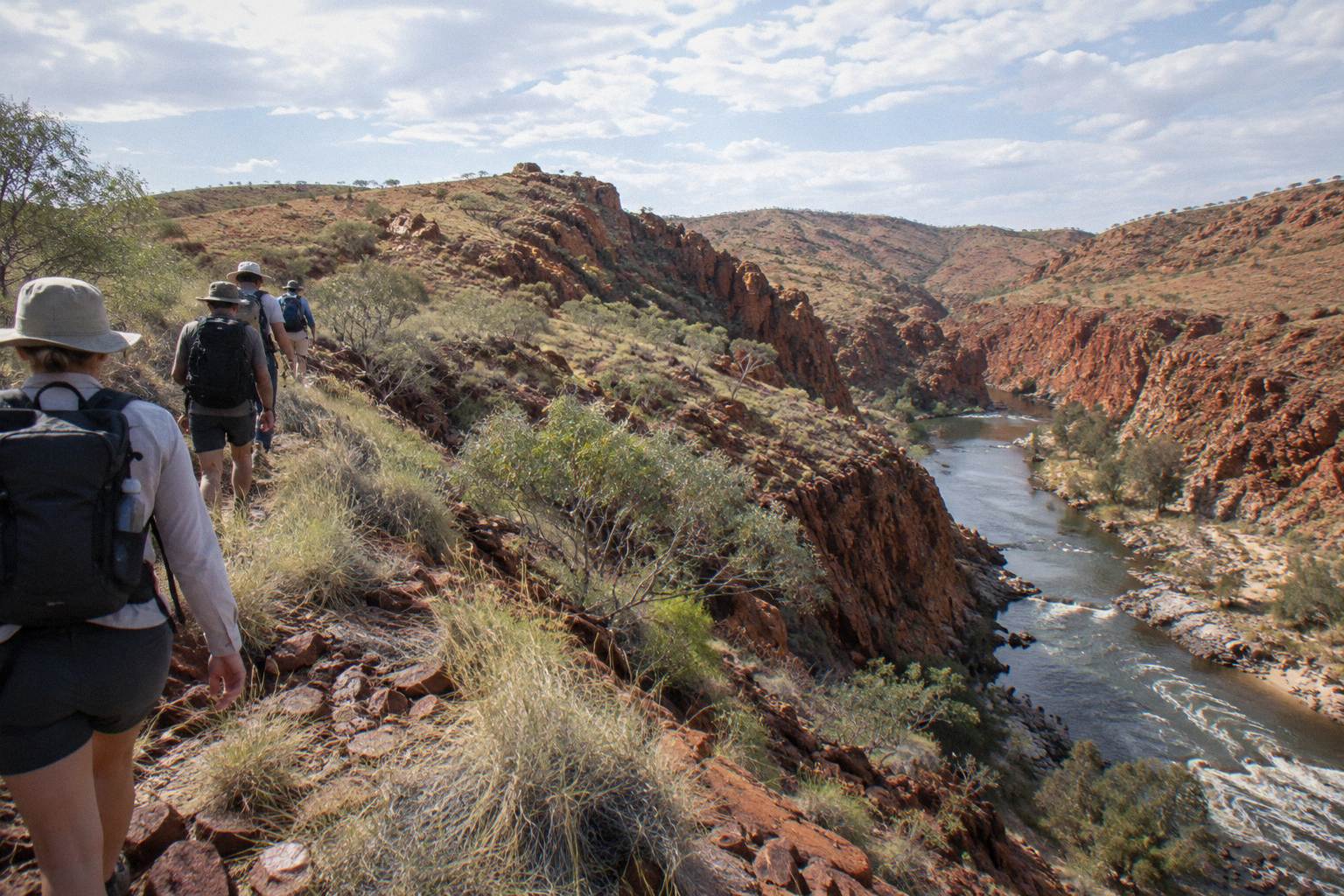
The five-day option, the "Alice Springs: Larapinta Hiking Trail 5-Day Adventure Safari" run by Autopia Tours, costs from AU$3,125 per person and includes four nights at a private, remote campsite on traditional land, all camping equipment including linen, pillows, blankets and sleeping bags, and 4 breakfasts, 5 lunches and 5 dinners plus trek snacks. Guided bushwalking covers roughly 14 km at grades 2 to 5, and transport is by air-conditioned 4WD off-road truck with hotel pick-up and drop-off in Alice Springs. It carries free cancellation up to 24 hours before, per the booking terms. You can read more in this site's Larapinta Trail guided walks overview and on the five-day Larapinta safari trek tour page.
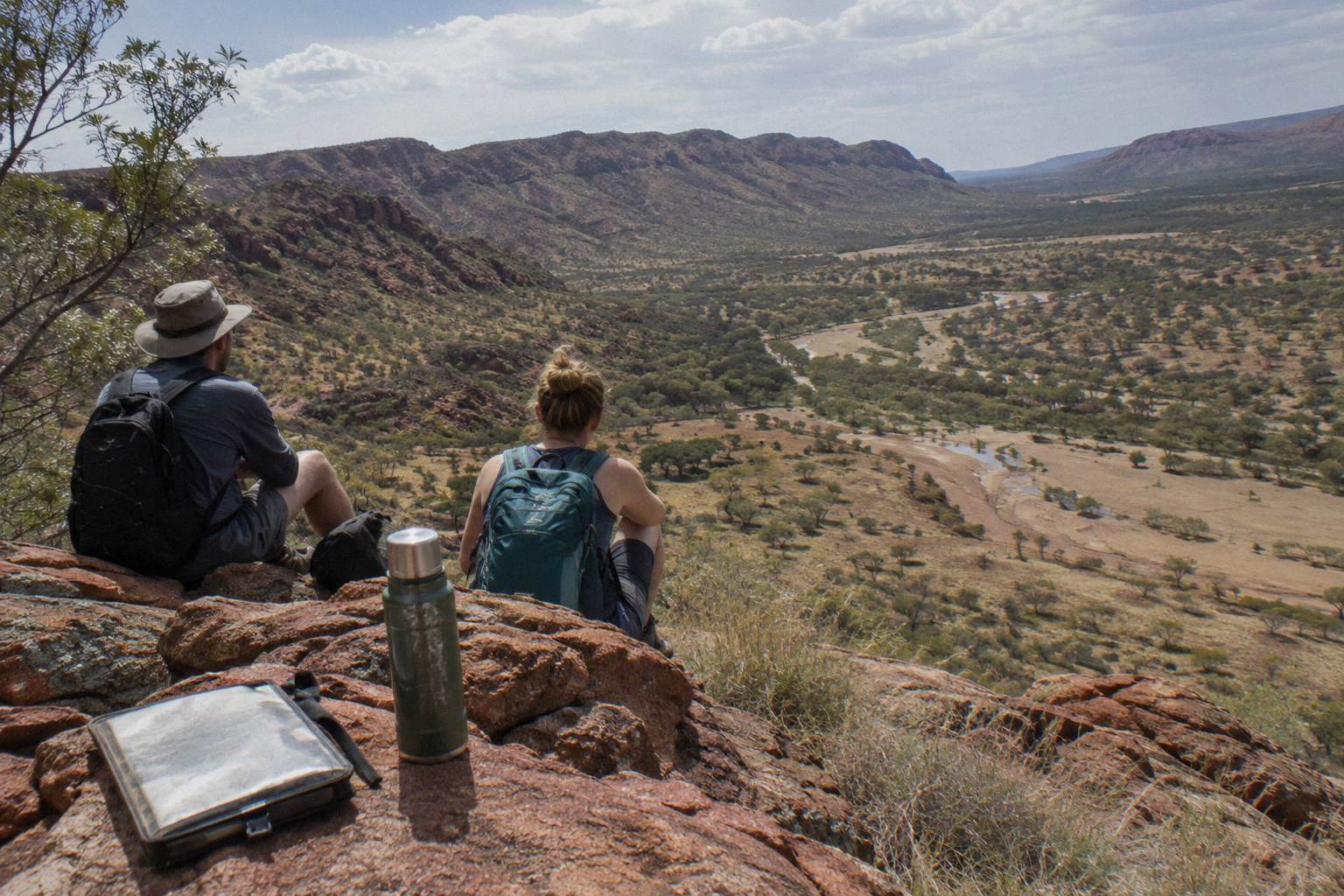
The longest guided option is the "14-Day Larapinta Trail Walking Tour from Alice Springs" from operator Walking Country. It runs 14 days from Alice Springs and includes 13 breakfasts, 14 lunches and 13 dinners, with 13 nights in a basic bush camp of tents and swags. It holds a 4.0 rating from 3 reviews, a small pool worth weighing honestly: three reviews is thin evidence either way. Pricing is on the live listing rather than published as a from-price, and cancellation terms should be confirmed at booking.
What a guide adds beyond logistics is harder to price. The park sits on the homelands of Central Arrernte, Western Aranda and Luritja people and is jointly managed, and the cultural layer of the landscape, the creation story framework that the official park page describes as the foundation of spiritual beliefs and identity, is something a guide can open up in a way a map cannot. On a practical level, operators also absorb the weather risk: the booking terms for multi-day Red Centre tours note that minor route and timing changes may occur for weather, road conditions or park closures, with a full refund if a core component is removed.
| Solo independent walk | Guided trek | |
|---|---|---|
| Upfront cost | Parks pass, campsite fees, beacon hire, food, gear | From AU$3,125 for 5 days, most costs bundled |
| Pack weight | Full pack, 14 to 20 days of food and gear | Day pack only |
| Route-finding | Your responsibility, Grade 4 and 5 track | Guide leads, track knowledge included |
| Communications | You carry a satellite phone or beacon | Operator carries safety equipment |
| Meals | Self-catered, fuel stove only | Included on the treks listed above |
| Flexibility | Choose your own sections and pace | Fixed itinerary and departure dates |
| Section choice | Any of the 12, in any order | Operator's route, roughly 14 km guided walking on the 5-day |
Which Treks Suit Which Walkers?
Experienced, fit, well-equipped walkers with beacon and booking discipline can walk the Larapinta alone in the April to September window. Walkers who lack remote-area experience, who want the cultural interpretation, or who simply do not want to haul a 20 kg pack for two weeks should book a trek.
The honest dividing line is not fitness alone, though the Grade 5 sections demand it. It is the accumulated solo burden: booking every night online before departure, carrying or staging food, treating water daily, finding the route without backup, and being your own emergency plan in country where mobile phones do not work. Walkers who have done remote multi-day walks elsewhere will recognise that list and price it fairly. Walkers for whom that list reads as new information have already answered the question.
Time is the quietest factor. A full solo traverse needs two to three weeks plus travel days plus food staging. Many working travellers have one week. That constraint alone pushes most visitors toward either a section-based solo walk (sections 1 to 3, closest to Alice Springs and reachable via sealed Larapinta Drive, are a common choice) or a supported trek that compresses the highlights into five days.
For travellers who want the Red Centre camping experience with only a taste of the West MacDonnell walking, the "3-Day Kings Canyon & West MacDonnell 4WD Camping Adventure" from Autopia Tours runs from AU$896 per person with two nights at permanent outback campsites, six included meals and roughly 12 km of guided bush walks, with NT Parks pass entry included and free cancellation up to 24 hours before. It trades trail depth for breadth, adding Kings Canyon to the itinerary.
For walkers set on the complete 230-plus kilometre experience without carrying it, the 14-day Walking Country tour is a guided walk (the operator does not say which sections are walked) with meals, tents and swags included across 13 nights of bush camp. Its small review pool, 4.0 from 3 reviews, means the decision should rest on the itinerary and inclusions rather than crowd verdicts.
A middle path deserves a mention: walk solo on the tamer front sections and book a trek for the remote middle. Sections 7 and 8, beginning at Ellery Creek North and running through Serpentine Gorge, are among the most scenic, and Serpentine Gorge is also the trailhead for those sections, which makes it a natural handover point. More detail on that stop is in this site's Serpentine Gorge tour guide.
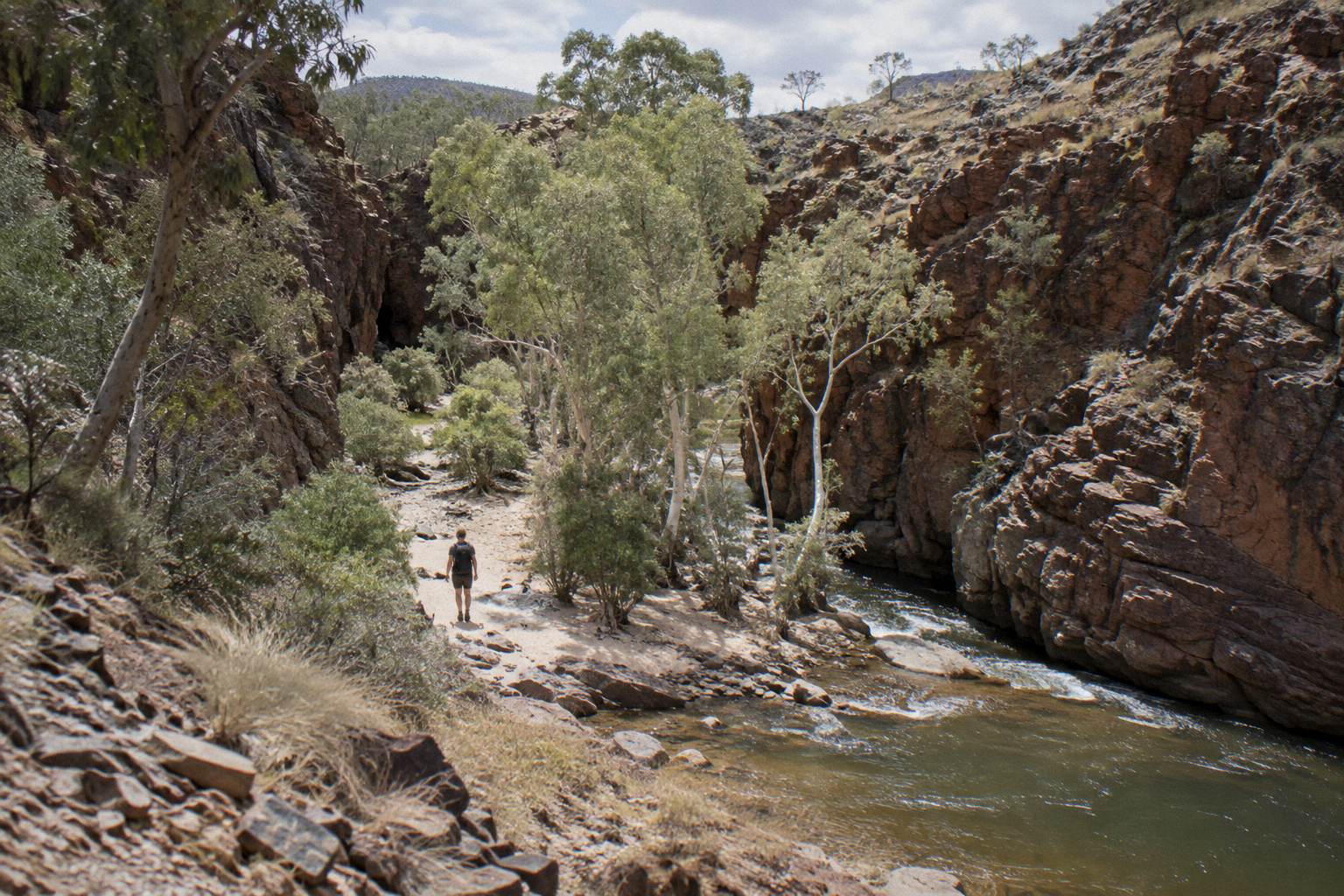
However you walk it, the decision framework on West MacDonnell Ranges Tours stays the same: match the format to your experience, your available days and your tolerance for carrying your own safety, then book camps or treks online before you travel.
Common Questions About Walking The Larapinta Trail Alone
Can You Walk The Larapinta Trail Alone Or Should You Book A Trek?
You can walk it alone: the trail is open to independent walkers who book and pay for every campsite online first. The official advice, though, is do not walk alone, and to carry a satellite phone or personal locator beacon. If you lack remote walking experience or want the logistics handled, book a guided trek from AU$3,125 for five days.
Is It Possible To Walk The Larapinta Trail Alone?
Yes. Independent walking is permitted, but every night must be booked and paid online before you go, walking fees are extra to the parks pass, and the park service advises against walking alone and against relying on mobile phones. A satellite phone or personal locator beacon is the recommended communications carry.
How Long Does The Full Larapinta Trail Take To Walk?
The trail runs more than 230 km across 12 sections, each taking one to two days, so a full end-to-end traverse takes roughly two to three weeks. Individual sections range from 8.9 km to 28.9 km, with recommended walking times from 4 to 12 hours per section.
Do I Need A Parks Pass To Walk The Larapinta Trail?
Yes. Visitors to the Northern Territory need an NT Parks Visitor Pass, sold online only before arrival. An adult two-week pass costs AU$30, and camping and walking trail fees are extra. NT residents are exempt but may be asked for proof.
When Is The Best Time Of Year To Walk The Larapinta Trail?
April to September, the cooler months, are the recommended walking season. Temperatures can exceed 40 °C between October and April, and even in the cooler months walkers are advised to walk only in the morning and late afternoon on hot days.
What Does A Guided Larapinta Trek Include?
The five-day safari trek from AU$3,125 per person includes four nights at a private remote campsite, all camping equipment such as sleeping bags and linen, 4 breakfasts, 5 lunches and 5 dinners, guided bushwalking of roughly 14 km, and 4WD transport with Alice Springs hotel pick-up. The 14-day guided Larapinta walk includes 13 nights of bush camping and 13 breakfasts, 14 lunches and 13 dinners.